


On Tuesday, Sept. 22, Student Affairs hosted the longest table in the Sunken Garden. The event hosted students, faculty, parents and alumni, who were able to experience not just conversations, but something deeper.
For Sarah Whalen, an alum and staff member who volunteered as a table captain, the setting offers a chance to connect with students, something she says her job doesn’t always allow. “I always think of the Sunken Garden as the center of the wheel of the campus of the spokes,” she said. “Everyone can see us. We can see everybody else, and we are gazing upon some of the oldest buildings on campus as well. It’s beautiful.”
But the event is about more than gathering around an impressive table. It is designed to create an opening for conversation among people who might otherwise pass one another on campus without speaking. Sochi Vidal Marquez, a third-year student, came without plans to meet anyone in particular, “I didn’t plan to meet up with anybody today, but I am looking forward to having conversations with people. I don’t know what’s gonna be brought up. So that’s interesting.”
The work of bringing people together starts months before the meal. Olivia Rodriguez, Intercultural Facilitator Program Coordinator at EISS, and Julia Wade, Associate Director of Restorative Practices, along with the planning committee all came together to plan the event.
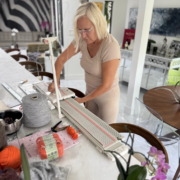
Attendees not only left the event with filled stomachs and stimulating conversation, they also left with intentional gifts curated by the coordinating team. “It’s really fun seeing people’s faces light up whenever they get a cute little free item to take. But we do try to be intentional around the item,” Rodriguez said. These gifts included bento boxes which allowed people to take food with them, little bookmarks with community guidelines on them, and notepads shaped like sliced bread.
The hope is that the conversation lasts longer than the event itself. Rodriguez described success not only as a full table, but as guests leaving with an idea or connection they want to keep nurturing. “If they are people taking away seeds that they’ve started to plant that they’re excited to nurture and cultivate and grow,” she said. “That’s to me the mark of a successful event.”
The gathering also makes space for people to bring different traditions and perspectives to the table. Before the meal, prayers and blessings reflected on gratitude, nourishment, and fellowship. One speaker drew on verses from the Quran about humanity’s diversity, saying that differences can invite people to encounter, listen to, and know one another.
Once the meal began, the conversations ranged widely. Julien Herard, a fourth-year student, mentioned how the talk at his table turned to artificial intelligence and its possible effects. He noticed that parents and students brought different concerns: parents were thinking about AI’s impact on their children, while students raised environmental questions. Both groups also wondered what greater dependence on AI might mean for people’s intellectual development.
Other discussions turned toward what it means to recognize people’s humanity. Herard recalled conversations about the dehumanizing treatment of Haitian immigrants “One person who’s also one of my advisors for the club talked about how Haitian people were put onto ankle monitors because of them being immigrants in this country,” he said. “I think we had really good conversations about what it looks like to really humanize someone, and what it looks like when you dehumanize someone.”
Herard’s Haitian descent made these exchanges especially personal. He said that people want a place where they can feel represented and heard, but that creating such a space takes intention, emphasizing that the community grows through repeated opportunities to return and reconnect.
For another attendee, the conversation was about the campus itself. Mya Brown, described sharing both complaints and the things she loved about LMU, and appreciated having time to reflect on the community with others. She left expecting the encounter to carry into ordinary campus life. “The people that I met here today, I’m probably gonna wave at every time I see them on campus or check in with them,” Brown said.
The event’s organizers share that hope. Alongside the Longest Table, they described other opportunities for dialogue, including smaller monthly gatherings and programs that help people build welcoming spaces. Their aim is to make conversation a continuing practice, not just a special occasion.
