


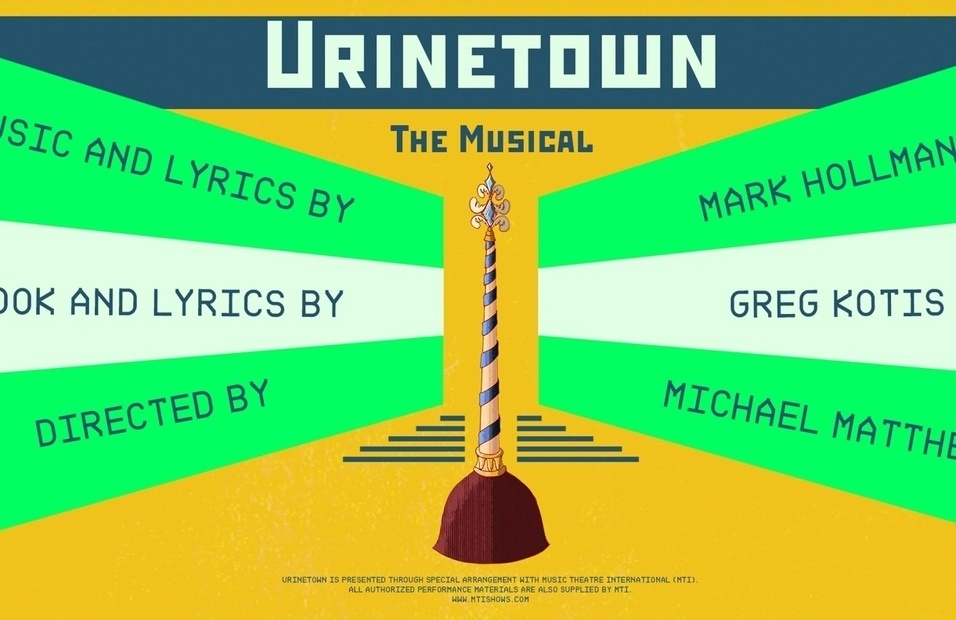
The stage of Barnell Theater, no larger than a guest bedroom, was transformed into the dystopian cityscape of “Urinetown: The Musical” for the first two weekends of November. The musical is funny and complex, diving into a world ruled by capitalism, corruption, stark class divides, and a furious lower class on the brink of revolt.
LMU’s production featured an impressively versatile cast of just eleven actors, compared to the original 2001 Broadway cast of eighteen.
The audience is first greeted by Officer Lockstock, a police officer who also serves as the omniscient narrator guiding us through this dark satire. Lockstock breaks the fourth wall constantly throughout the musical, often joined by his sharp-witted counterpart, Little Sally. The two explain that a twenty-year drought has forced citizens to pay to use public restrooms, known as “Public Amenities.”
Over the course of nearly two hours, the musical tackles a wide array of contemporary issues, from shady corporate-government alliances and police brutality to the inherent flaws of disorganized rebellion.
Sidney Dixon, an LMU senior who plays both the scrappy Little Becky Two Shoes and the corporate loyalist Mrs. Millennium, reflected on the play’s striking relevance. “There’s a bunch of throughlines to what’s going on in the current political climate in the U.S. and outside the U.S.” she said. “The play is made to be funny, but there’s examples of people losing their rights, from the situation with female reproductive rights and abortion to the situation with ICE, where people are facing injustice, and I feel like Urinetown is a reflection of that. ”
At the center of the story is Bobby Strong, the protagonist who falls head-over-heels, within the span of a single song, for Hope Caldwell. Hope is unfortunately the daughter of the ruthless CEO of Urine Good Company (UGC), the megacorporation that controls nearly every aspect of the town. UGC’s influence over the government and police is unmistakable, positioning CEO Caldwell B. Caldwell as a puppet master driven solely by profit.
The climax of the musical erupts when Bobby leads his fellow destitutes in a full-scale revolt, urging them to stop paying for the right to pee. What follows in the second act is a cascade of chaos: Hope’s kidnapping, Bobby’s murder at the hands of Caldwell, an ever-growing body count, and an ending as bleak as it is ironic. Hope, whose very name symbolizes optimism, rises to power only to guide the town into total collapse.

“It reversed the story,” said Dixon on the dark ending. “The person everyone thought was so good can turn out to be power hungry and take it all for themselves and ruin everything.”
Ultimately, Urinetown stands as a cautionary tale about the future we may be hurtling toward. Water scarcity already affects over 40% of the global population, and that’s far from the only crisis looming over us. Though written more than two decades ago, the musical remains relevant in an era of growing discontent, abuses of power, and eroding rights. Its warning is clear: without thoughtful, collective action, there will be no satisfying resolution.
Still, LMU’s cast brought vigor, wit, and emotional depth to the production, delivering a memorable two-weekend run. If you missed it, make sure to catch their next show as you won’t want to be left out again.
