


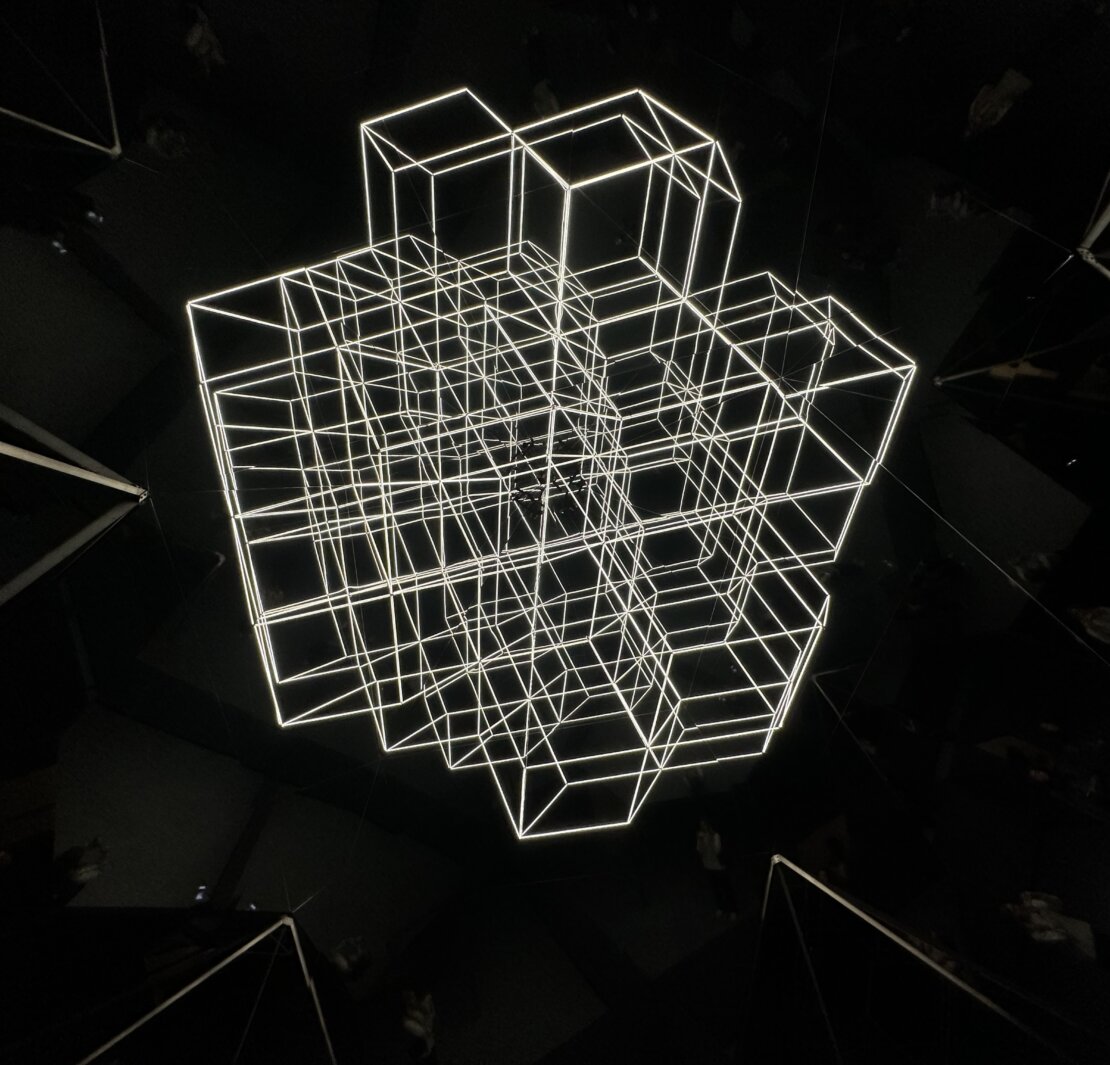
The increasing light pollution in Los Angeles does not allow residents to look up and see a sea of countless stars in the sky. Locals typically must venture to clearer skies in nearby desert landscapes, such as Joshua Tree National Park, to see more than just the brightest stars glowing through the city’s artificial light. In the heart of downtown L.A., however, residents can now experience art that transports them to the stars, feeling like they have stepped into the magnitude of space. Danish-Icelandic visual artist Olafur Eliasson conveys this emotion through his immersive art, which is currently on display at The Geffen Contemporary at The Museum of Contemporary Art (MOCA) until July 6. The Berlin-based creator is best known for his experiential installations, oftentimes incorporating natural elements to engage viewers and share meaningful messages about the world around them.
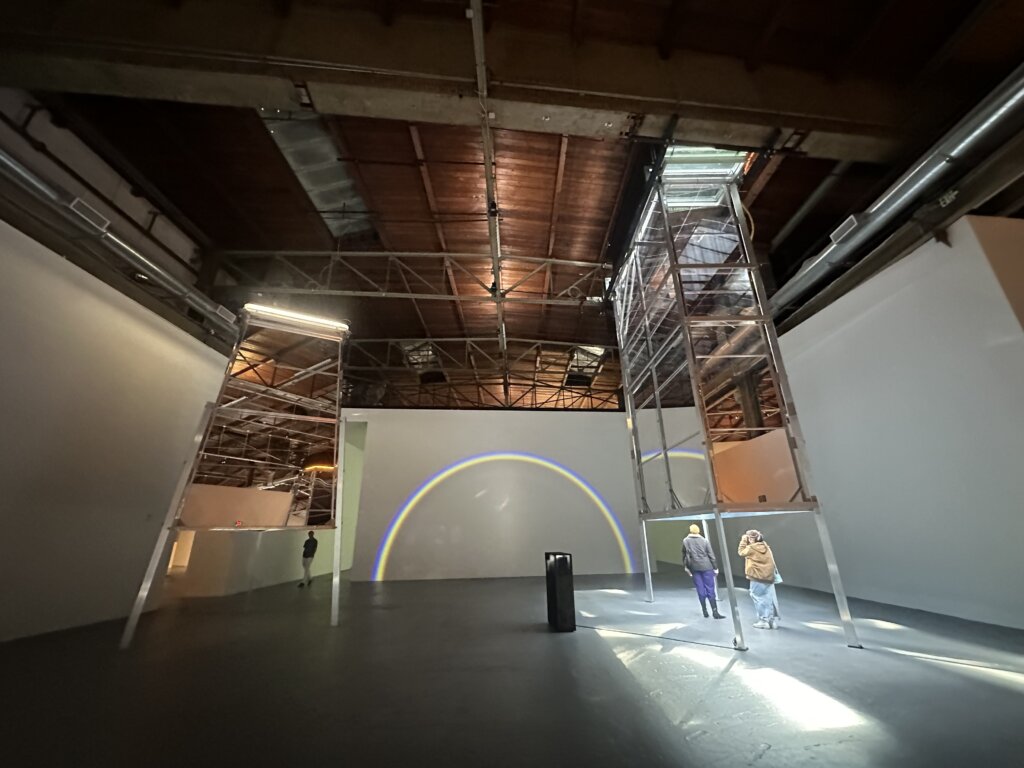
Among his highly notable works is Eliasson’s 2008 creation of “The New York City Waterfalls,” a series of four constructed large-scale waterfalls throughout the New York Harbor – the most renowned being one off of the Brooklyn Bridge. Contrary to his artwork’s location in busy, outdoor spaces, however, “Olafur Eliasson: OPEN” at MOCA showcases other expansive pieces in a seemingly empty, indoor setting. When stepping into this gallery, visitors are met with blank walls and minimal noise. Each work of art stands alone, without a lengthy description attached, allowing viewers to sit with or stand beneath each piece, reflecting on the creative vastness. The isolation of each design transmits a similar feeling to attendees, creating art they can experience, not solely observe.
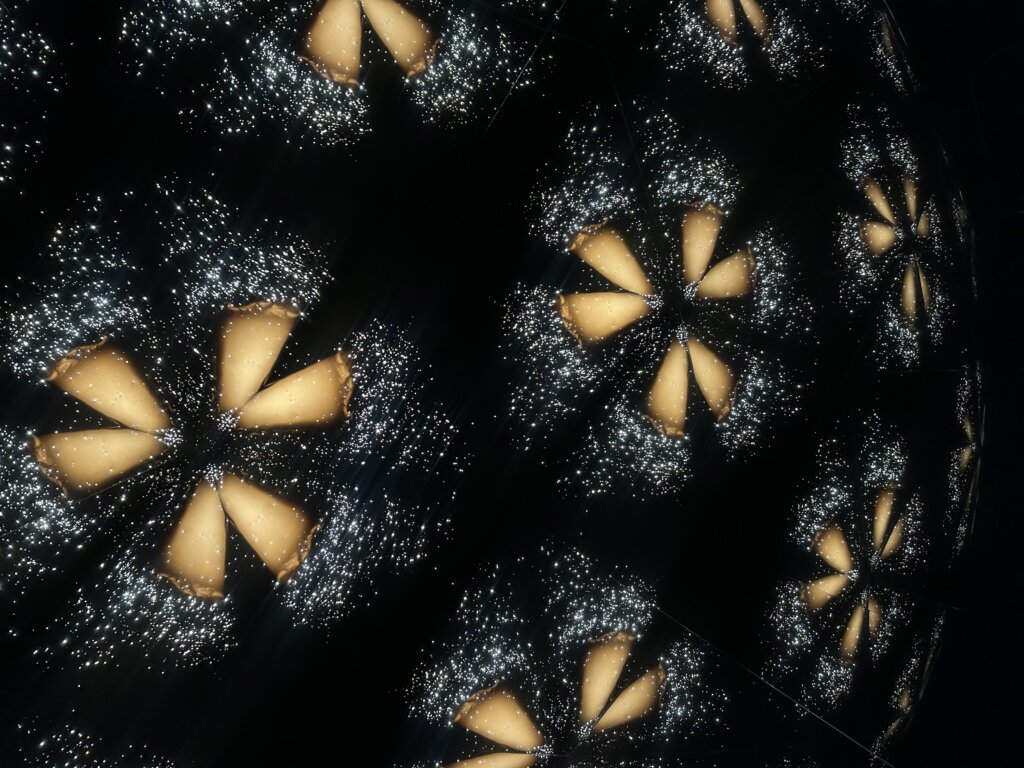
Eliasson’s “Kaleidoscope for beginning at the end” is one of the many otherworldly pieces found in his downtown L.A. exhibit. The lunar module-like structure utilizes mirrors and lights, as well as water, oil, and ink to create kaleidoscope patterns that resemble the movement of a galaxy, appearing closer to observers. The empty room in which the tower stands produces a feeling of boundlessness, which is enhanced when being consumed by the art. Three other towers stand in this main room of the gallery, all sharing similar exterior characteristics. Nevertheless, when stepping into every arrangement, museum attendees find different experiences within each one. The other towers, “Observatory for seeing the atmosphere’s futures,” “Viewing machine for imagining oceanic futures,” and the “Device for seeing potential solar futures,” are all constructed of stainless steel, aluminum, and mirror foil. In addition to the rather simple components, however, outdoor elements are brought into each piece, which encourages a moment of reflection about the role of humans in the world. One of the towers is located beneath a skylight in the ceiling, allowing for natural light to form patterns in a kaleidoscopic effect, while another’s distortion element is dependent on the time of day and the weather outside. These structures utilize the architecture of the museum to skillfully engage the art with the environment beyond the building’s walls.
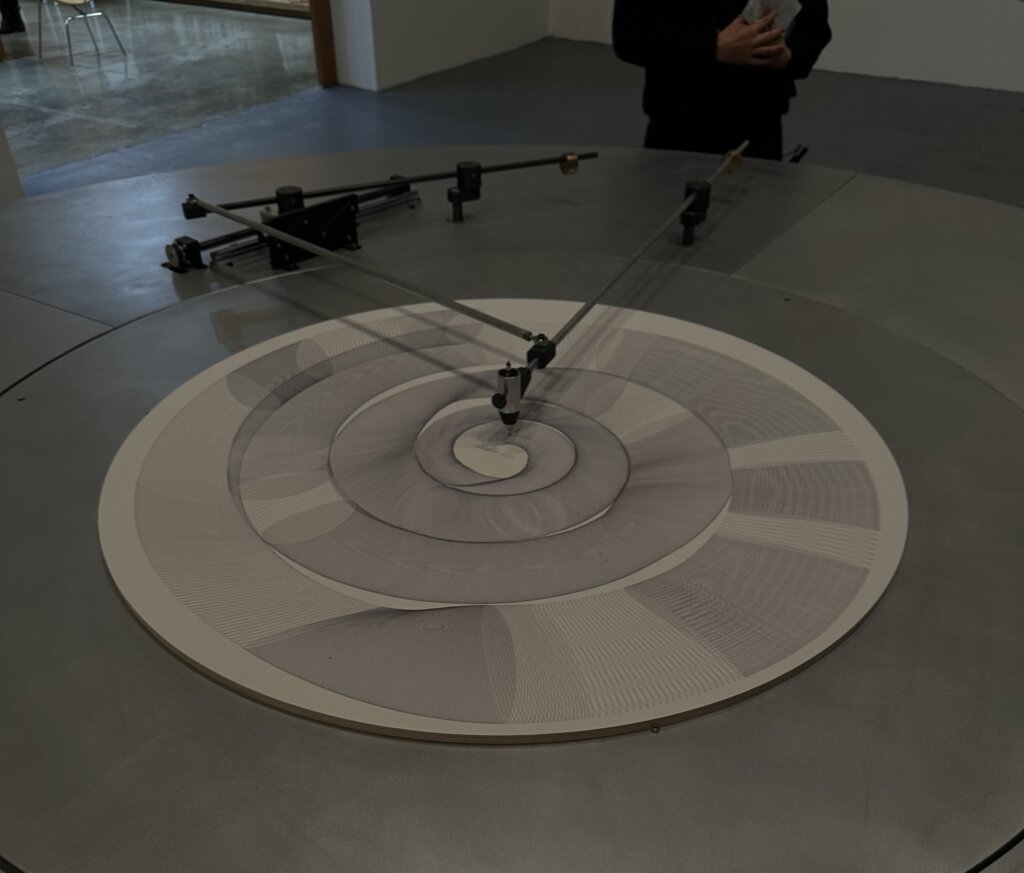
Perhaps the most captivating of Eliasson’s work that incorporates these organic materials in his art is the “Weather-drawing observatory for the future.” Circular canvases of unique markings line the walls of another room at The Geffen – the sole focus of the room being the creation of one distinctive idea. At the center of the room is a drawing machine that spins slowly, illustrating on the canvas a pattern produced from meteorological data. The frequency of the circular waves, as well as the intensity of the markings, are determined by the weather and temperature outside, once again using natural elements to produce art. Not only do these installations take the current climate into account, but the design of the drawings is also impacted by the difference between the temperature from 50 years in both the past and in the predicted future. This action is repeated every single day, revealing a unique pattern on the circular canvas that will be added to the rows on the wall. The contrasts in the drawings reflect the extensive impact of humans in the world, particularly the future of the planet, despite the feeling of being surrounded by vastness, represented in Eliasson’s art. “Seeing paintings” is a similar creation within the gallery that showcases this message – created through ice melting in ink and bleach to form unique illustrations on circular canvases. Each of these original visuals portrays the ever-evolving universe and human’s impact on its future, regardless of how insignificant this influence may feel.

Despite the many variations and materials, this theme of being a part of something greater than oneself is continuously woven into each of Eliasson’s pieces. Another creation conveying this message is “Your mutual appreciation compass,” which is hung from the ceiling of an additional bare room of the exhibition. This colorful arrangement contains a rainbow arrow and a magnet, serving as a compass to represent the placement of humans together in a larger, more complex environment.
Olafur Eliasson’s work presented at this Los Angeles exhibit challenges the feeling of smallness regarding human existence and instead proves the immense impact people can make amid the vastness. This idea generates an adventurous spirit, leaving observers eager to explore more than what is currently visible. The immersive nature of each piece of art within the exhibit places visitors in a sense of otherworldliness, providing space for reflection – not only in terms of the meaning behind the art but also within life on a broader scale. This is carried into a smaller, secluded room in the gallery, where viewers encounter a wall of questions to reflect on – an adequate final stop on the exhibition tour. “Am I open to relaxing my attachment to outcome?” is one of the messages displayed, offering a positive outlook on the influence of humans in shaping the future. Despite the daunting feeling of smallness, the hope for an improved future is visible in Eliasson’s art – like the brightest stars in a Los Angeles sky.
