


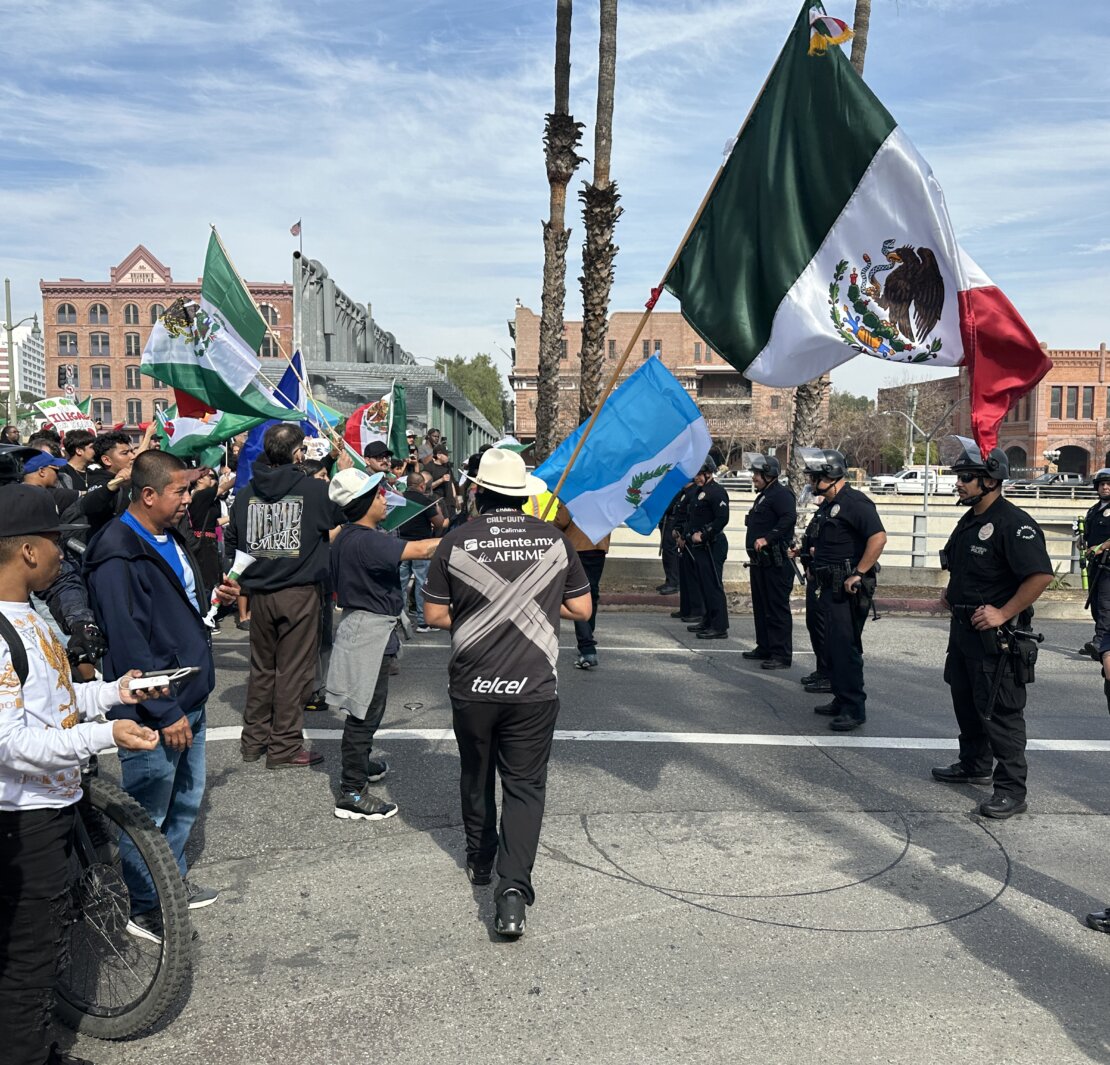
The loud ambiance of Los Angeles saw another day as street vendors stood in front of their sizzling grills selling corn and hot dogs, car horns continued to blare from each corner, and yelling echoed from the nearby streets. But on Monday, Feb. 3, the honking was longer and the yelling was louder as Angelenos marched the streets of LA in solidarity with immigration rights.
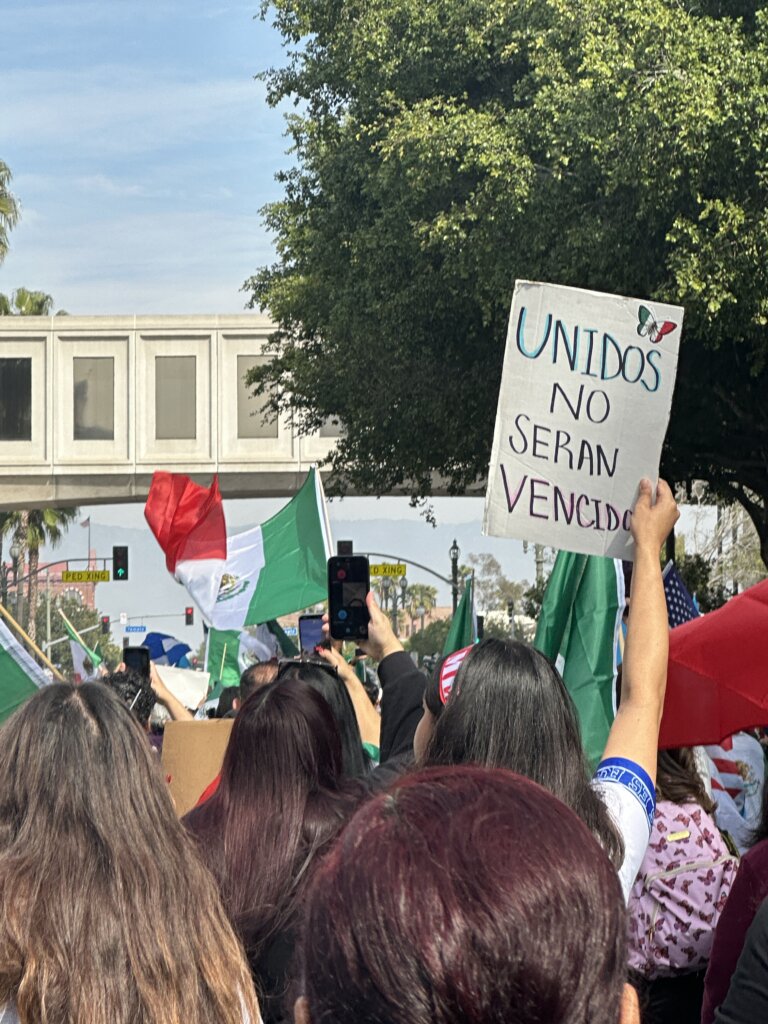
From early in the morning, Angelenos took to the streets against the Trump Administration’s mass deportation measures. From young children to older people, protests expressed their resistance against the US Immigration and Customs Enforcement (ICE).
The first chant that roared from the protestors sang: “DEPORT TRUMP! DEPORT TRUMP! DEPORT TRUMP!”
Although the protests centered on immigrant rights, a rather diverse community gathered in front of LA City Hall. This group represented not only the immigrant community but the broader, more diverse LA community, united in solidarity with their immigrant neighbors.
The recent actions by the Trump Administration, in regards to immigration policies, spurred demonstrations throughout Los Angeles. President Trump’s push on mass deportation ignited demonstrations opposing it, especially his recent executive orders on lifting entry-restrictions on “sensitive locations”, such as schools and churches. The change of the once protected and off-limit institutions for ICE sparked protest by many who view the decision as unlawful and unfair for the immigrants within the community. The Anti-ICE sentiment began to rocket when various ICE raid posts surfaced social media as of late January.
Data from the Migration Policy Institute shows the stakes at hand: there were 951,000 undocumented individuals living in Los Angeles County in 2019. With 66% employed and 90% of undocumented children enrolled in school, the undocumented population is intertwined in the LA community, not merely documented immigrants. These executive actions drove people to the streets of LA, including those who are not directly affected.
By early afternoon, Angela Givant, a newcomer to Los Angeles, brought her bold poster and stationed herself alongside many protestors. Although Givant is a white US citizen without direct ties to recent immigration, she couldn’t help but support the protestors and stand in solidarity.
“I find [the protests] really beautiful…powerful,” Givant said. “I hope people with power will listen to those with power on the streets.”
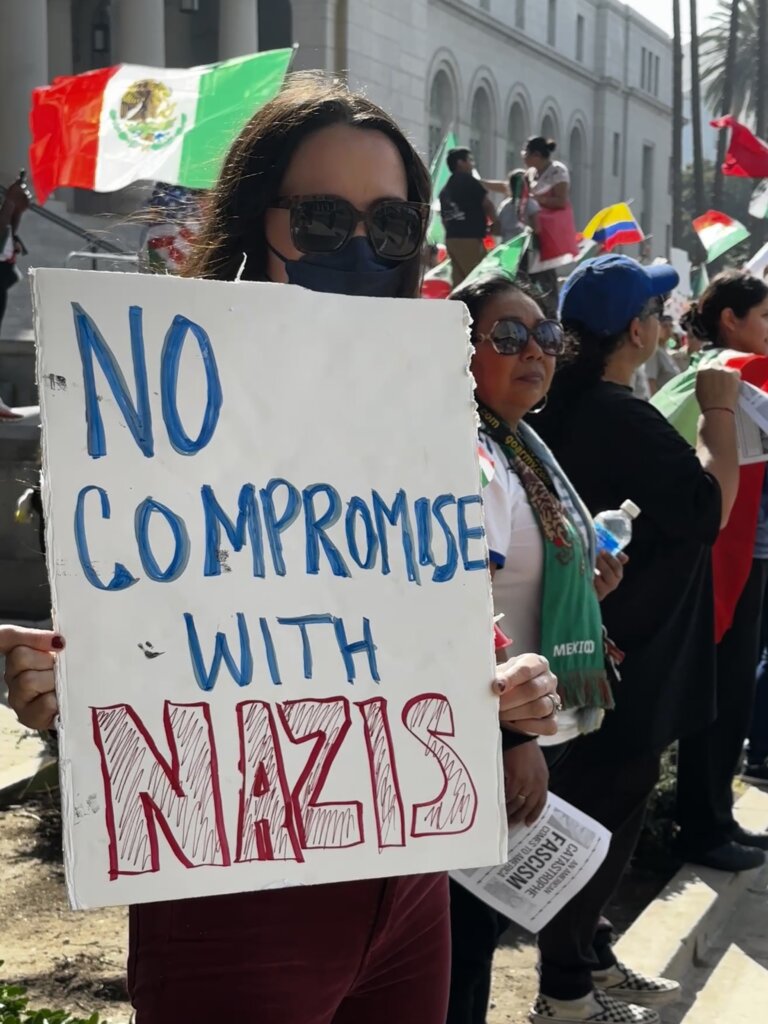
Givant understood the true meaning behind the movement and the larger stakes for others even if it does not impact her directly.
“We want to abolish ICE. End mass deportation,” said Givant. “And more importantly, support equal rights.”
By nightfall, the atmosphere changed. The protestors soon moved away from City Hall, food vendors dispersed as police presence increased, and officers formed barriers, blocking key routes and cornering demonstrators. From above, helicopters swirled over the surrounding demonstrators, shining a bright light down to the assembly. Blue and red lights reflected off demonstrators’ cars as they drove past the assembly, honking and waving flags proudly from their driver-side windows.
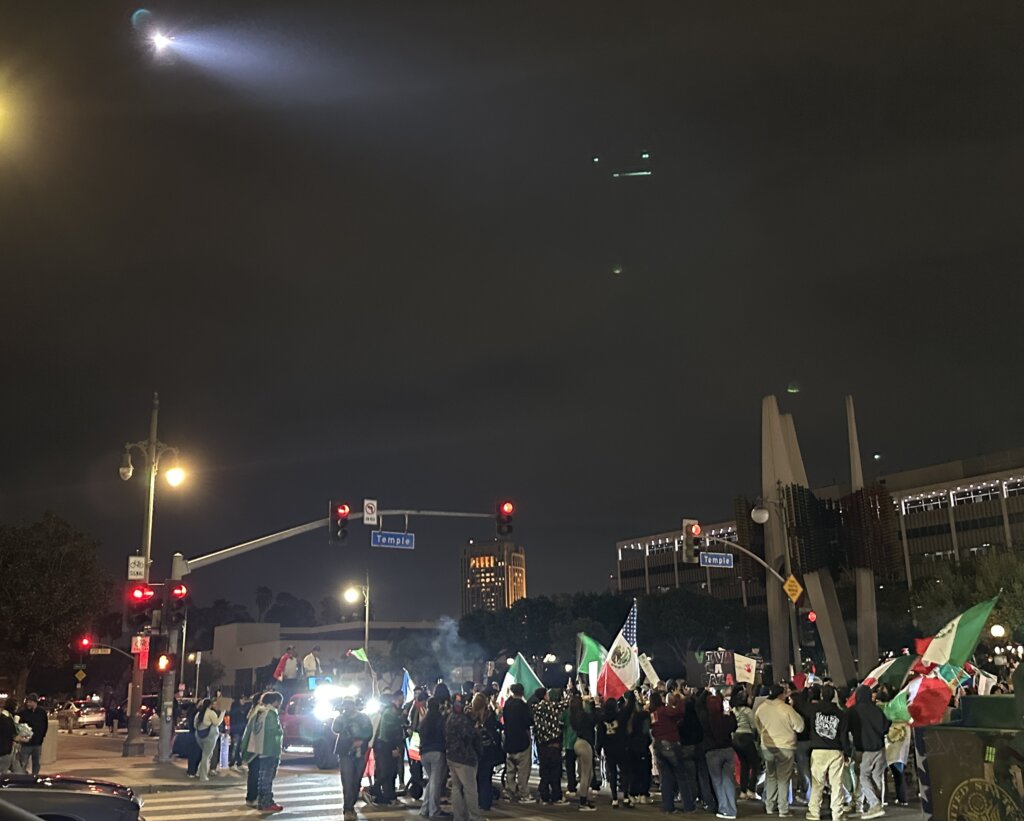
One truck in particular, circled by young protestors, carried a makeshift speaker with a microphone attached. Through the speaker on the truck’s bed, a woman’s voice spoke in Spanish, urging the protests to continue.
“Continue to protest—this is your right,” the voice said. “You have the 5th amendment. If immigration officers ask you a question, you don’t have to answer.”
Raymond Kemp, 16, was one of the protestors that night. A young Black student at Diego Rivera High School, Kemp joined his friends to protest at night in an act of solidarity.
“I need to support the people,” Kemp said. “I have a lot of Mexican friends.”
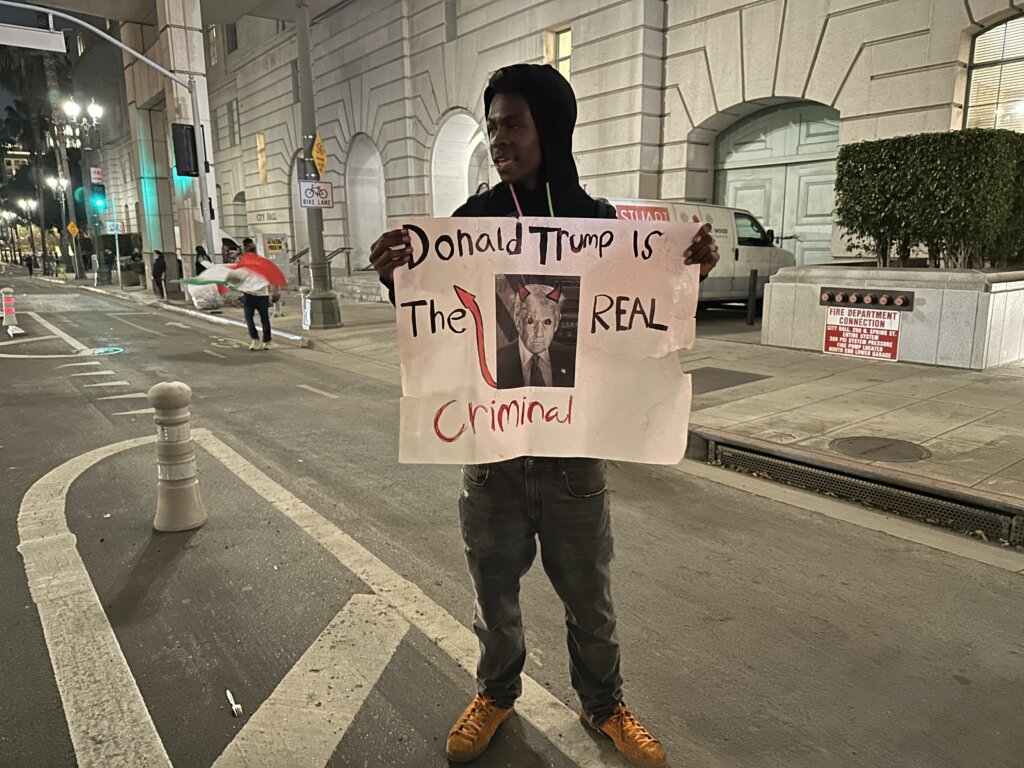
Despite the protest continuing in main streets, stopping the flow of traffic, and attracting police presence, Kemp felt it was necessary to continue the protest.
“It’s the most appropriate response when all your privileges are stripped away from you,” said Kemp.
Like many other US born protestors, Kemp came in support of their immigrant friends and neighbors despite not being directly affected. The protesters projected a resilient message: LA is LA because of immigrants. Without the inclusion and influence of immigrant neighbors, these demonstrators wouldn’t call it their home and community.
