


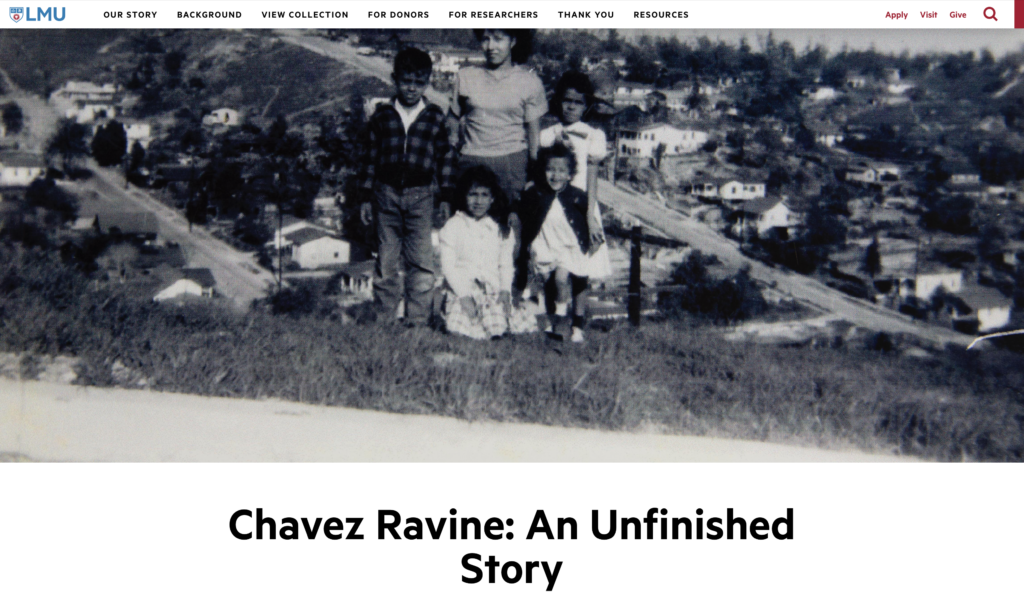
‘The Land’ has produced many valuable monuments, shaping the city’s individualism and unconventional beauty. One of the paramount landmarks being Dodger Stadium, settled on the steep, shallow canyon called Chavez Ravine. Originally federal land with a couple of mines, and it was one of the only places in LA at the time to have Mexican homeowners.
What most people don’t know is that the construction completely destroyed communities for the creation of the new architecture. Originally looking at the Compton and Watts area for the construction, it was ultimately decided construction would be in the heart of Los Angeles. The residents of Palo Verde, Bishop, and La Loma were displaced due to eminent domain, labeling the area blighted for the new housing project called Elysian Park Heights. After a couple years, the Elysian Park Heights project fell through, leaving the 300 acres of land to be purchased by the Brooklyn Dodgers’ owner
With the housing crisis in LA being in such high demand and the Chavez Ravine already being mostly vacated, the California Supreme Court supported the project of urban renewal, welcoming a new stadium. 1,800 families were forcibly removed from their homes that were destroyed by bulldozers.
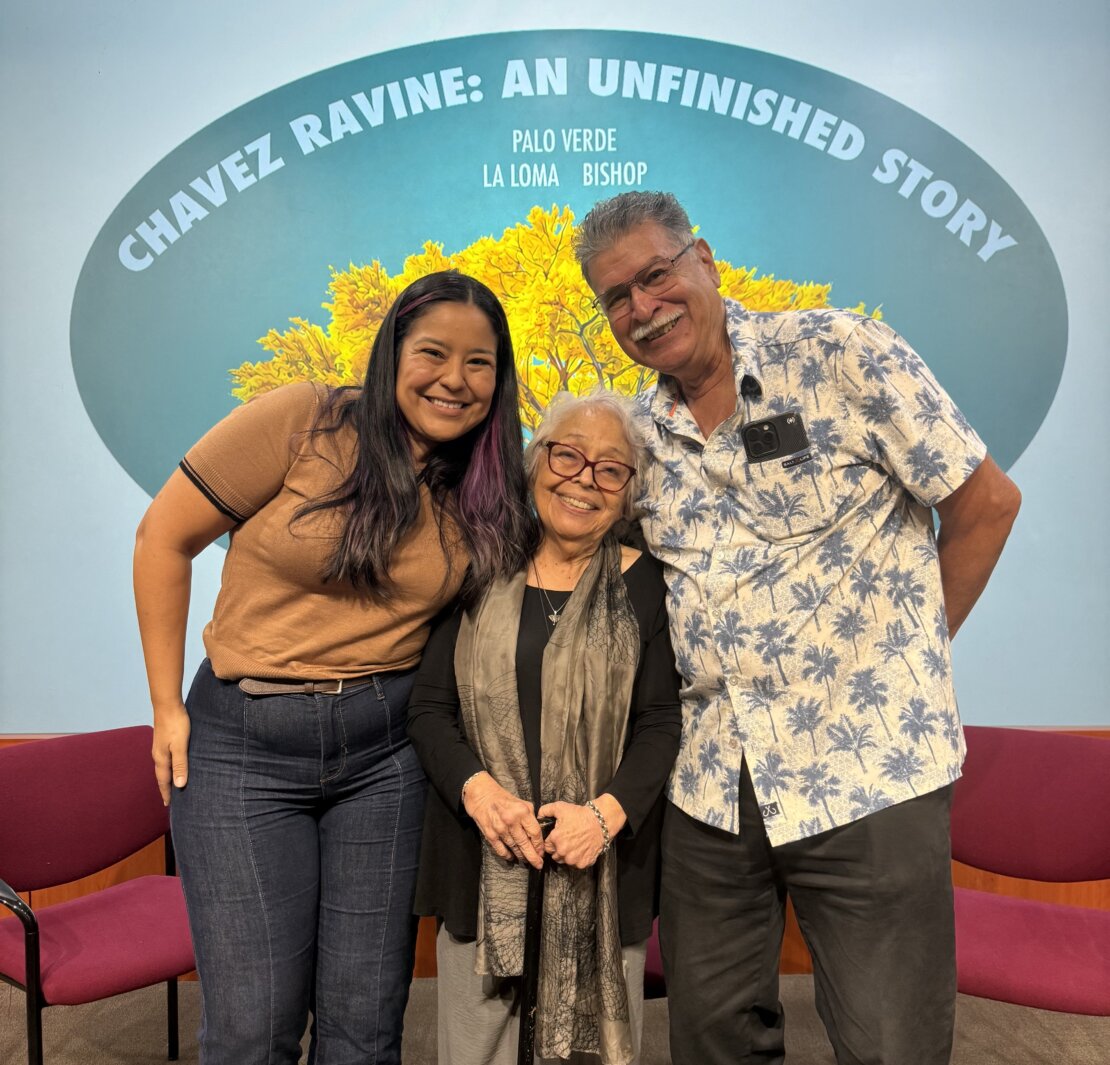
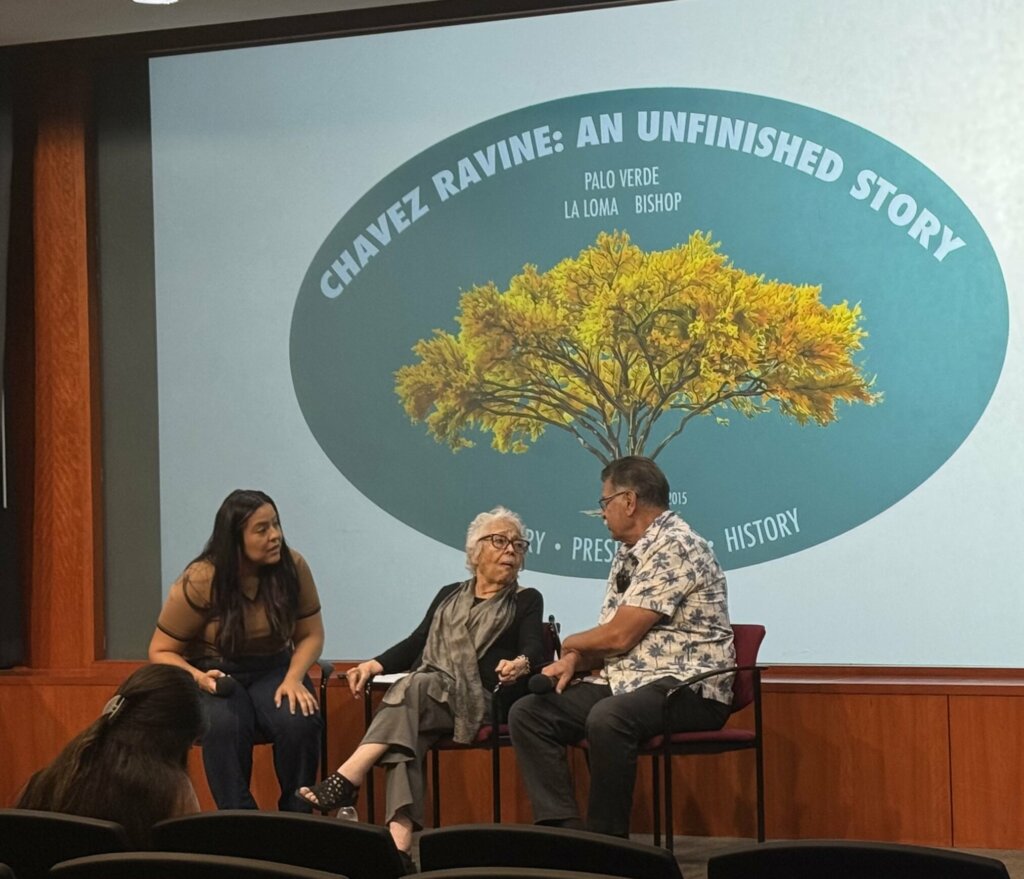
Dr. Priscilla Leiva, the professor for Chicanx and Latinx Studies, as well as the director of the Sports Studies department here at LMU has dedicated 11 years to a project called Chavez Ravine: An Unfinished Story. This project is a digital archive founded in 2015 about the Brooklyn Dodgers owner Walter O’Malley buying the land and the removal of residing communities. Her research is still continuing to this day, with LMU’s Hannon Library hosting the cultural remains for public access. Leiva hosted an event on LMU’s campus, introducing activists Carol Jaquez and George Martinez. Both Jaquez and Martinez have been working with Leiva to collect photos from the families affected by the displacement.
Jaquez and Martinez described themselves as “kissing cousins,” born after World War II in the prohibition era with no blood relation, but deep family histories. A story was shared about George’s grandmother bootlegging an alcohol business in the neighborhood, and when the feds came to shut it down, Carol’s grandfather took the fall and ended up in county jail.
Both their childhoods were filled with happiness and belonging in a community speaking mostly Spanish. Everyone in the Chavez Ravine knew one another, to the point that if an outsider came in, whistles would be used to warn the rest of the community of a stranger. Horses were used as an early form of transportation, letting community members travel to pick up or drop off goods. However, they had to speak English out of fear of being deported for speaking their native language.
Martinez told a story about his father and grandfather bringing tons of bread to the members of the neighborhood from the inner-city bakery’s throwaways. They reminisced about seeing the police academy on top of Elysian Park and how police officers would put together events regularly.
He explained how it was popular for little boys to explore everywhere. They went around going to all the different neighborhoods, playing with farm animals, and even sliding down the steep hills with a piece of cardboard. On the contrary, the little girls were highly protected and sheltered in the neighborhoods of Chavez Ravine.
A common misbelief that upsets both activists was that the Chavez Ravine was considered a “slum.” This was completely false as they lived in a flourishing community. With three markets, hair salons, barns, gasoline stations, and churches for different religions, they were a thriving neighborhood. The community members consisted of lawyers, and homeownership was prevalent. Jacquez explained how the community was actually very successfully self-sustained, partially because Mexicans were blamed for the Depression at the time.
When asked about her current place of residence, Carol says, “I’m trying to recreate my childhood because those were the best times of my life.”
The tone flipped from pleasant reminiscence to rehashing old grievances when the subject switched to the Dodgers’ stadium project. Carol remembered a man named Frank Wilkinson knocking on the door, very officious and unkind, and giving papers to her tía before leaving. Her tía tearfully read the papers, called the family to deliver the news on the transformation of their property. Jacquez said, “I hated the Dodgers” for destroying what she knew as her community and childhood.
She relocated to Silverlake with her family, where she faced a whole different type of struggle. From “a world full of love to a world full of negative haters,” she was met outside with racist notes on the car stating, “Mexicans get out.”

Unlike Jaquez’s experience, Martinez’s outlook on the removal was different. His family moved to West Los Angeles, a fairly wealthy part of LA. He “felt there was an advantage moving to the west side” because of his grandfather, Crispín Martinez, being an actor and his ties to Hollywood. “There was a lot of resentment coming down from our parents,” Martinez recalled. “But the resentment didn’t trickle down to me.” He blames the city officials for the permission to destroy their community, instead of the Dodgers.
“Many people still hold grudges, including Carol,” Martinez said.
Chavez Ravine holds buried history, literally. Martinez says the elementary school him and Jacquez attended is now buried 60 to 70 feet underground, all for parking expansion. The two neighbors told their truths behind Dodger Stadium’s very beginning. Thanks was given around the room to everyone who made this opportunity possible to hear and learn our history
Jacquez said, “community working with academics makes the best story.” Dr. Leiva’s event and extensive research with LMU Hannon Library’s availability to preserve the artifacts that came out of Chavez Ravine and bring into the light, is very culturally significant. The presentation was closed off with Carol’s words of encouragement and an important statement: “know your history and be proud of who you are.”
