


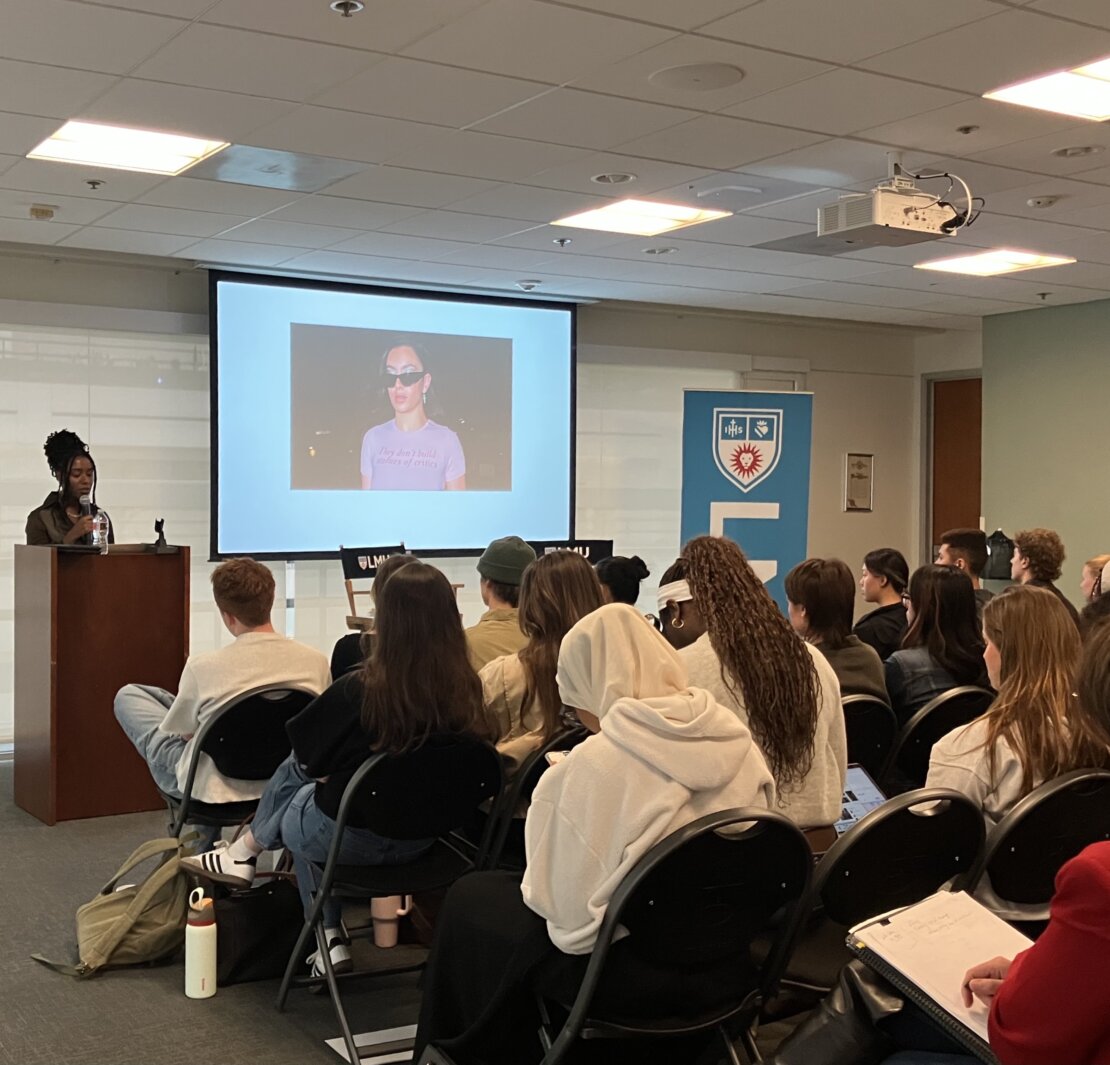
Doreen St. Félix, a staff writer at The New Yorker, visited Loyola Marymount University on Wednesday to speak with students about her experience as a critic and culture writer, and the importance of preserving her field as it evolves, particularly in Donald Trump’s America.
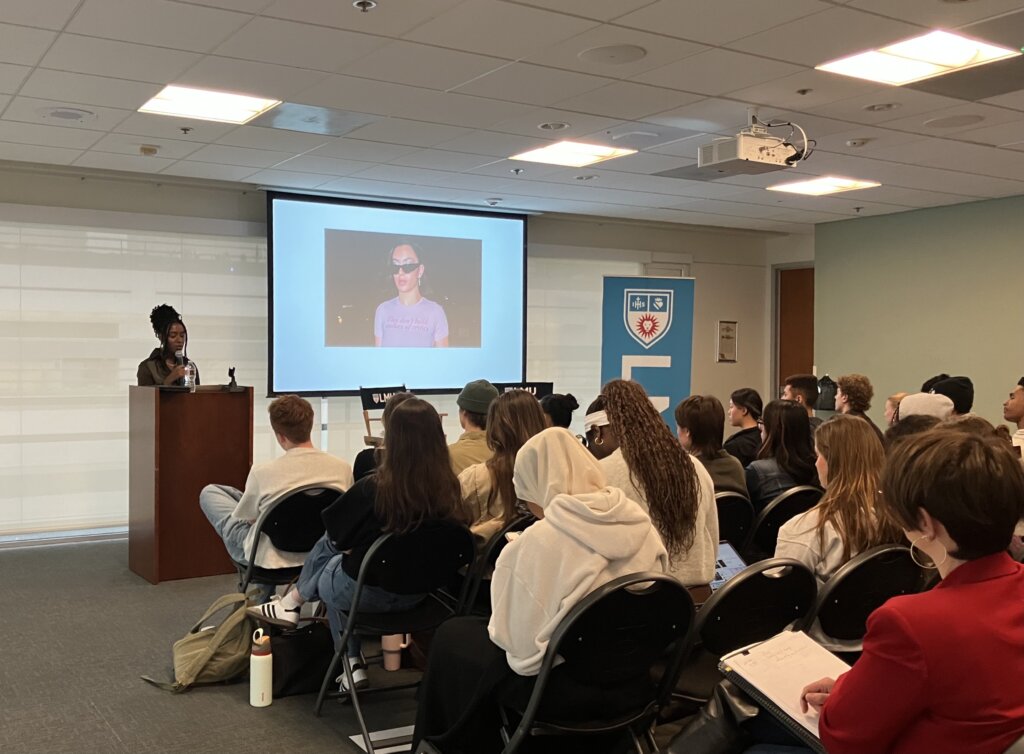
Doreen St. Félix speaking at Loyola Marymount University.
So, who is ‘the critic’? Félix identified the critic as a “species of writer” who does the work of “interpreting and analyzing for the reader.” They are people who are processing their feelings about something – whether it be art, music, or culture – and publicly sharing their curiosity, enthusiasm, and passion for the subject matter. In Félix’s understanding of the current moment, the stakes in protecting this increasingly endangered species of writer are high.
The talk explored the longstanding contentious nature of criticism, which has only been aggravated in an age of authoritarianism. She explored censorship of art and how the government is seeking to interpose itself to become ‘the critic.’
To demonstrate this unwelcome evolution, Félix referenced the removal of photographs by artist Sally Mann from the Modern Art Museum of Fort Worth’s exhibition, Diaries of Home. According to Glasstire, “five of Ms. Mann’s works — Popsicle Drips, The Perfect Tomato, The Wet Bed, Another Cracker, and Cereus” were removed from the show.
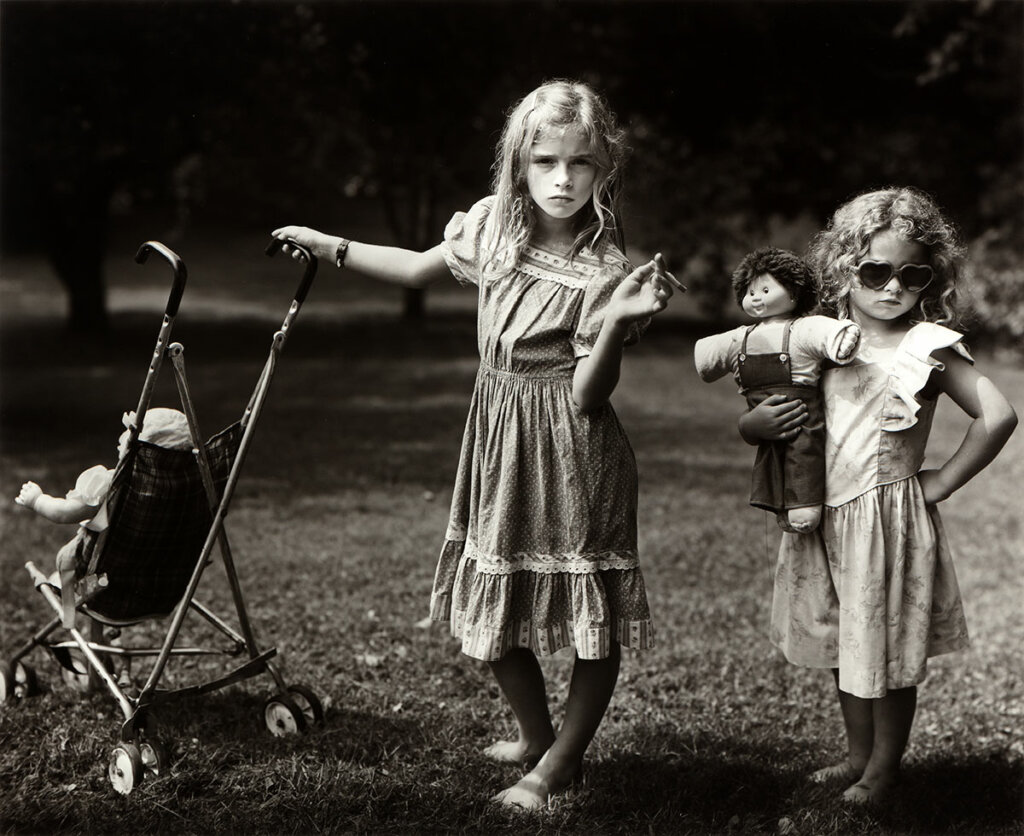
Sally Mann, The New Mothers, 1989.
Félix acknowledged that this series has “long been very controversial” and that the photographs displayed “are not easy images to look at.” While we are not living in the only moment in history when Sally Mann’s photographs sparked controversy, this was “the first example we have of the art physically being taken out of the space it was in.”
“It puts us in this scenario where the police has appointed itself as critics, as art critics. The state has appointed itself as an art critic,” Félix said. “These figures who have nothing to do with art, who don’t live in the art world, who don’t think about art in these ways, have vested themselves with the power of criticism, and then used the legal system to ratify or codify their judgments.”
The field of criticism, of course referring to real art critics, may seem small to some, but is ever important in our current moment of political disorder and chaos. So long as culture exists, criticism will exist alongside it. In preserving criticism, what we are really working to preserve is culture.
“We love living in a world that produces culture,” said Félix. “We have designated ourselves – whether consciously or subconsciously – as stewards of this cultural world. We think this stuff is really important. And we think this work tells us about ourselves.”

Félix asked, “If criticism doesn’t matter, if we should just be ignoring critics, if critics are just so extraneous, then why is it that the government has decided that it wants to be an art critic? Why is it that the government, the state, the police, these institutions are coming in to say ‘We are going to dictate what is art and what isn’t?’ It must be very important.”
Why would the sitting President thwart the release of The Apprentice or take over the Kennedy Center? There is an “interest in reframing how culture is created,” to decide what is permitted and what is not permitted. They are attempting to create our culture by force, to fit their rigid mold of what art is “right.”
It’s our job to not let them; to continue supporting art, to continue commenting on it, and to continue creating our own culture. We have a responsibility to embrace art that uplifts us, that challenges us, and that makes us uncomfortable.
It is this very diversity that has given way to our country, “which is not like any other country,” said Félix. “A country that exists because of a meeting of both the cataclysmic and the creative. Because of both the belief in humanity and the complete denial of humanity. The embrace of nature and the natural world, and the utter destruction of it.”
