

On a recent fall morning Ada County Sheriff Matt Clifford stood in front of reporters who had traveled from across the country to Idaho to learn about a major break in one of the most famous unsolved criminal cases in this country’s history. In 1982, seven people were fatally poisoned in the Chicago area after unknowingly taking Tylenol capsules that were laced with cyanide. At the press conference the possible new suspect, who was dubbed “The Tylenol killer,” was revealed to be Loyola Marymount University alumni Dr. Mathew Francis Betkouski.
“He’s been the hardest man to run down in my career,” detective Tim Cooper of the Ada County Sheriff’s Office, who led the investigation, told reporters. “I’ve never seen someone conceal their identity for so long in such a smart way.”
While following his tracks, Cooper found signs of trouble dating back to his time at LMU where he left a tainted legacy, including a scholarship in his name that The Lion found has since been scrubbed from the university’s website.
LMU has stated the university is reviewing the matter under its established process for evaluating university gifts and related recognition.
A Mystery 40 Years in the Making Solved?
For nearly 40 years a mystery sat unsolved in the Treasure Valley, Sheriff Clifford told reporters who gathered in Idaho on Sept. 23. “A man died inside a Boise church back in 1982 with no known name, no ID, and nothing but a note, keys, and a pocket full of cash, he said. He became known as the Unknown Wanderer. Today we can finally tell you who he was, and where that answer eventually led us,” Clifford said.
The unknown wanderer, who is now identified as Betkouski, died by suicide from cyanide poisoning in a Boise church on Dec. 4, 1982. The only clues left behind were a set of 30 keys, $1,900 and a typed note signed with a fake name. Authorities had been unable to identify him until 2019, when detective Cooper reopened the case.
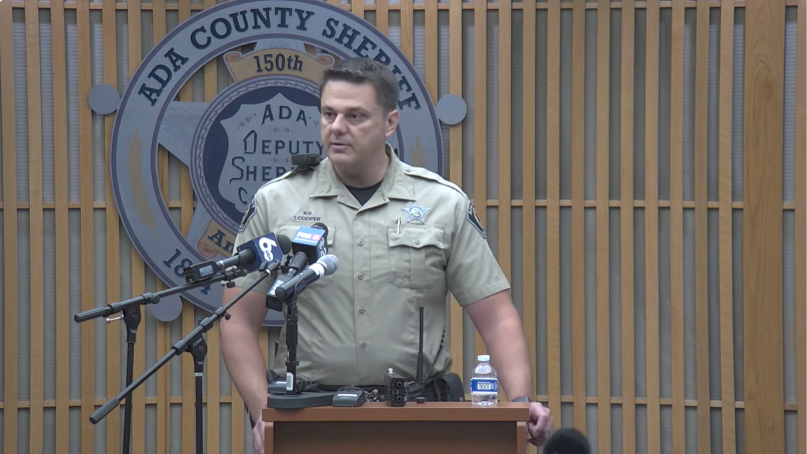
Detectives found that one of 30 keys had a marking that indicated it came from a store in Jacksonville, Fla., as well as an etching that led to a specific street. When looking through property deeds for that street, one decedent matched the timeframe: Betkouski. His sole surviving family member, his brother Mark, was contacted. A DNA sample confirmed Betkouski, who had been missing since 1982, was the wanderer.
Cooper finally had an answer as to what the wanderer’s name was, but his investigation was far from over. He began a background investigation into Betkouski, finding homemade cyanide and a map of Chicago among his possessions in his childhood home in Los Angeles, and later photographs of Betkouski in Chicago in Dec. 1981.
After speaking with Betkouski’s family, friends and coworkers , Cooper learned he struggled with mental health issues, suffered a traumatic brain injury in the spring of 1974 and had a history of concerning behavior including an interest in cyanide and explosives. Police also learned of comments he’d made about committing a perfect crime using cyanide.
Betkouski was fired from his job at the White Sands Test Facility in New Mexico for taking chemicals and was known to be doing experiments at home.
These series of breaks along with more information not released in the Sep. 23 press conference are believed by many, including forensic psychiatrist Dr. Park Dietz, to connect him to the Chicago Tylenol murders of 1982.
Dietz, one of the most respected forensic psychiatrists in the country, has been consulted and testified in high-profile cases including Jeffrey Dahmer, Theodore Kaczynski and the DC Snipers.
At the September press conference, Dietz spoke alongside Cooper about his review of the investigation, and just how convincing the evidence is.
“When he told me about the cyanide and the possible connection to Chicago,” Dietz said, “Of course, I became very interested because this was in my view the most important unsolved crime in my lifetime – the Chicago Tylenol murders.”
Dietz himself conducted three separate presentations to professional groups by giving them anonymous information about the history and the sequence of events. He then polled whether they believed Betkouski to be a viable suspect in the Chicago Tylenol murders.
The first group, a national audience of forensic psychiatrists, overwhelmingly regarded him as a viable suspect.
The second group, made up of experienced forensic psychologists, were more skeptical but still overwhelmingly viewed him as a viable suspect.
The final group, which Dietz and Cooper co-presented to, was the largest group of experienced criminal profilers at the FBI academy, in which everyone agreed this was a viable suspect.
Dietz added that “even more were as convinced as I [am] that Detective Cooper had solved the most important unsolved murder of my lifetime.”
Dietz also acknowledged that law enforcement is “being careful not to use the word ‘suspect’” in connection with Dr. Betkouski. As Dietz puts it: “I’m not bound by the same rules.” He’s convinced that the new developments are a “very likely closure to the identity of the Tylenol killer.”
The murders resulted in a recall of 31 million bottles, and led to the anti-tampering packaging we see today.
Throughout his investigation, Cooper gathered evidence on Betkouski’s criminal profile dating back decades before his death in 1982. He says friends and classmates recalled some very concerning incidents while he attended university.
Signs of Trouble on Campus
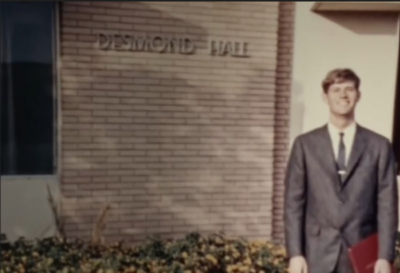
Betkouski was born and raised in the city of Los Angeles and attended Loyola from 1961 to 1965 as a chemistry major.
James S. Whitehead, a current member of the university’s board of trustees, and friend of Betkouski during their undergrad years recalled one event in particular when speaking to Cooper.
“We were both chemistry majors at Loyola University. One incident was in the middle of the night was this large explosion in the dorm. Some of the suspicion was that Mat was involved in some fashion with the explosives.” Whitehead said in an interview included in the documentary on the investigation, “Unmasking the Tylenol Killer.”
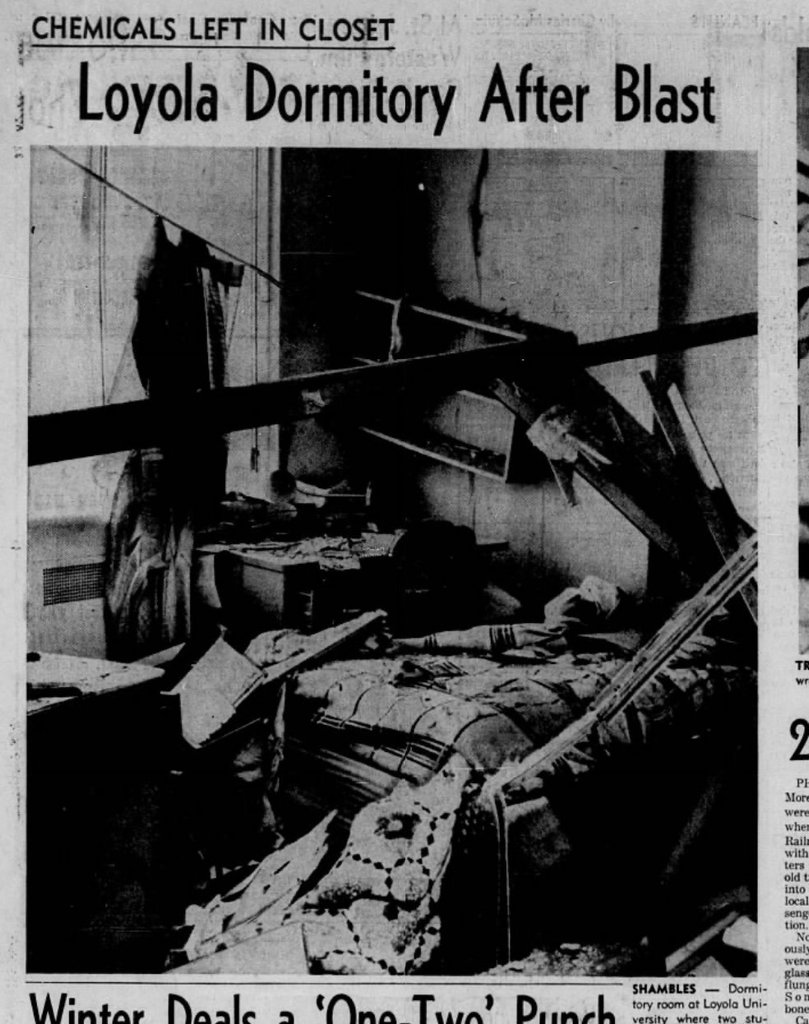
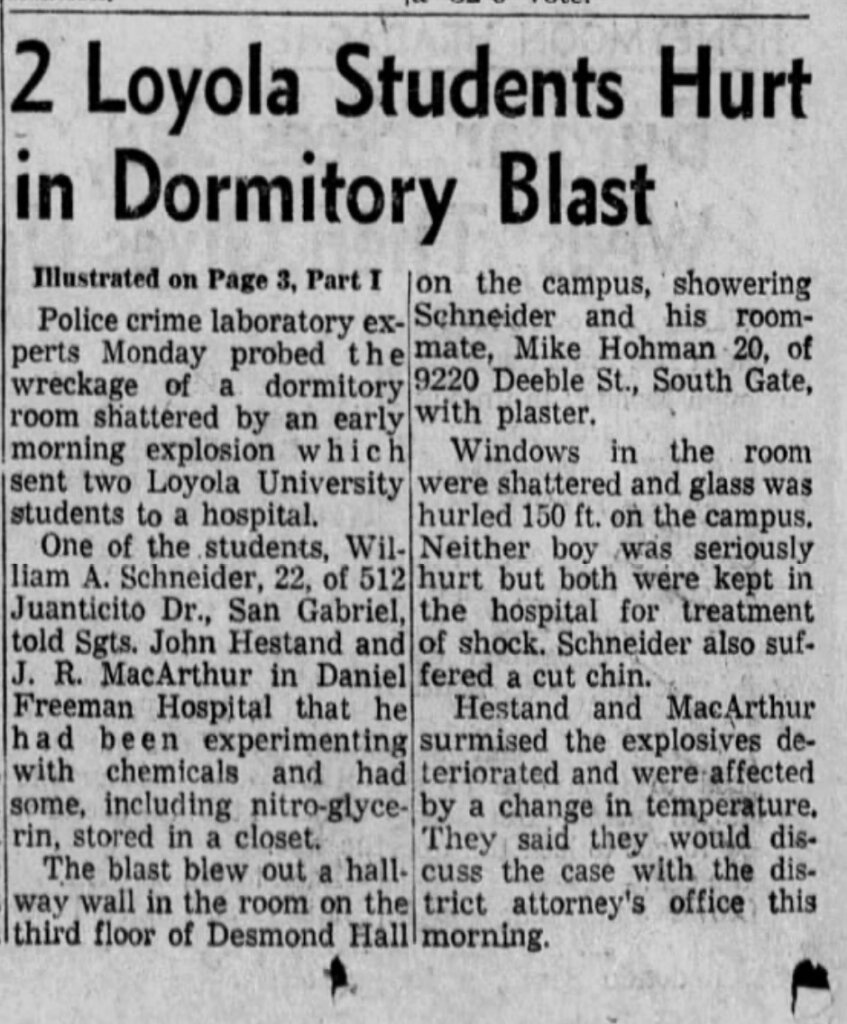
The incident took place in January of 1963 in Desmond Hall where Betkouski lived, however he was not named in the Los Angeles Times article about the explosion. Two other residents were named as injured.
When asked about the incident’s relevance, Cooper stated that “it was said that there were two boys who were messing around with the explosives.” Schneider acknowledged he was one of them. He didn’t remember the name of his fellow roommate or friend who was messing around but he did remember other pranks they had done and some of these were consistent with things that had been said of Dr Betkouski, things like “dropping chemicals off of the rooftops.”
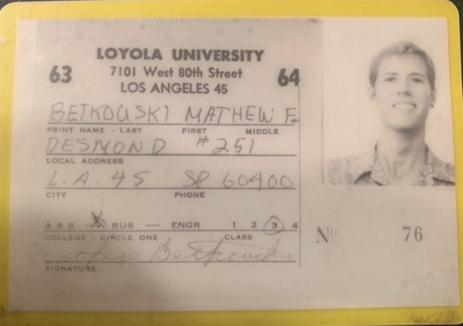
Cooper also provided Betkouski’s Loyola ID card,which was found in his desk at his home in Los Angeles along with other belongings. It shows his residence as Desmond Hall.
The initial suspicion around Betkouski having involvement with the dormitory explosion appeared to be based on his reputation among those he attended Loyola with, as many students recalled other “pranks” he would pull.
Cooper stated that an alum recalled Betkouski was reported to have shot into a yard kiosk. “I think it may have been a homemade firearm of some sort that he had devised. The concern there was, of course, whether or not the kiosk had been occupied.”

Cooper also listed an off campus incident where he “threw a type of chemical into a pool, which caused all of the windows to blow out.” The incident took place while he attended Loyola and was recalled by Whitehead.
Betkouski apparently went to great lengths to conceal incidents like these, according to interviews conducted by Cooper. “People who went to school with him at Loyola remembered an interesting lock invention that he had made, which he later had patented, that he was using to hide his chemistry contraband at Loyola so that security staff didn’t intercept it,” he said.
While never directly named in writing for any involvement in the Desmond Hall explosion, “Dr. Betkouski himself is remembered by others in subsequent years during his master’s program when he lived in Ohio, telling his dorm mates there about the explosion and that he had caused it,” Cooper said “So he eventually later told people that he had something to do with the explosion.”
“This is something that was recalled by his dorm mates there, was that he would tell the tale of the Loyola explosion, how he was responsible for it, and how he was almost injured.” Cooper added.
Betkouski’s parents also got phone calls after the explosion from neighbors and friends asking if he was involved. Cooper said that was something remembered by his brother.
Cooper reached out to the FBI to see if they could find any reports on that or any Loyola explosion, he was told no records would be provided.
“The primary victim in the Loyola explosion, Mr. Holman, recalled the FBI coming and speaking with him while he was still in the hospital. And so that was another reason we reached out to the FBI,” He said. “So it was certainly leading towards, I think for others too, the notion that he was involved even back when it happened.”
A Tainted Legacy
Betkouski’s brother Mark passed away in 2021 during the investigation, his estate carried out his wish for a sum of money to be donated to LMU in Mathew’s name, which became the Mathew Betkouski Scholarship.
The school claims the scholarship name and its terms are unchanged in the following statement provided.
“LMU is proud of the many scholarships that help make an LMU education possible. The Betkouski Scholarship was established in 2021 through the estate of Mark Betkouski in honor of his brother, Matthew, who was not the donor. LMU is reviewing the matter under its established process for evaluating university gifts and related recognition. The scholarship itself remains unchanged, including its name and terms. LMU will continue awarding it to qualified students, and current recipients’ funding is unaffected.”
However, the scholarship has since been removed from the University website following the September press conference.
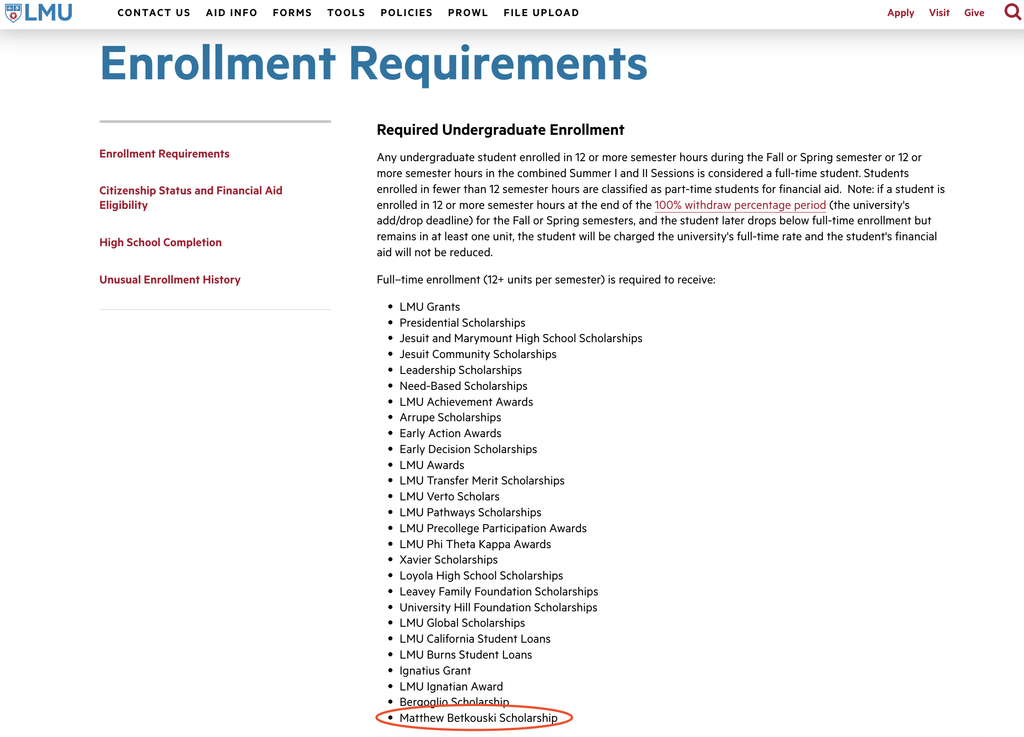
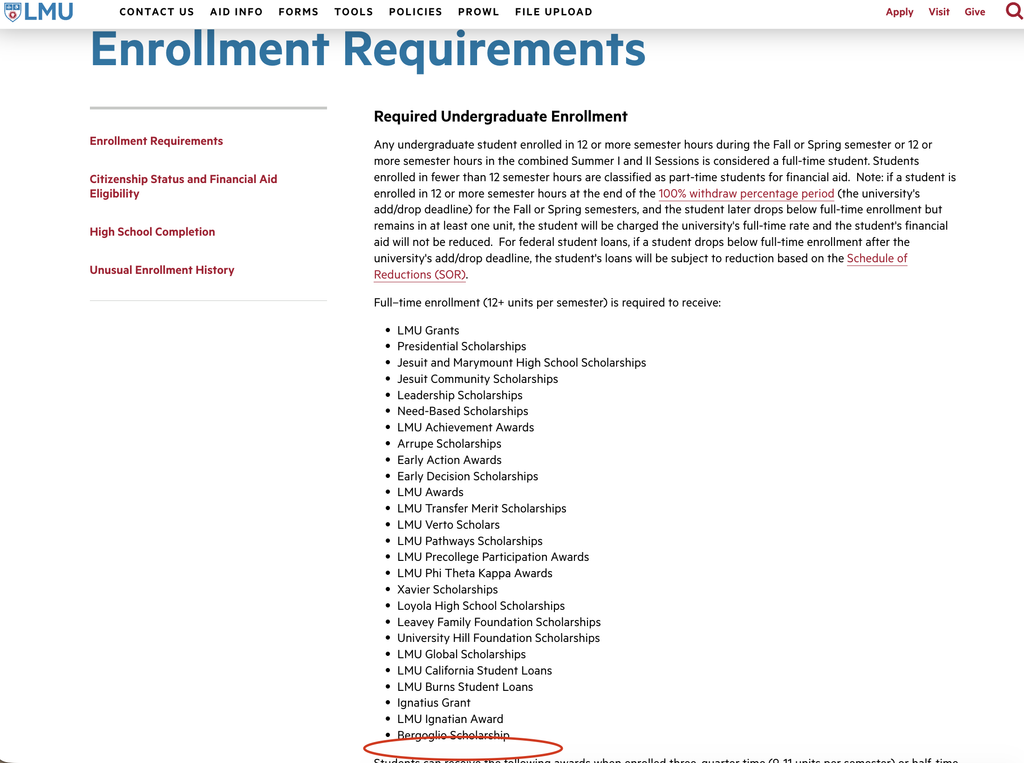
LMU Financial Aid policies. Jun. 10, 2026 (left) and Oct. 16, 2026 (right).
The documentary ‘Unmasking the Tylenol Killer’ can be watched on Roku.

