


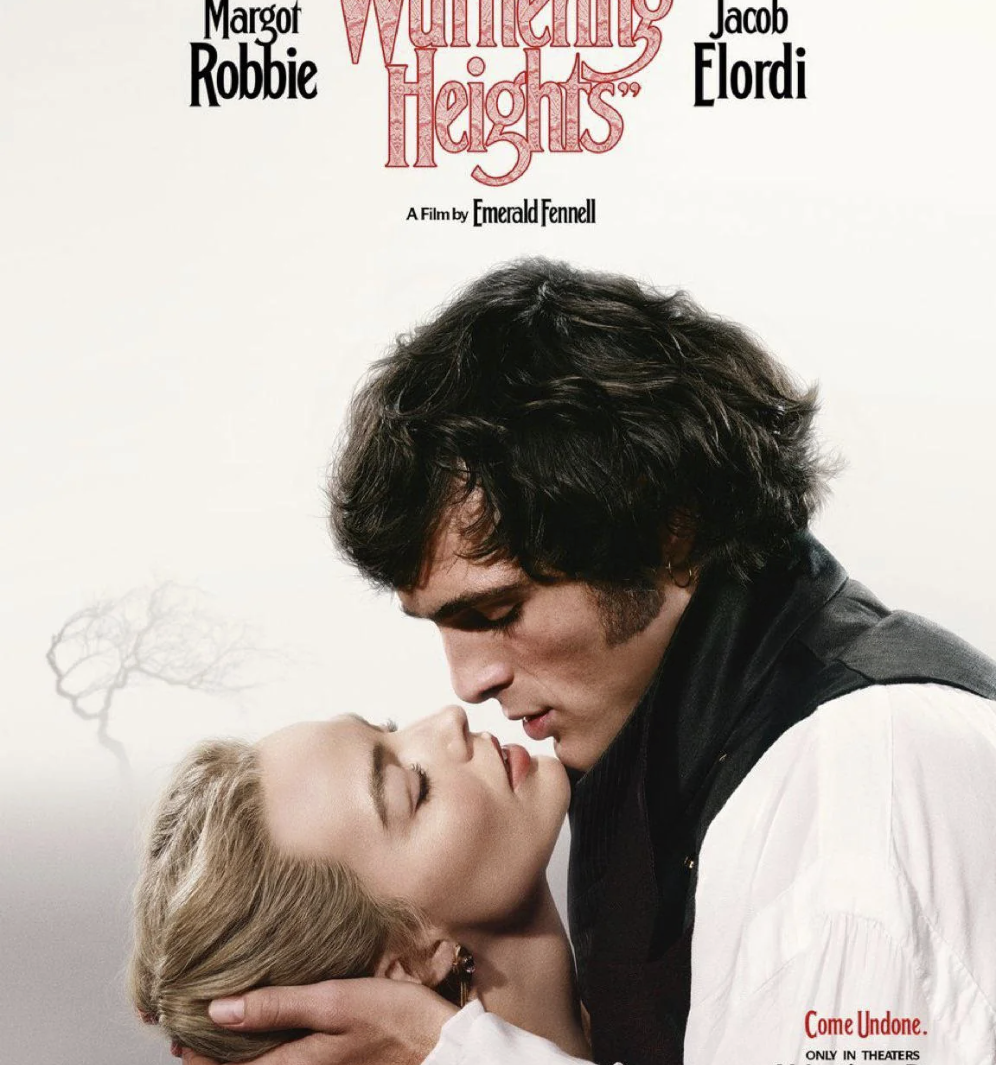
Since its announcement two years ago, ‘Wuthering Heights’ (2026) has been surrounded by controversy. From the casting announcement, to the director, to its Valentine’s Day release date, everything about this film has sparked discourse online. This is commonplace for adaptations of beloved source material as fans want to protect the work that they love. I walked into ‘Wuthering Heights’ this weekend to see if the slander I’ve been hearing about the film is warranted or if it’s just another case of internet hysteria.
I’ve never read Emily Bronte’s beloved novel. However, I do know that Wuthering Heights is a story about class dynamics and how they shape the people we become. There is a romance between the two lead characters Cathy and Heathcliff, but it is not the main focus of the novel. Instead, the novel focuses on how their falling out leads Heathcliff to take revenge on Cathy, and subsequently everyone in her life, for marrying another man.
Emerald Fennell has stated that her film is based on her experience first reading the novel as a teenager, which has sparked great criticism from fans of the book. Perhaps the most controversial decision Fennell made was casting Jacob Elordi as Heathcliff. In the novel, Heathcliff is described as having dark skin and is widely regarded by scholars to be a person of color. Fennell defends her decision to cast Elordi by explaining that he looked exactly like the illustration of Heathcliff from the cover of the book when she first read it. Heathcliff’s status as a person of color further complicates his relationship with Cathy. The casting of Elordi removes a layer of nuance that helps to explain why Heathcliff is the cruel, vengeful man that he is.
Fennell’s adaptation is defined by the stripping of all the nuance that leads the characters to do what they do. As a result, the film sacrifices the novel’s central theme in order to make Cathy (Margot Robbie) and Heathcliff’s relationship into the “greatest love story of all time,” a tagline used in the film’s marketing. However, I enjoyed how the increased role of Cathy and Heathcliff’s romance gives Fennell the opportunity to play around with classic melodramatic tropes. The key to a good melodrama is to the internal emotional journey of a character external through the use of film form. Fennell’s use of music and color physically represent Cathy and Heathcliff’s inner turmoil throughout the film.
Music is one of the most important elements of melodrama, as it cues the audience to react to particularly emotional moments. Tracks from Charli XCX’s album made for the film explain Cathy’s internal dilemmas. “Chains of Love” plays during the montage of Cathy’s life with the Lintons and in her marriage to Mr. Linton (Shazad Latif). XCX sings, “the chains of love are cruel, I shouldn’t feel like a prisoner,” over a series image portraying Cathy’s seemingly perfect. The music cues the audience into Cathy’s emotional state.
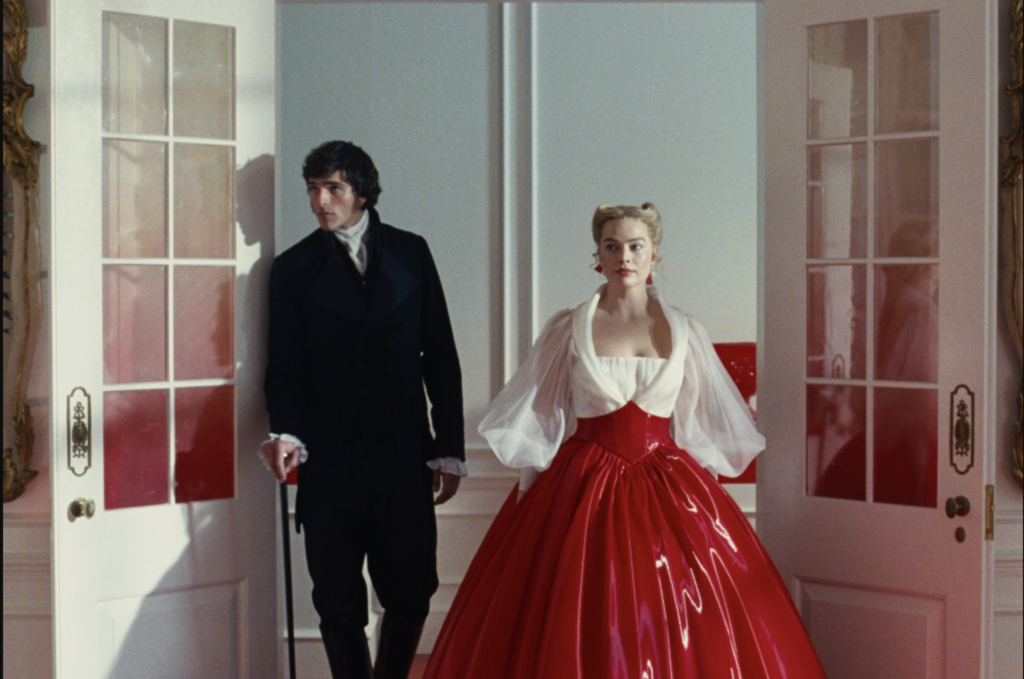
The color red is featured prominently in Cathy’s costuming, and throughout set design during moments of revelation in Cathy and Heathcliff’s relationship. Cathy is often seen wearing red, as both a child and adult living at Wuthering Heights. The color symbolizes passion and love, but also anger, physically representing Cathy’s complex desire for Heathcliff. After she marries Linton, Cathy’s red is replaced with white. Cathy is drained of color as she is unsatisfied in her marriage and life with Linton. When Heathlcliff returns, red slowly returns to Cathy’s wardrobe as her passion returns.

Films that are adapted from source material do not have to follow a canon to a T in order to be good. Interpretations should be allowed to take creative liberties with the original stories, and it’s not necessarily bad to adapt source material to better serve the medium of cinema. The real issue with ‘Wuthering Heights’ is how the changes flatten the spirit of the novel and the nuances of the story. The changes Fennell makes to the story of Wuthering Heights actively work against the novel’s major themes. What Fennell does succeed at is telling a compelling visual and emotional story that can be attributed to its use of a melodramatic mode of story telling. The film’s use of melodrama does not make ‘Wuthering Heights’ worthy of a watch, as the essence of Emily Bronte’s novel is completely lost.
