


As a second-year criminal justice major at California State University Los Angeles (CSULA), Gena Rodriguez is at a crossroads as the university grants she depended on were terminated by the Trump Administration. She’s applying for scholarship opportunities through her job at taco bell, hoping to fill the gap.
As a high school student, Rodriguez was torn between California State Polytechnic University, Pomona (CPP) and CSULA, but her mind was made up after she visited CSULA’s campus. “It was the first time I had been surrounded by so many Hispanic people who had such a strong desire to learn,” said Rodriguez. “It felt like home.”
An Afro-Latina from the lower-middle class, Rodriguez plans to become a lawyer. Rodriguez valued the affordability of CSULA during her first year. Come the second year, Rodriguez has lost two middle-class scholarships due to the university’s recent budget cuts.
“We [CSULA students] work really hard on our grades here… for the chance of getting more of a scholarship,” Rodriguez expressed. “Now it feels like they’re undermining our achievements because no matter what we do, we’re not going to be able to get the aid that we need here.”
On Sept. 10, secretary of the U.S. Department of Education, Linda McMahon, announced a nationwide action that will cut federal funding for Minority-Serving Institutions (MSI) grant programs. McMahon argues that the funds discriminate against institutions that do not meet the racial quota for government benefits. The action was followed by the U.S. Department of Justice’s letter from the Solicitor General that claims the racial quotas for Hispanic-Serving Institutions (HSI) are unconstitutional and “violate the equal-protection component of the Fifth Amendment’s Due Process Clause.” This decision will end a total of $350 million in funding for HSI’s, placing California HSI’s in jeopardy– making up the most in the country and receiving over $600 million in HSI grants all together since the program’s first distribution in 1995.
To qualify as an HSI, an institution is required to meet a 25% enrollment of full-time, undergraduate students of Hispanic or Latino descent. Established in 1992, HSI’s work to make higher education more accessible, improve academic success, and better retention rates for Hispanic students.
Of the California HSI’s, CSULA is ranked as the number one best hispanic-serving institution. Its rewarding spotlight reflects the university’s mission to transform students’ lives and foster “thriving communities across greater Los Angeles” through their legacy of upward mobility. The various ways CSULA embodies and celebrates Hispanic culture, whether it be through events hosted by the Cross Cultural Center or by hiring fruit vendors to make sales on campus during the school week, creates a strong foundation for community that CSULA students value.
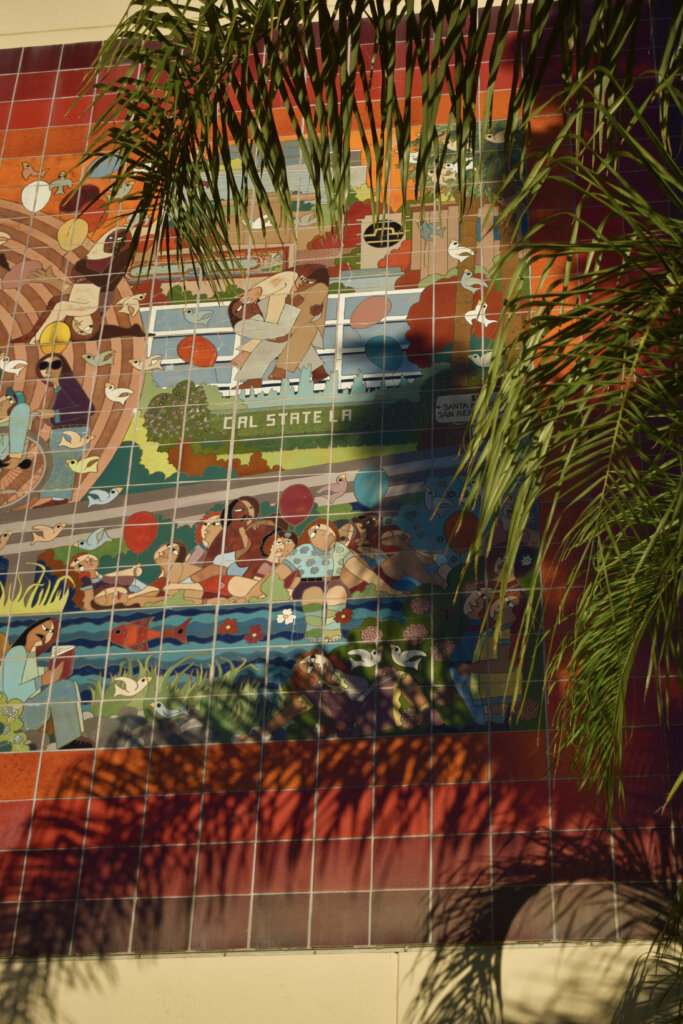
While CSULA is notorious for its high percentage of Hispanic student enrollment– leading at 75.5% – and its financial affordability, the 2025-2026 school year reveals the title’s loss of validity.
Prior to the funding cuts, CSULA has received a total of $6 million in MSI/HSI-related grants from the Department of Education over a five-year period with each year’s total accounting for $1.2 million, according to the information provided in an email from CSULA’s spokesperson Erik Hollins.
“Our most recent award in 2023 was a five-year grant of $3 million. If these federal actions hold, we will lose the last three years of funding on that grant.” Hollins stated in the email.
Due to the funding cuts, CSULA is ending different programs, such as class options for some majors such as Chicana/o and Latina/o Studies, which decreases enrollment and causes lecturers to get laid off. “Loss of grant funding will limit our ability to continue these high impact programs…” Hollins continued in the email.
With the Department of Education’s decision, CSULA’s community is heavily impacted as 58% of students depend on the financial aid that is granted through HSI programs, according to Gabriel De La Rosa, senior and Chief of Staff of CSULA’s Associated Students Incorporated (ASI).
“We were also recently ranked for ‘Best Bang For Your Buck’,” said De La Rosa.
That being said, CSULA students are most frustrated by the contradictory of the university’s acclaimed titles.
“I think if you wanna claim that title of being number one, then you should actually support it and actually do something to support our community,” said Brenda Nunez, a first-generation graduate student getting her Master’s in Political Science.
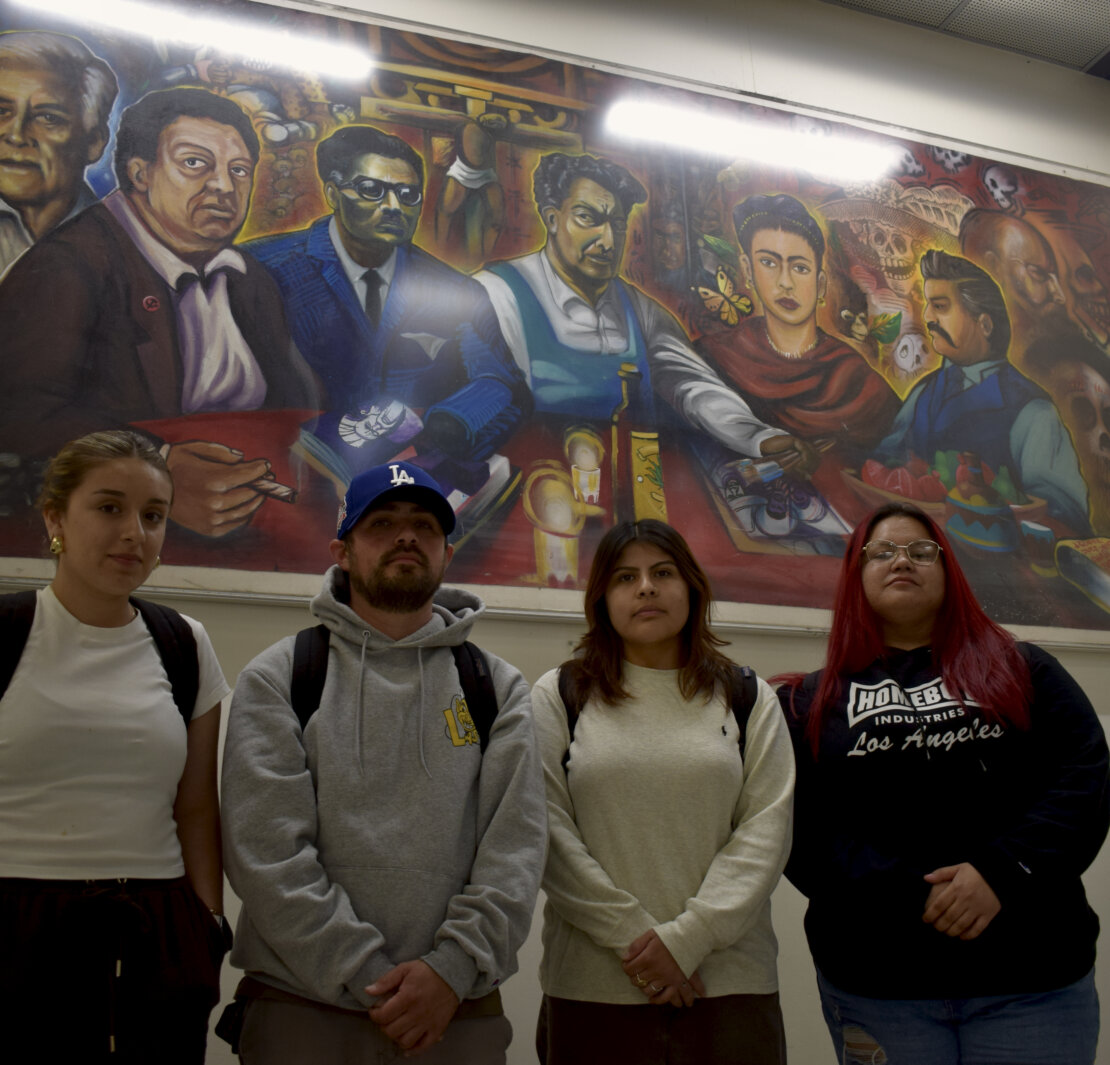
After long days of class, Nunez regularly meets with her friends Mariana Rosas, a third-year undergraduate majoring in English and Chicano/a and Latino/a studies, Paul Samaniego, a graduate student studying Chicano/a and Latino/a studies, and Jacqueline Rocha who is also getting her Master’s in Chicano/a and Latino/a studies through CSULA’s graduate program.
At a table in front of CSULA’s King Hall, the poorly conditioned building with chipped paint and creaky doors that holds all the Chicano/a and Latino/a Studies classes, a department that’s getting defunded under the budget cuts, the four exchange concerns about their future at the university.
“This year they [CSULA] didn’t offer grants or scholarships for Master’s students, I had to take out a loan,” said Rocha. “The loan amount, I believe, was $20,500 for the full year… but I only reduced it to 10 grand.”
“I have no other option but to take out a loan in order to pay for my first year [as a grad student],” she continued.
As a third-year undergrad, the Fall 2025 semester is the first time Rosas has to pay for her tuition. “I would get my reimbursements from FAFSA (Federal Student Aid) and everything, but now I gotta pay out of pocket,” she said.
Samaniego said he fears “losing the homies” that were dependent on the grants that secured their enrollment.
“They’re [classmates] one bad paycheck away from not coming to school anymore,” Samaniego said.
Due to the funding cuts, student retention has become a challenge in varied classes, “We haven’t seen them [classmates] since week three…we’ve seen them once or twice and now they’re gone,” said Samaniego. “It leaves you to wonder, ‘Damn, what happened?’… this school’s getting expensive.”
Samaniego acknowledges the privilege in his presence at CSULA as he’s granted a full ride. Yet, he had also been given trouble as financial aid fell behind in filling out his GI bill requests, “It takes three to four months to get a response and that’s why I almost got kicked out of school,” he said.
“If you’re [financial aid] fucking with my shit, I could imagine what you’re doing with them [non-veteran students]– and I’m guaranteed money,” said Samaniego. “That five grand is for sure coming, you can fill it out whenever you want, but let’s worry about the homies that are out here trying to make it happen and they’re getting dropped left and right.”
For an institution that promotes higher education despite financial disparities, the four say CSULA administrators are not working with students in good faith.
“You’re [CSULA administration] over here worried and don’t know why people aren’t enrolling, it’s because people can’t afford it and you know what communities you’re coming into.” Nunez said.
“You [CSULA administration] have to worry about what it was before– just the education and just forget about the fucking numbers,” Rocha added. “Who cares about the numbers? Do it for what we really come here for and that’s just to create a better society.”
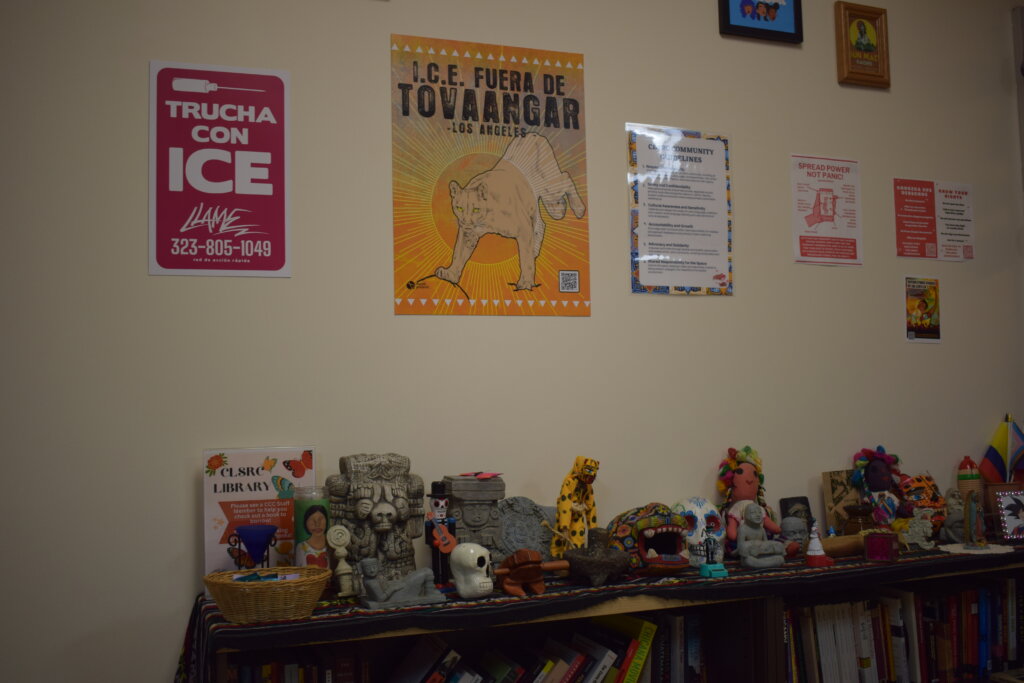
Founded in 1959, ASI serves as an outlet for students to have their concerns and ideas heard and carried out by the administration.
“ASI is that avenue that represents the entire student body to be able to be in these spaces [advocacy meetings and events] where we not only become leaders but also effectively advocate on behalf of the Cal State LA community,” said ASI President Arwa Mohamed Hammad.
As a student body structured to serve CSULA students, ASI prioritizes advocacy as their number one order. “All of us [ASI board members] are doing the program to have more transparency in funding,” said De La Rosa.
But ASI, too, faces repercussions of the funding cuts as they heavily rely on student fees – that are bundled with tuition – for funding.
“As student body members, we’re happy to serve the Hispanic community and we want to show that in any way we can,” said De La Rosa. “But with that decision, going forward, we’re not going to be able to serve them as best we can.”
ASI’s ability to function depends on student enrollment, and without a student body there’s a lack of advocacy for student rights in administrative spaces. “It all is kind of like a domino effect,” said Hammad.
Hammad finds that unity among all California State University’s (CSU) can make for a better case that will work towards the benefit of all students.
“As long as we are having a unified voice, that is the best thing we can do at these times.” Hammad began. “We need to come together not just as a CSU but as a broader, public, higher education system and go to– whether it’d be our governor or our federal government …[We] need to show that we are all in solidarity,”
Sitting under a tree on CSULA’s lawn, accompanied by the warm October sun, Rodriguez takes time away from stopping students walking from, or to, class to promote awareness over police brutality with the Families Demanding Justice organization. She reflects on her time at CSULA.
“I feel more connected to people here [at CSULA] than I ever have in my life.” Rodriguez said.
She finds that the understanding and similarities in one another’s struggles allows for a deeper connection among students.“Most of us are all middle-class or lower here, most of us are community college transfers… because we knew we couldn’t afford a Cal State, and a lot of us had to choose this Cal state over others because of the tuition costs,” expressed Rodriguez. “It helps us bond because we all see the potential in each other.”
Students remind themselves of how far they’ve come since beginning at CSULA.
“Just ending on a good note– on some positivity shit, we finna keep it pushing, we are the change.” said Samaniego under laughter.
“They ain’t ready for me with a Master’s degree,” Rocha added.
“We’re a product of our environments…we’re all from the hood,” Samaniego joked. “They fucked up and let us read a book.”
