


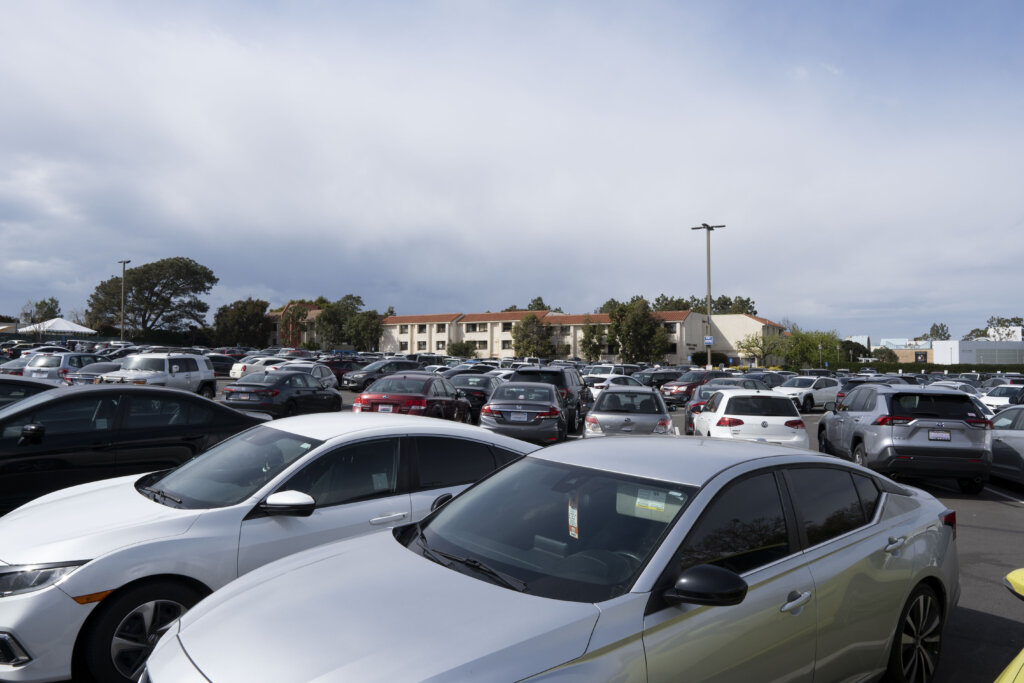
If there’s one thing Loyola Marymount University students dread more than a Monday morning before midterm week, it’s finding a parking spot on campus. Every LMU parking lot has its flaws, the most infamous one being the Hannon Lot (Lot A): where stress builds before stepping foot in the classroom.
The Hannon Lot becomes a battleground for the drivers trying to grab the last available spaces. Running late is no longer an option as on and off-campus students will begin to pile into Hannon to try and find parking for a long day of classes.
Lot A stands on the outskirts of one of the main student housing hubs, with the Tenderich, McKay and Hannon apartments only a short walk away. With the ongoing traffic from the constant flow of students coming and going through the back gates, parking availability and accessibility become a major source of stress for students.
Last year, students were anticipating the Lot A makeover. With signs posted toward the end of the school year with vague information about a renovation, there was hope for bigger and more well-organized parking spaces.
While student’s wishes for Lot A renovations may have been heard, their reasoning for wanting so was not. The unveiling of the new lot revealed a parking situation more treacherous than the last.
Post-renovation, it was clear that all that was done was a repavement, repaint, and seemingly more spaces, but that came with a price.
The Hannon Lot now has a handful of more spots than it previously did, but such spaces are much smaller to accommodate the students. With complaints about hit-and-runs and unorthodox parking already at a high in Hannon, the last thing Lot A needed were smaller parking spaces. Especially with students having to pay $459 per semester for parking, a guaranteed spot should be the bare minimum
“I have a Mini Cooper, so I’m not sure how someone could hit my small, parked car,” said junior Nicole Nemerofsky. “But it’s definitely been scratched and nicked multiple times.”
Resulting in poor parking jobs, students often get blocked in and are unable to leave for class, head home or even open their car door. Parking dilemmas are not foreign to LMU students, but with Lot A holding apartment residents and off-campus students, there tends to be more traffic and activity.
“For the benefit of everyone else, I don’t park in Hannon anymore,” said former Tenderich resident, Savannah Blaakman. “I’ve come so close to hitting cars and it’s always so crowded with people, I just think it’s best to stay away.”
Avoiding the lot may seem like an obvious solution, but the lack of parking in surrounding areas often leaves students with no other choice. With Iggy’s Cafe, The Burns Rec Center, and a majority of classrooms surrounding Hannon Lot A, attempting to find parking elsewhere becomes a larger inconvenience.

“Either I leave 30 minutes early to find convenient parking, or there needs to be a whole other lot to accommodate what’s around the Hannon area,” said sophomore Jack Urena. “As well as another lot so people’s cars can stop getting hit.”
Students have voiced the need for expansion of the lot, not just of the spaces themselves. There is constant work being done near and around Lot A. Such as random spots of construction and fenced off areas outside the Hannon apartments. However, no beneficial changes are being made and seen to the lot itself.
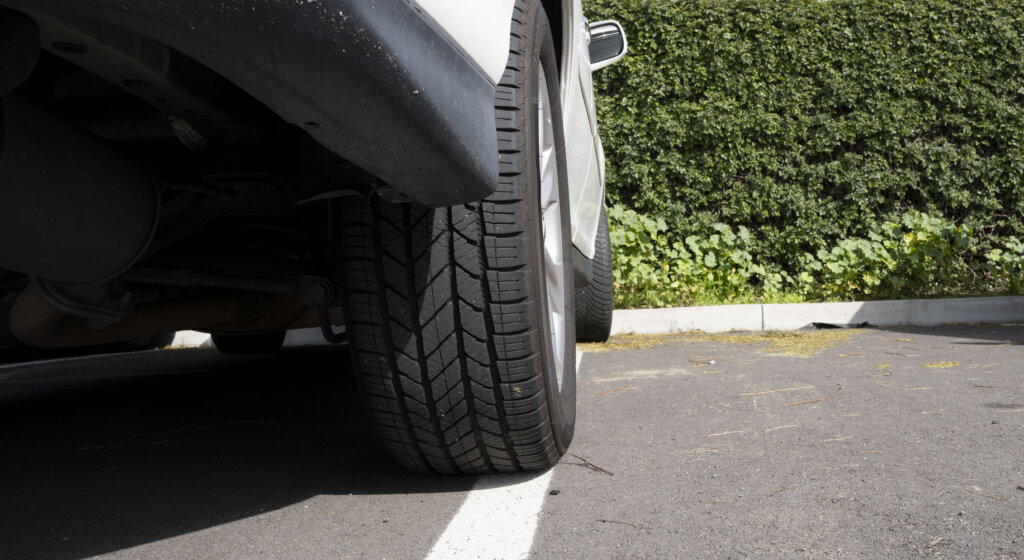
“All the construction carnage caused me to hit a screw and pop a tire when I backed out of a spot,” said senior Sophia Pizzuti. “LMU should stop whatever it is they’re doing over there and turn it into more spots for students to park.”
Students should be able to peacefully and conveniently park at school when paying the large parking fee. The fear and anxiety students may face should stem from an intimidating exam, not from the possibility of their car getting hit while attending class.
“I think we all hate the Hannon lot because no one knows how to drive and park in those small spaces,” Pizzuti continued. “There’s no proper parking plan for where students congregate the most in terms of class, and that needs to change.”
