


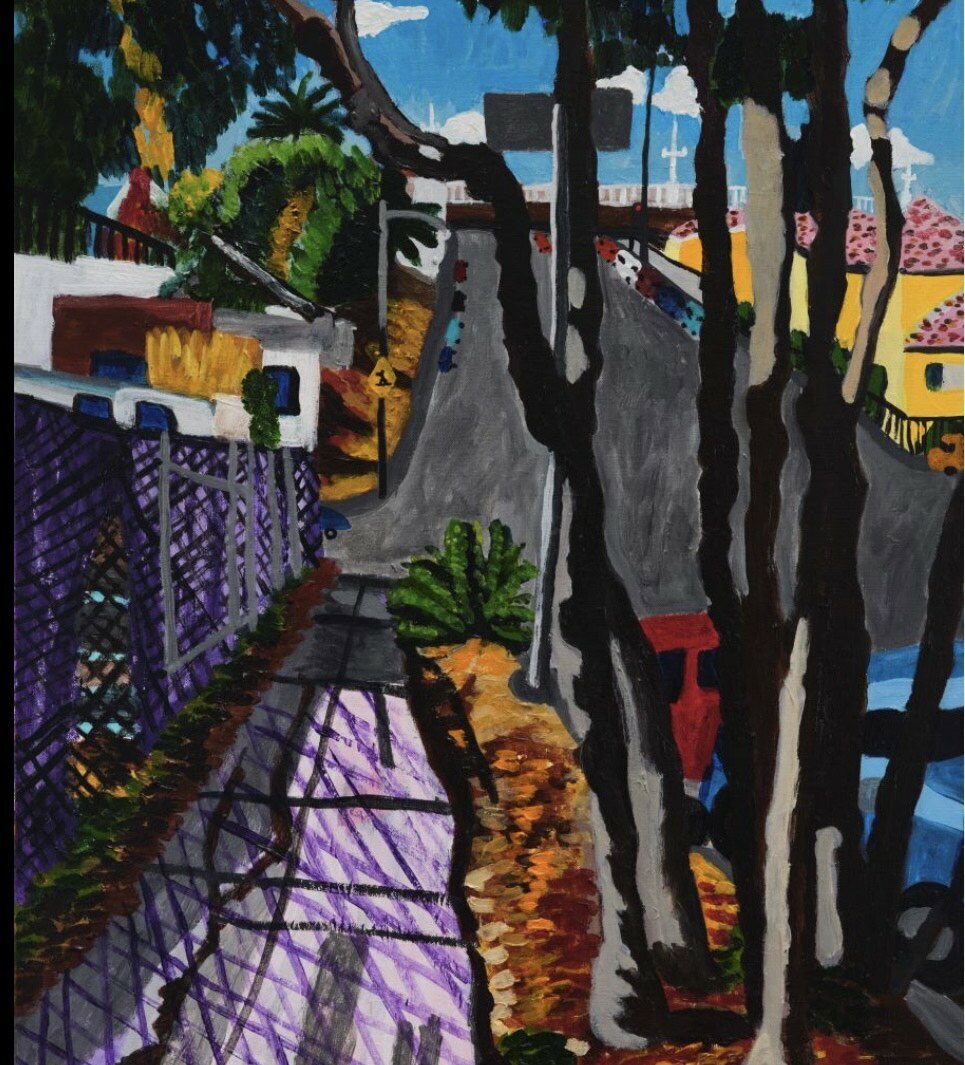
Los Angeles– As LA natives, Armando and Mary Salinas Durón noticed the stories and history of Chicanx cultural heritage weren’t being preserved or told by those within the community. From lovers on the bluff to art collectors of one of the largest collections of Chicanx art in Cali., the Durón’s embody their community in their newest art exhibit at Loyola Marymount University (LMU). by people who were a part of the community and had first hand experience of what it meant to be and grow up as Chicanx in LA.
Armando and Mary Salinas Durón met at Loyola Marymount University (LMU) through their shared passion and joy for Chicanx community unity and social justice– a joy persisted through collecting art from LA artists during the Chicanx movement from 1965-1980 that told the story of what it meant to be Chicanx in LA..
“We wanted to make sure we had a collection that looked at it from an insiders point of view, from people who grew up in the community and groups in the same communities as many of the artists grew up and would showcase from an insiders perspective,” said Armondo.
Now back at LMU on the opening day, the Durón Family welcomes all to the ‘Seeing Chicanx: The Durón Family’ art exhibit that showcases a collection of the beauty and struggle of important Chicanx movements and culture throughout various art pieces. With more than 700 pieces of art in the Laband Gallery from Sept. 25 to Dec. 6, 2025. Mary Salina’s was filled with excitement.
“We started collecting in the 80’s and never did we think fifty years later we would be here with an art collection to share with everyone. It’s a joy and pleasure to be back here at LMU,” said Salina. “We also helped start the Latin American Alumni Association so coming to share the collection is really wonderful.”
The Durón Family Collection set out to focus on collecting art that not only preserved historical narratives and Mexican-descent during the civil rights era but to also challenge and change the narratives of stereotypes of the Chicanx community. They wanted to also showcase the community strength and beauty of the Chicanx community and highlight artists who were contributing to telling that story in many different forms.
Karen Mary Davols, the curator of the Durón family collection, met the Durón family back in 2001 at the Santa Monica museum of art during the Chicano Art Collectors Anonymous exhibition. Davolos has been doing work for about 10 years. She expressed everything she thought she knew about Chicano artists. Until realizing there was much left to learn.
“This show was a chance for me to rethink, have other people rethink what they think they know of chicano art. So it’s an intentional intervention,” said Davols. “ I picked all the themes of anti porter landscape, alternative masculinities as a way to show a particular kind of intervention.”
Mat Sideo, a good friend of the Duron family, was walking around the gallery laughing and enjoying the many different works of art. “I am a student of history and to be surrounded by such historic work and also to see organized and curated as it is I am kind of enveloped by it’s really a moving experience and I am writer by trade but I’m struggling for words to put it all together it’s an incredible experience and I encourage everyone to come see it.” he said.
In a time where the Chicanx community is facing great issues of mistreatment and discrimination regarding the nation-wide mass deportations as of earlier this year, this collection is a reminder that the Chicanx community is still here and has always been a part of American history.
“Trump got it wrong, he thought he could come to town and scare people, get rid of them and round them up. He did make people disappear but what he missed is that we belong and are not going anywhere and we have a community of artists and supporters that are more than Chicano to demonstrate that.” said Davolos. “The fact that there’s private collections is really important because our mainstream museums aren’t doing this. These private collectors have the foresight to bring forth this work in a way that public museums did not and still have not.” said Davolos
Diving deeper into the many challenges that communities have faced, one artist focused on the systemic injustices that occurred during the pandemic. Connie Mendoza’s art was inspired by the Zonpatile, an Aztec skull rack that is found in Mexico city.
“When covid happened I wanted to compare the cruelty of the government against their own people the death toll was staggering each and every day. I wanted to visually demonstrate that and the systemic way services were being offered during that administration.” said Mendoza.
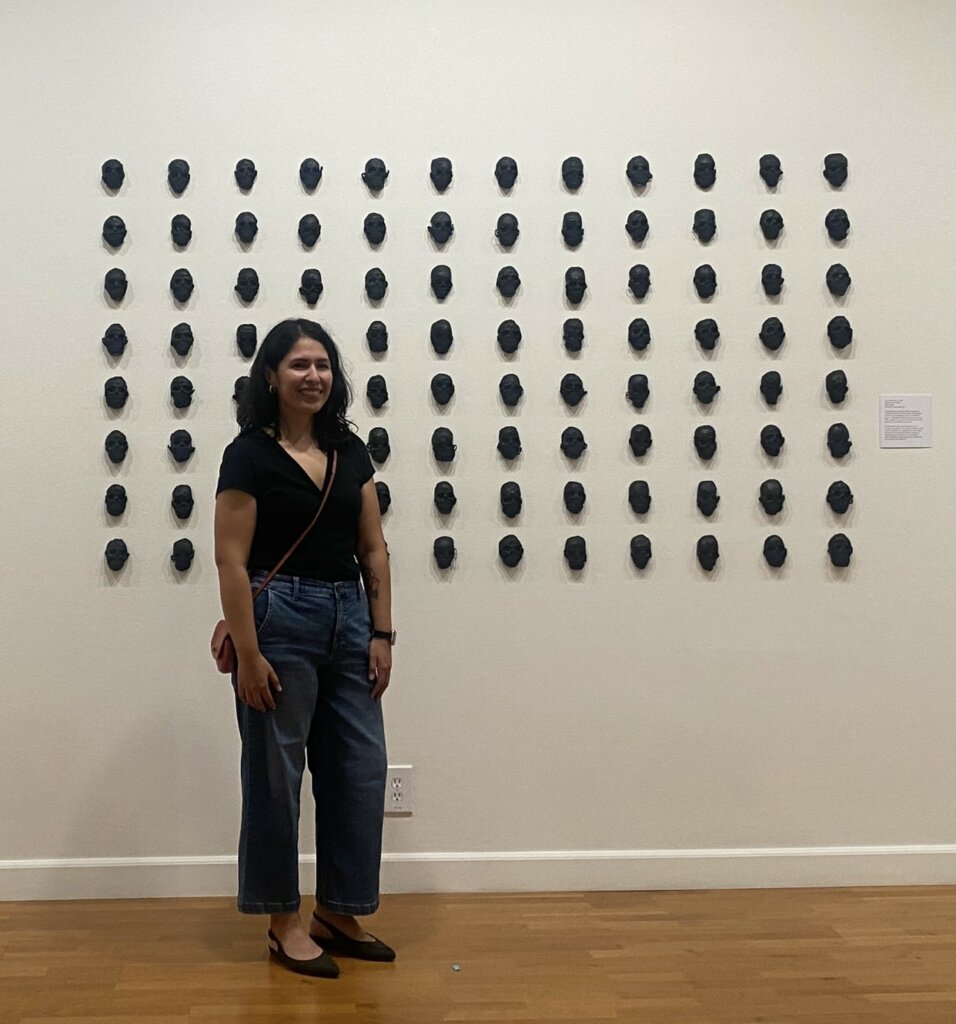
After standing and seeing her art on the wall Mendoza felt somber, her work was a memorial to the people who passed away during the pandemic. For her, death can sometimes be an abstract idea that feels far away. Being hit in the face with death affected so many people.
In a time of quick art and capturing photos, some artists like to slow dance to the beat of their own drum instead. Ramon Ramirez went looking for nothing and found everything. His painting was inspired by the LA skies, as growing up in LA, he’d been caught in the clouds of earth’s canvas since he was at least one year old.
“It’s allowing me to sort of ignore the quick snap and allowing me to really meditate and oil painting takes a long time to dry. If you don’t respect the medium it’ll turn muddy but once you respect the medium and slow dance with the painting that’s when the magic happens.” said Ramirez.
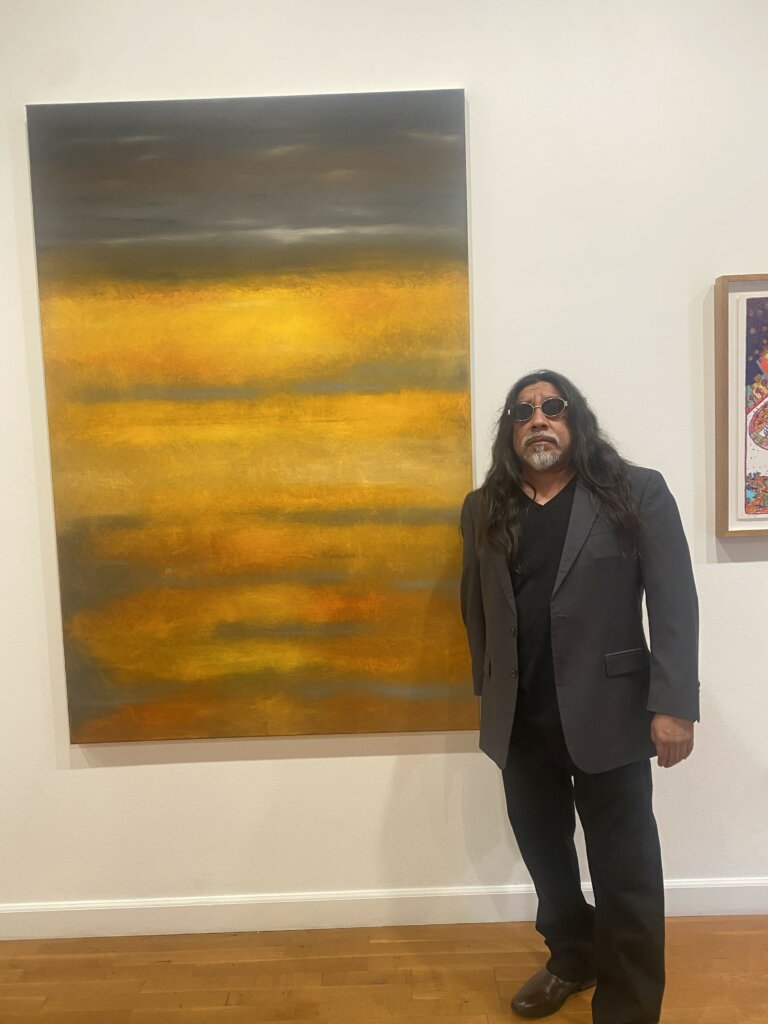
For Ramirez, he expressed that this piece was not about approaching art with an agenda, but going into it with an open mind and letting it “transform you”.
While many believe art can be interpreted in so many different ways LMU’s President Thomas Poon was walking around the gallery paused in front of an image that captured his eye.

“The viewer and purchaser can rearrange the art and it can mean something different. That piece reminded me of a photo I just saw of my brother and I when we were kids. It just illicit these feelings and reading about the history of Chicano art and different styles,” Poon said. “It speaks to diversity and the importance of being able to contribute to narratives in society.”
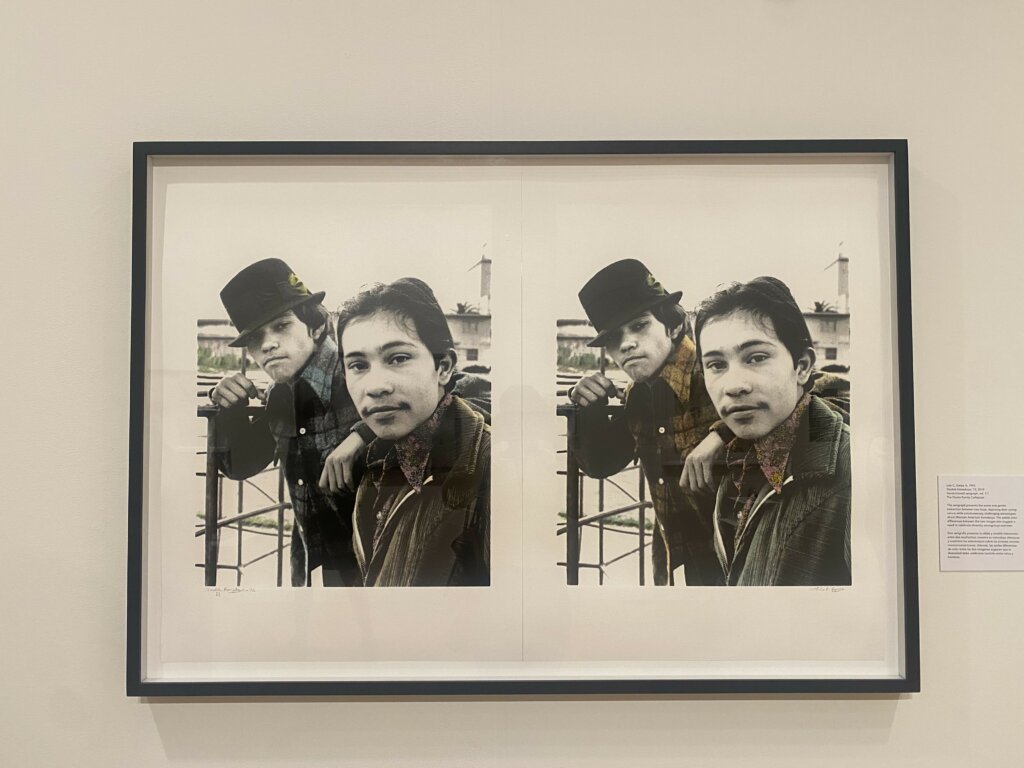
Guests in attendance had a deep appreciation for the variety of different voices dating back to older generations and new voices that were being shown.
“The visual arts in a lot of immigrant communities isn’t as celebrated as in other communities. Everybody loves the dancer, singer, actor but not so much the visual artist. So having this work here gives an array of ideas of what the human spirit is capable of and it’s not just performance.” said gallerist Noel Alumit.
One student from the University of San Diego, Lucian Cortez, expressed that he feels heard and seen within the Chicanx community that is often isolated from society.
“I appreciate that the collection has a bunch of different mediums and highlights the chicana and aztec culture and things that happened in the chicana community in the 60’s that are still happening today. It delves deep into the topic that chicana community was facing back in the 60’s and that is still currently still coming up today.” said Cortez.
Bob Balentine and Diane Balentine, a retired couple who live in the neighborhood behind LMU, frequent the Laband art gallery to view the exhibits. For them, the collection served as an educational exhibit as it enlightened them about the Chincax artist and heritage.
As for Erica Heregomy, an academic curator, The Durón family collection highlights what it means to be Chicano throughout time and space for many individuals.
“In the middle of this political climate we need to be mindful about brown spaces and the joy that we all feel when we’re together and this collection does a really good job at doing that.”
