


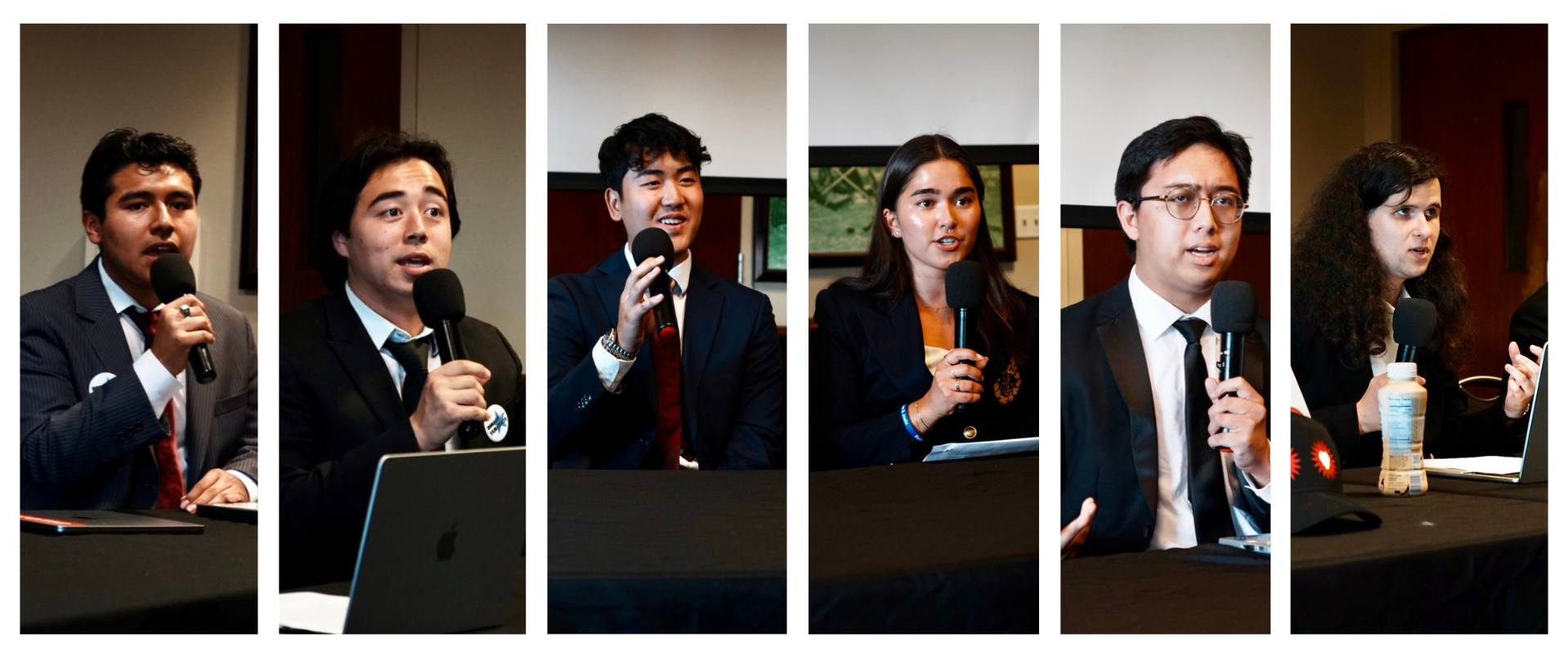
LOS ANGELES – On March 19, a debate for the 2026 presidential and vice presidential candidates was held at The Hill by the Associated Students of Loyola Marymount University (ASLMU). Three presidential candidates competed for student votes at the event, which took place from 5 to 7 p.m., in advance of the next election.
At the discussion, which drew roughly 20 students, candidates responded to inquiries about their platforms, student issues, and ASLMU’s future. The election results will be announced at 6 p.m. on March 26. Voting for the election starts on March 24 and ends at 5 p.m. on March 26. Students can vote on the Leo.lmu.edu website.
The three presidential contenders were Lucas Rizal Pangilinan, whose running mate is Katie Chatow; Andrew Presa, who is running with Josie Kranick; and Isaac Donado, who is running with Luke Yamashita, the vice presidential candidate.
The debate’s guidelines were introduced by ASLMU Chair Alexis Jasminn. Each ticket had two minutes to respond to inquiries; when that time was out, a bell would sound. Additionally, candidates had a one-minute window for each of their rebuttals.Donado was the first to speak in the debate, followed by Presa and Pangilinan. It started with the candidates introducing themselves and outlining their reasons for running for office.
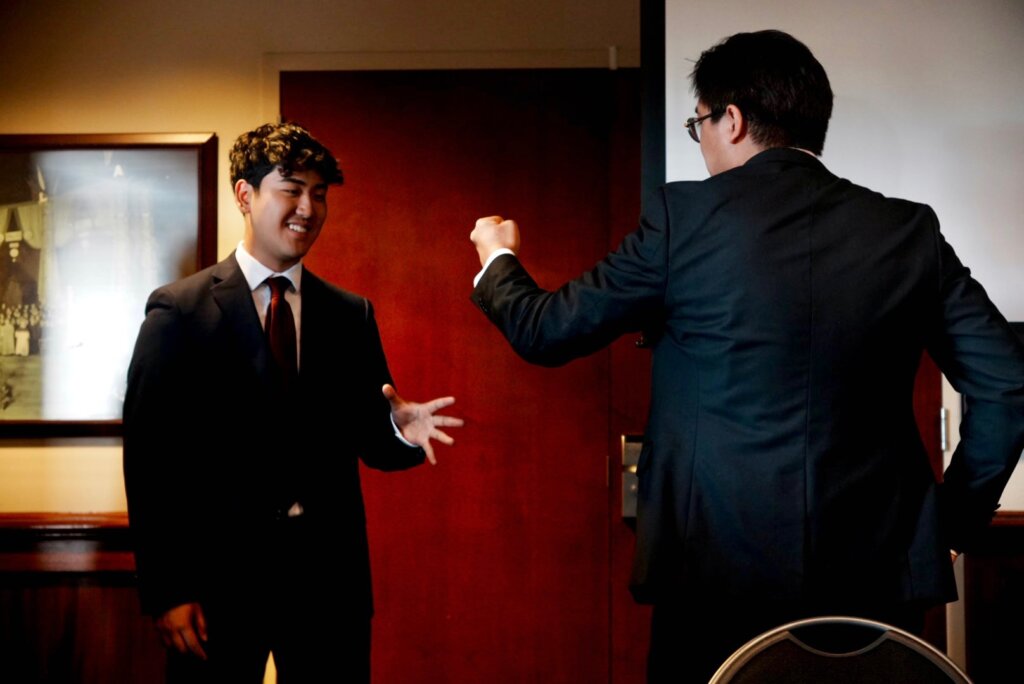
Donado emphasized activism while describing his background as a first-generation student and citizen of the United States. “I believe in vocalizing concerns and issues that are on campus and making sure they are put into action,” said the political science-[insert other major] double major.
His running mate, Yamashita, reiterated a focus on representation and community. “I think we have some of the most unique and incredible people at this school, and they deserve someone who is going to serve and represent them,” he said.
Presa, a finance major, stated that the main goal of his campaign is to assist students in putting their ideas into practice. He clarified that a lot of kids desire to make a difference but don’t know how to achieve it. Kranick, Presa’s running mate and a junior marketing major, stated that she wants to use ASLMU to foster community and unite individuals.
Political science major Pangilinan stated that his primary objective is to increase ASLMU’s accessibility for students who might not fully comprehend how the institution functions. Chatow, a marketing analysis major and his vice presidential candidate, claimed that daily struggles in college inspired her to run.
“We are not just listening but following through making sure these problems are solved,” she said.
One question exclusively for vice presidential candidates inquired about their reasons for selecting their presidential partners, as well as their skills.
Kranick clarified that Presa was her pledge educator in the business fraternity Delta Sigma Pi. She claimed that her decision to run alongside him was motivated by his leadership and dedication to enhancing student life. “He is genuinely invested in improving the student experience,” she said.
Kranick also emphasized Presa’s efforts in starting the nonprofit organization Leftovers for Love, which sought to assist Los Angeles’ homeless population by using surplus cash from student meal plans.
Yamashita said he met Donado through Crimson Circle, where Donado currently serves as president. “He cares so much about people… best time managed person i know,” Yamashita said, adding that Donado has strong connections across multiple campus organizations.
According to Chatow, she initially got to know Pangilinan during their first year at LMU, and their friendship gradually turned into a collaborative effort. She highlighted Pangilinan’s prior employment at ASLMU.
“We compliment each other. Lucas has institutional knowledge and experience and I have more of a problem solving analytic approach. … We want to combine our experience to make the best ASLMU table,” Chatow stated.
Candidates were then asked to describe a time when they felt disappointed by LMU and a time when they felt supported by the university, as well as how those experiences have influenced their leadership choices.
Although Chatow admitted that there is space for improvement in making sure every student feels welcomed and supported, she said she feels supported by the strong feeling of community on campus.
Yamashita highlighted the close relationships students form at LMU by sharing a personal story of how friends threw him into the campus fountain for his birthday. He did, however, think that the university should do a better job of educating students about the options that are accessible.
“LMU has a ton of resources and we know this from the amount of money we pay for tuition … Most people don’t know you can receive free bikes, direct career coaching, activities, I don’t think enough people know that and it makes me feel disappointed,” Yamashita said.
Presa talked about the chances LMU has given him, such as studying abroad in London and taking part in business visits to China and Korea. He said that these encounters influenced his belief that every student should have equal access to academic materials.
He also talked about the difficulties when trying to start a nonprofit organization that gathered money from leftover meal plans to donate to homeless shelters. The project raised about $50,000 and collaborated with Skid Row organizations before the university put an end to it because of security and financial issues.
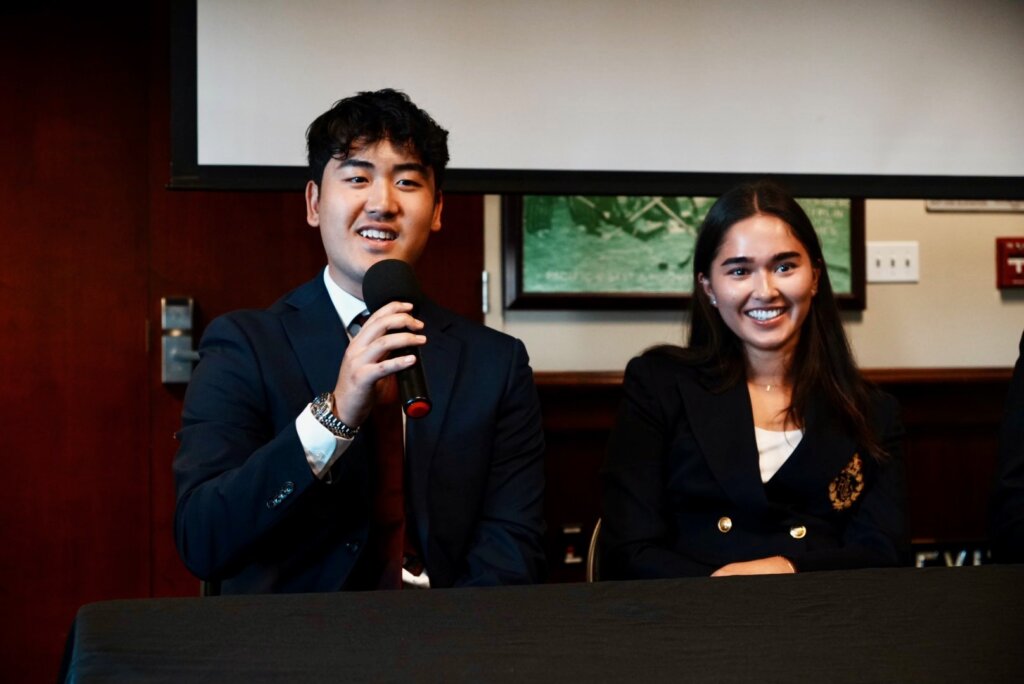
“I want to make a change and an impact and make sure LMU fosters and helps us,” Presa said.
Audience members were asked to pose their own questions after the scheduled ones. Candidates were asked by a student to explain why a voter might not support them.
Donado first urged people to evaluate candidates based on their commitment and enthusiasm rather than their popularity. “Could you answer more on why we shouldn’t vote for you?” was Presa’s reaction.
After a moment, Yamashita intervened to explain the viewpoint of their campaign. “We want to get a lot of stuff done and sometimes that can get in the way of the success of the administration… sometimes over ambition can get in the way of being really effective,” he said.
A reply was also raised by Pangilinan, who inquired about a campaign flyer that had allegedly been put on a campus trash can in violation of posting regulations. In response, Donado said he didn’t know about the placement and took it down as soon as he did.
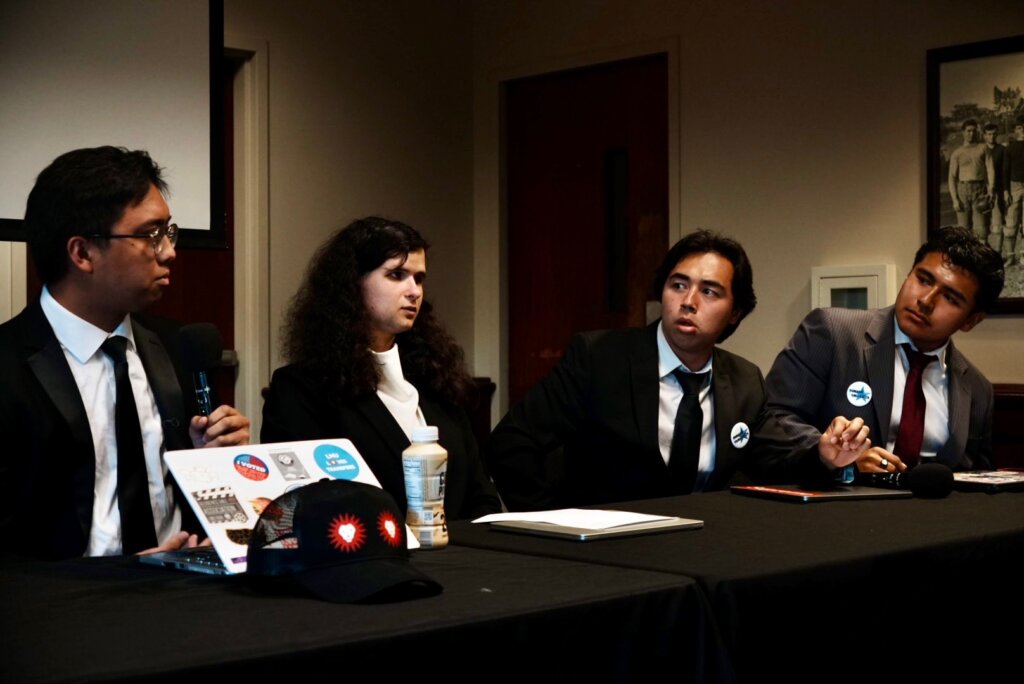
In response to the audience’s initial query, Pangilinan urged students to thoroughly investigate candidates prior to casting their ballots.
“If you are the type of person to just vote and not do your research as to what you personally want for ASLMU then I don’t want to have a vote for somebody who doesn’t take the time to consider all of us,” Pangilinan emphasized.
Despite moments of disagreement, candidates ended the debate on a shared note of purpose.
“At the end of the day all of us want to make ASLMU a better place. We want to change ASLMU in a way that can serve all students,” said Pangilinan in his last statement.
