


A small building on Western Avenue catches the eye with a vivid mural of Pope L holding a pot of yellow flowers, seemingly about to launch out of the wall and into the street. Above him reads the cryptic phrase: “Beneath this sentence is a hole.”
This is The Brick Museum, formerly LAXART, a nonprofit contemporary art space known for pushing artistic and social boundaries. From now through May 3, the museum is hosting Monuments, an exhibition presented in collaboration with the Museum of Contemporary Art (MOCA), located in Little Tokyo next to the Japanese American National Museum.
The concept for Monuments has been in development for nearly eight years, emerging from the national reckoning over Confederate monuments beginning in 2015. In the wake of tragic, racially motivated violence, such as the Mother Emanuel AME Church shooting in Charleston, SC, and the deadly 2017 “Unite the Right” rally in Charlottesville, VA, widespread protests raised urgent questions about how the country memorializes its past.
In December 2016, following a petition started by Charlottesville high school student Zyhanna Bryant to have a monument of notable confederate general Robert E. Lee taken down, the city commissioned that the monuments of Lee and confederate general and military officer Thomas “Stonewall” Jackson either be relocated or transformed in place.
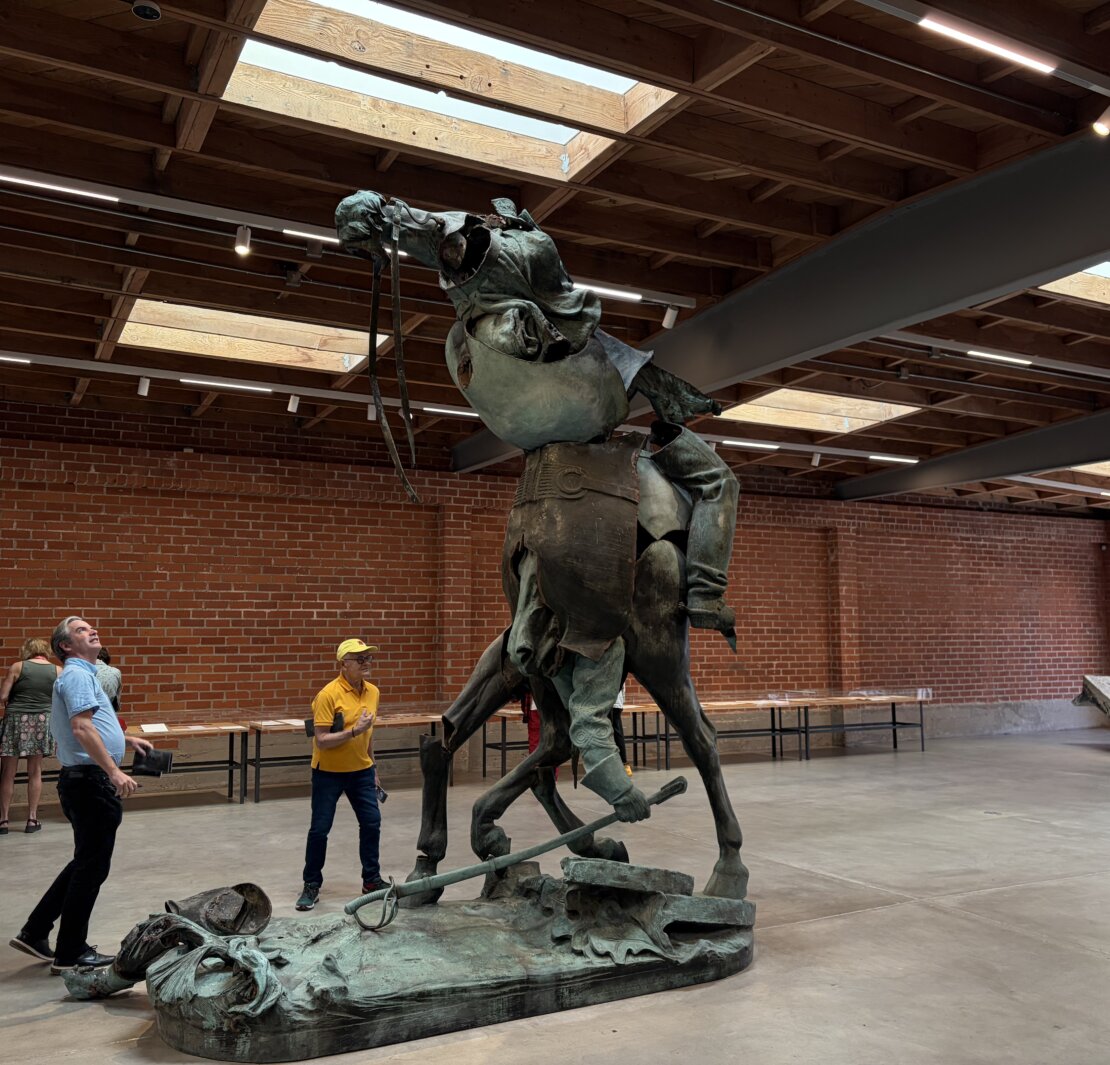
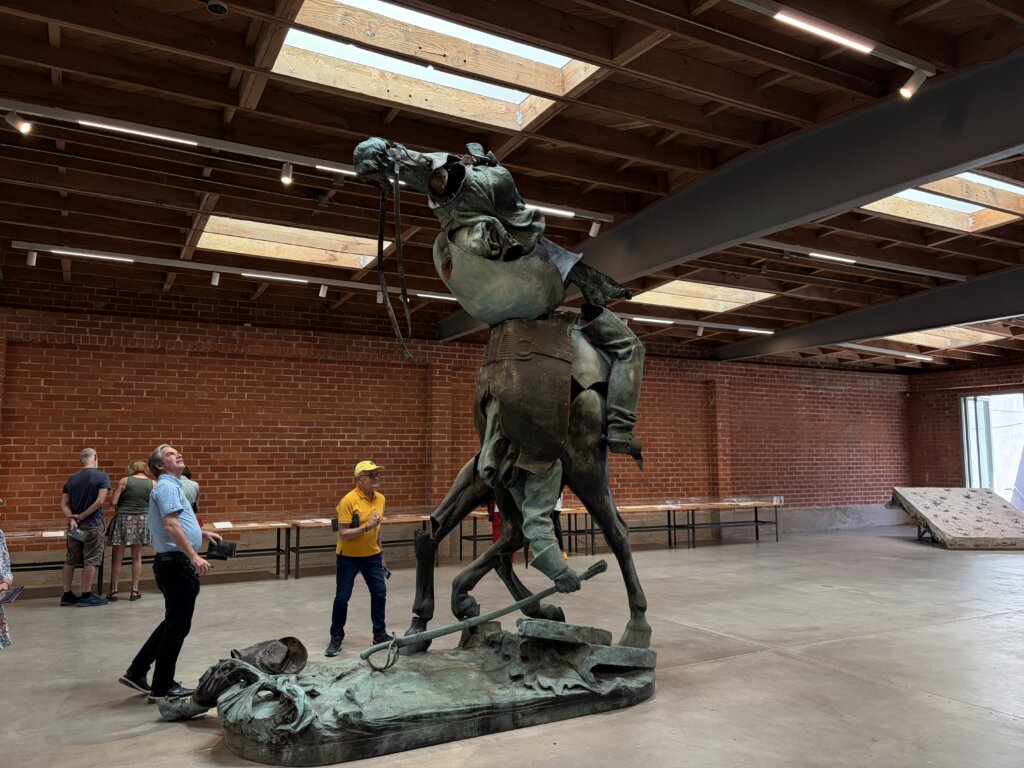
In 2021, contemporary artist Kara Walker was deeded the decommissioned statue of Stonewall Jackson. Rather than simply erasing the monument, Walker reimagined it, creating a new work titled Unmanned Drone.
Upon entering The Brick Museum, Unmanned Drone commands immediate attention. The original bronze of Jackson on his horse, Little Sorrel, has taken on a haunting, hybrid form. The horse’s legs attach to the general’s fragmented body; its snout extends from where Jackson’s head should be. The general’s severed arm grips a sword pointed downward, grounding the sculpture in both violence and transformation. This description only scratches the surface.
In person, the sculpture defies easy interpretation. Viewers move around it slowly, dissecting its twisted anatomy from all sides. Like much of Walker’s work, the piece is reliant on the viewer’s varying interpretations, but the surrounding context is crucial.
Around the gallery, tables display historical documents detailing the lives of Stonewall Jackson and his steed, Little Sorrel, along with an exploration of the “Lost Cause” myth, the narrative that framed the Confederate cause as a fight for states’ rights rather than the preservation of slavery. This ideology fueled the creation protection of Confederate monuments across the country as an attempt at obscuring their violent legacy.

This belief contributed to why statues of the confederate soldiers were initially created, and how they remained in the public eye for so long with very little pushback from the community. “The bronze equestrian Stonewall represents the prevailing ideology, the hangdog narrative of the Lost Cause.” Walker wrote within the magazine accompanying the exhibition, “The fact that his Confederate cohort – the statuary erected all over the United States- were being called out as anti-Black, fundamentally Anti-American, reprobate and wrong seems to have had the unintended consequence of making them contestable, and ultimately an undesirable destabilizing presence in city parks and public spaces.”
Walker further explained the ties between the reconfigured piece and the fate of Stonewall Jackson’s horse, Little Sorrel. The animal was sent to a farm following his owner’s death, and was used as a figure in memoriam of the confederate general and following his death, taxidermied. The horse, Walker describes, was “enslaved by the narrative of his rider,” and compares his story to that of Black people in America, “enslaved, entrusted, evoking hunger, pity, and ultimately fear in their former captors.”
The piece is meant to evoke discourse amongst its viewers, and it has been successful in that manner. Walker calls us to reflect on how America can reflect on its past while also rejecting the romanticization of figures who have been immortalized by time.
Monuments will be on view at The Brick Museum through May 3. The companion exhibition at MOCA’s Geffen Contemporary highlights further works by Kara Walker and other contemporary artists, including Kahlil Robert Irving, Bethany Collins, and Karon Davis, who each address America’s fraught relationship with memory, idolatry, and power.
