


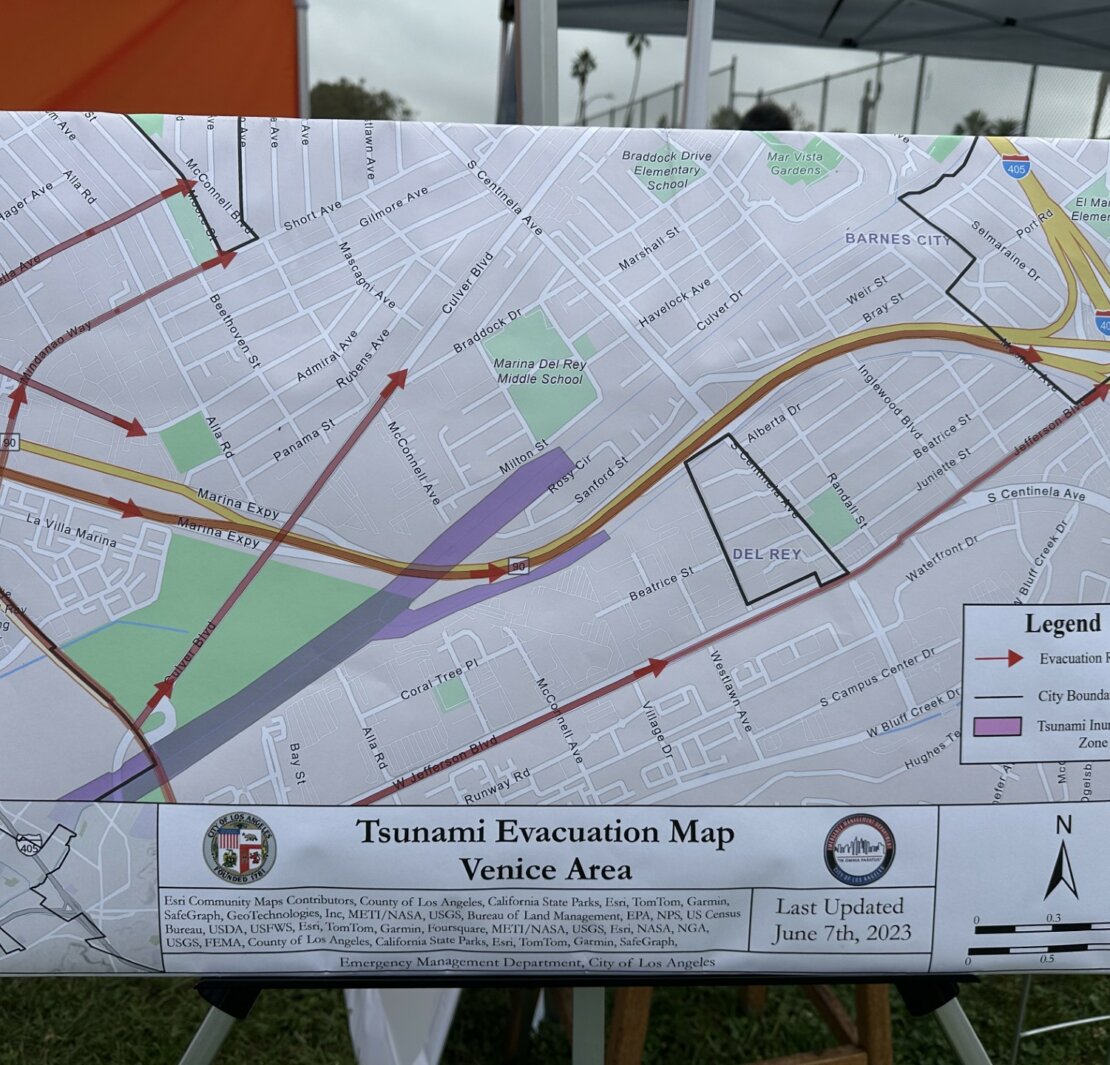
By design, Venice faces a series of major risks in a natural disaster; its narrow roads and intertwining one-way streets increase the odds of gridlock should an evacuation occur.
On a recent Saturday afternoon, the Venice Neighborhood Council hosted the second installment of its three-part tsunami preparedness series at the Oakwood Recreation Center to connect people with resources to prepare Venetians to be more resilient should a disaster occur.
“Flooding is a classic here,” said Keith Harrison, Chair of the neighborhood council’s Resiliency Committee, which works with the city to educate and prepare west siders for natural disasters and emergencies. “I tell friends, no, I do not live on the Venice Canals until it rains a lot,” he added with a laugh.
The Santa Monica fault runs through the Bay, and even though it is smaller in comparison to other California faults, the chances of it triggering an underwater landslide are possible, pushing up deep water which can turn into tsunamis. El Niño raises the risk of more intense tsunamis, as the warmer ocean temperatures caused by the phenomenon cause water molecules to expand, raising sea levels and the volume of water that could be pushed up should a below-water landslide occur.
“So where the groundwater and the sandy soils mix,” Harrison said at the community education event on Oct. 12. “When you shake them up, the foundations start to give way.” He came to advocate for the committee’s mission and connect people with resources and specialists from the California Earthquake Center and Community Emergency Response Team, a civilian volunteer group that utilizes local fire stations to train members in key disaster response skills to assist emergency responders, geared towards developing essential emergency skills among citizens.
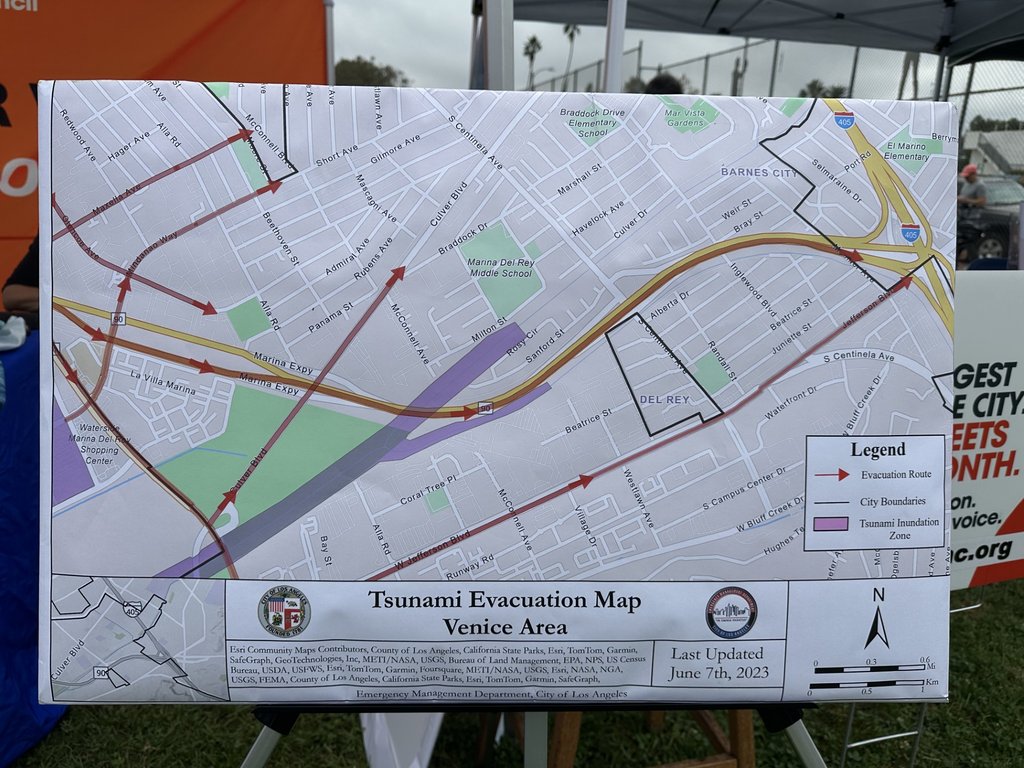
People wishing to prepare themselves are encouraged to attend CERT training courses, teaching people how to make and use go-bags that hold essential survival tools like food, water, two-way radios, first aid and documents.
The City of Los Angeles and the Venice Neighborhood Council also promoted the Ready Your LA Neighborhood program at the event. Through the program, people along the same blocks, residential buildings or apartments are guided on how to implement an evacuation plan and create tailored lists of the specific necessities and challenges that they may encounter; most prominently, ways to assist members of the community who may be differently abled, elderly, have children or have pets and ensure they are accounted for.
Even with all of these accessible resources and city support, the event struggled to draw an engaged audience. With few participants, many of the hosting organizations expressed deep concerns about the communities’ abilities to survive a crisis.
With limited community participation, Erica Moore, the Venice Neighborhood Council’s outreach chair, reiterated the whole reason behind the event. “Life is full of unexpected experiences,” Moore said. “And there’s nothing worse than feeling helpless”
Disaster preparedness is a community affair; as such, the Council continues its efforts to prepare residents with an evacuation practice planned for March. Residents are encouraged to attend the next Venice Neighborhood Council meeting Tuesday, Nov. 16 for further information, resources and opportunities to equip themselves with these crucial skills.
Find additional resources here:
Venice Neighborhood Council | Statewide California Earthquake Center | CERT-LA | You Can’t Predict…But You Can Prepare
