


Editor’s Note: This story was written in April 2025, prior to the summer’s ICE raids. It was edited in December 2025.
LOS ANGELES — It’s a typical Thursday evening in West Los Angeles — a soft pink sunset, planes flying overhead, and an aroma of smoky salsa and marinated pork that wafts down the street. Just shy of 7 p.m., the parking lot in front of the Taqueria Dos Cuales food truck is already filling up with customers. Cooks shout orders out the truck’s small window as a group of ten customers scan the menu in front of them, which includes everything from birria ramen to cheeseburgers.
Street vendors like Taqueria Dos Cuales provide an experience that can’t be matched in restaurants. Ejaaz Lawa, a loyal customer, drove from Orange County to pick up a friend at the airport. Lawa has the food truck saved in his phone and the two immediately drove over after baggage claim. When asked about their thoughts on street food, the two men immediately lit up.
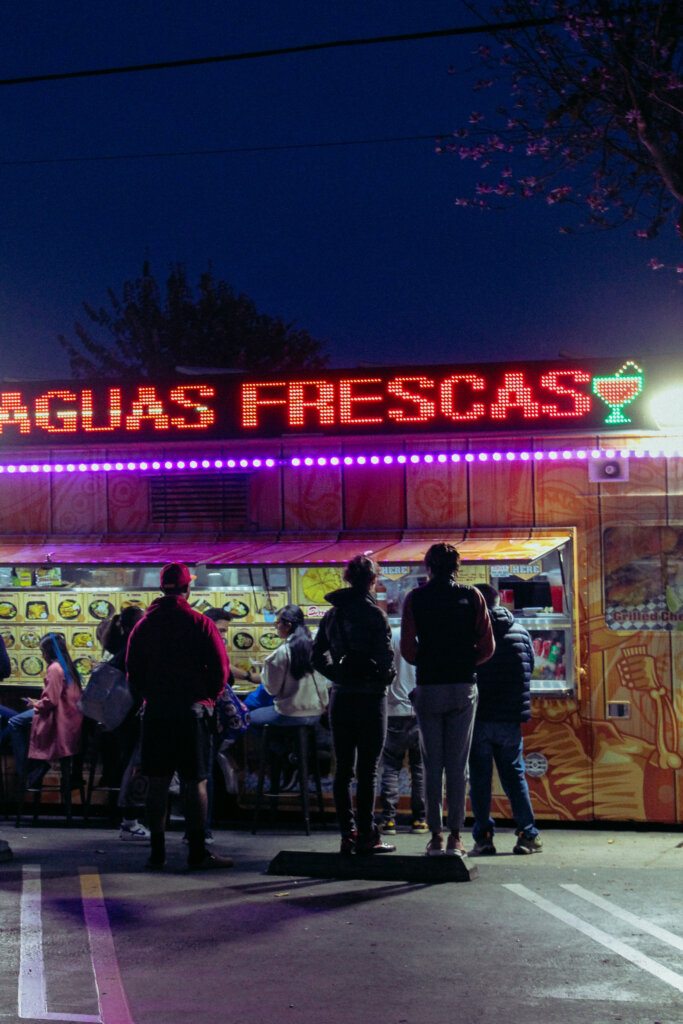
They described how communal and social the experience is, as shown through the plastic chairs and tables set up outside most vendors where customers eat together.
When asked about the quality of food, Lawa said, “My wife and I are African – I’m Nigerian, she’s Ghanaian, so we just like a lot of flavor in our food.”
The flavor from street vendors that Lawa refers to often comes from immigrant workers and cooks. 80% of vendors in L.A. County are women and the majority are people of color, immigrants, or come from low-income households.
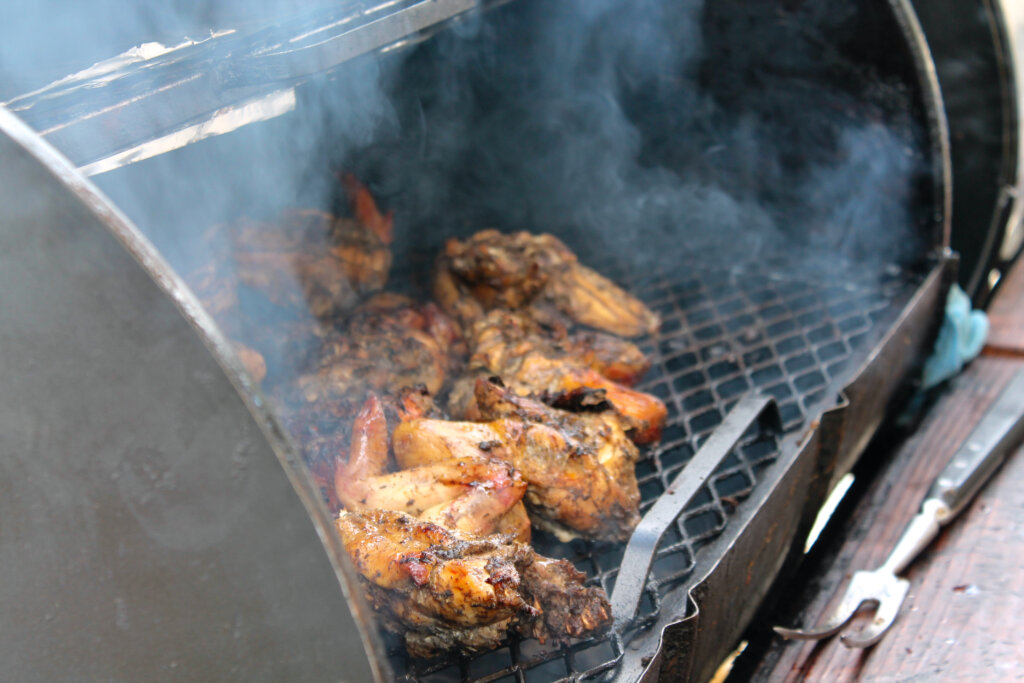
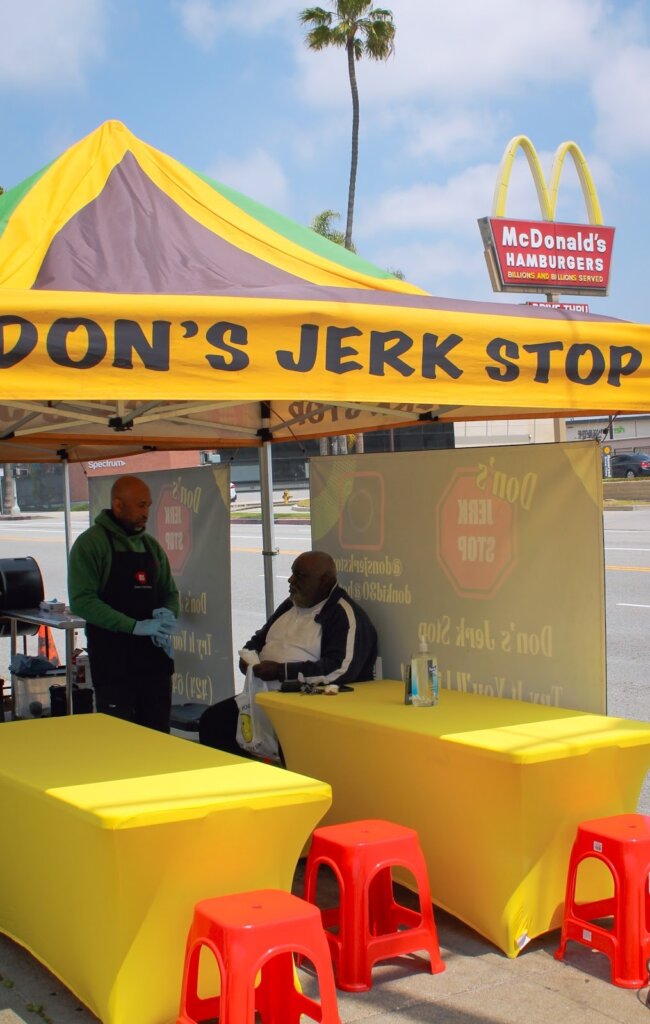
Donovan Gray is a Jamaican immigrant who owns a jerk chicken spot on South La Tijera Blvd. He comes from a family of cooks and learned how to from his aunt when he was 10 years old. Now Gray is consistently on the block—dressed in a signature sweatshirt and black beanie, he flips glistening chicken wings over the grill while chatting with customers. Smoke curls into his eyes, but he never seems to miss a beat.
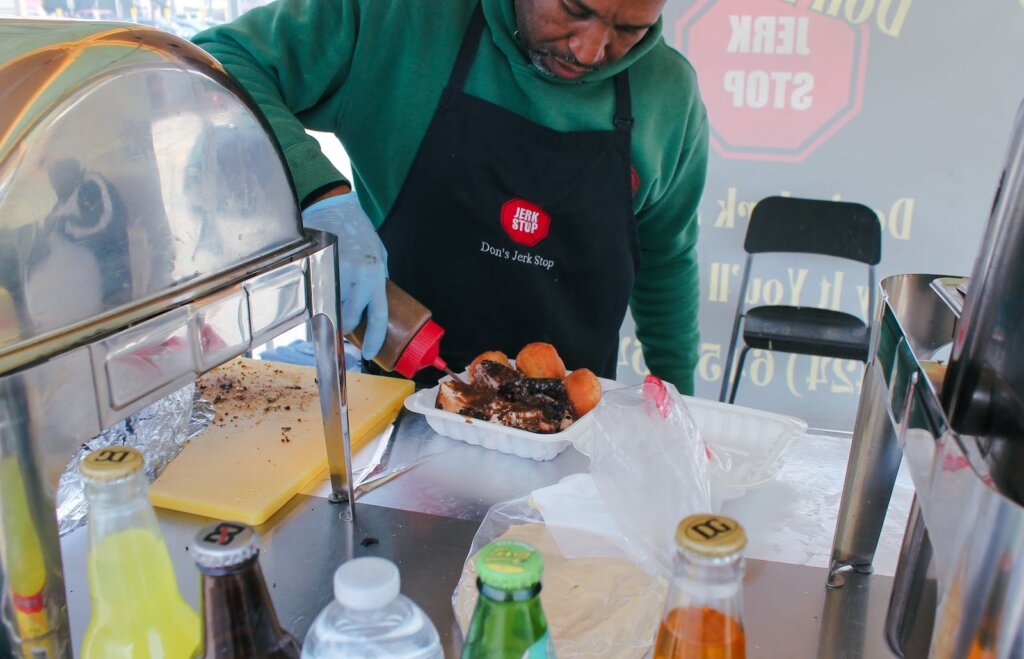
“I’m always working,” he said, reaching into the trunk of his black Mercedes for more frozen chicken. Gray has been running the tent for almost two years now, and his popularity has grown exponentially. Fridays are especially hectic, he said, when he usually sells out by 6 p.m.
“If you’re cooking the right food, you’re always going to get the customer,” he added.
A woman waiting in line mentioned how she first smelled the chicken from the Dollar Tree across the parking lot and that she’s now returned on her day off.
“I’m hooked,” the woman said, and promised Gray she’d be back next week.
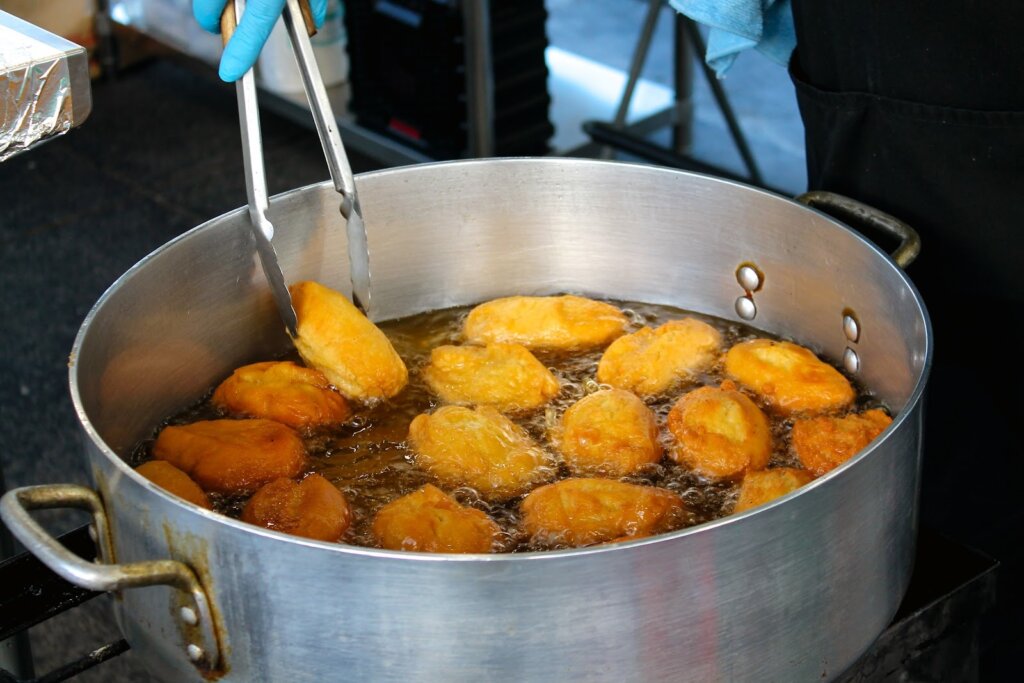
Customers will order based on what looks and smells good, even if they don’t know what it is, said Maria Martinez, who works at Tacos El Flaco in Mar Vista. She described the experience as personable, where people watch the food being made, ask questions, and request recommendations.
“As soon as they see the food, they say, ‘Oh, I want that!’” she said.
Every day, Martinez and the team come from East L.A. to set up. They’ve been driven further away because of the competition with other vendors.
“There’s taco stands on every corner there,” she said.
Each night, those at Tacos El Flaco pack all their gear up to make the lengthy commute back home, before doing the same thing the next day. Martinez said that one of the chefs had been working at the stand for five years now.
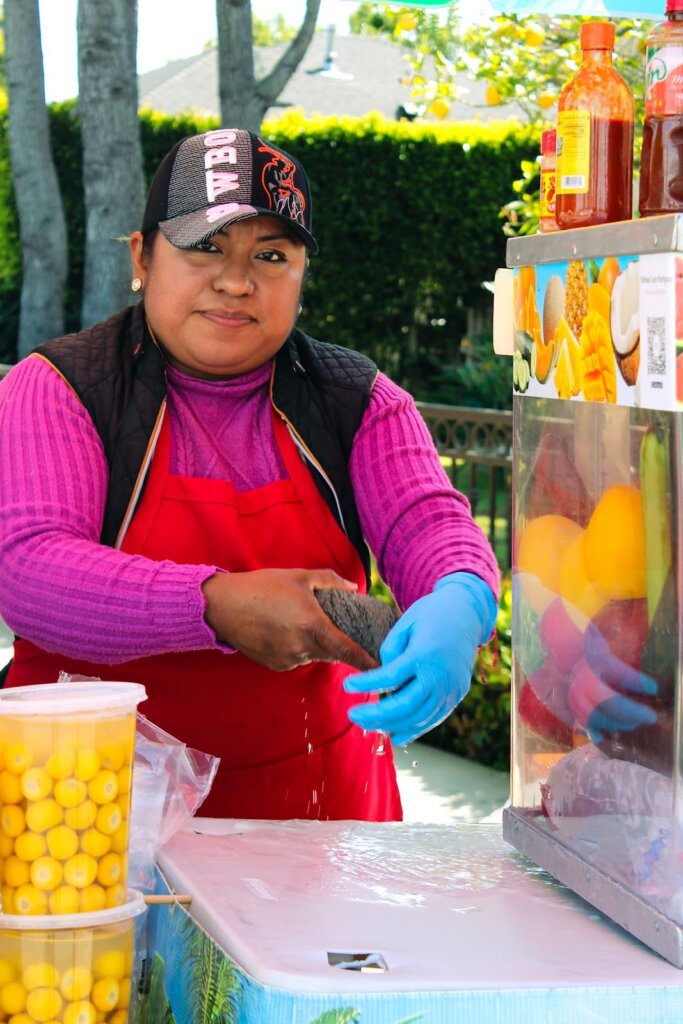
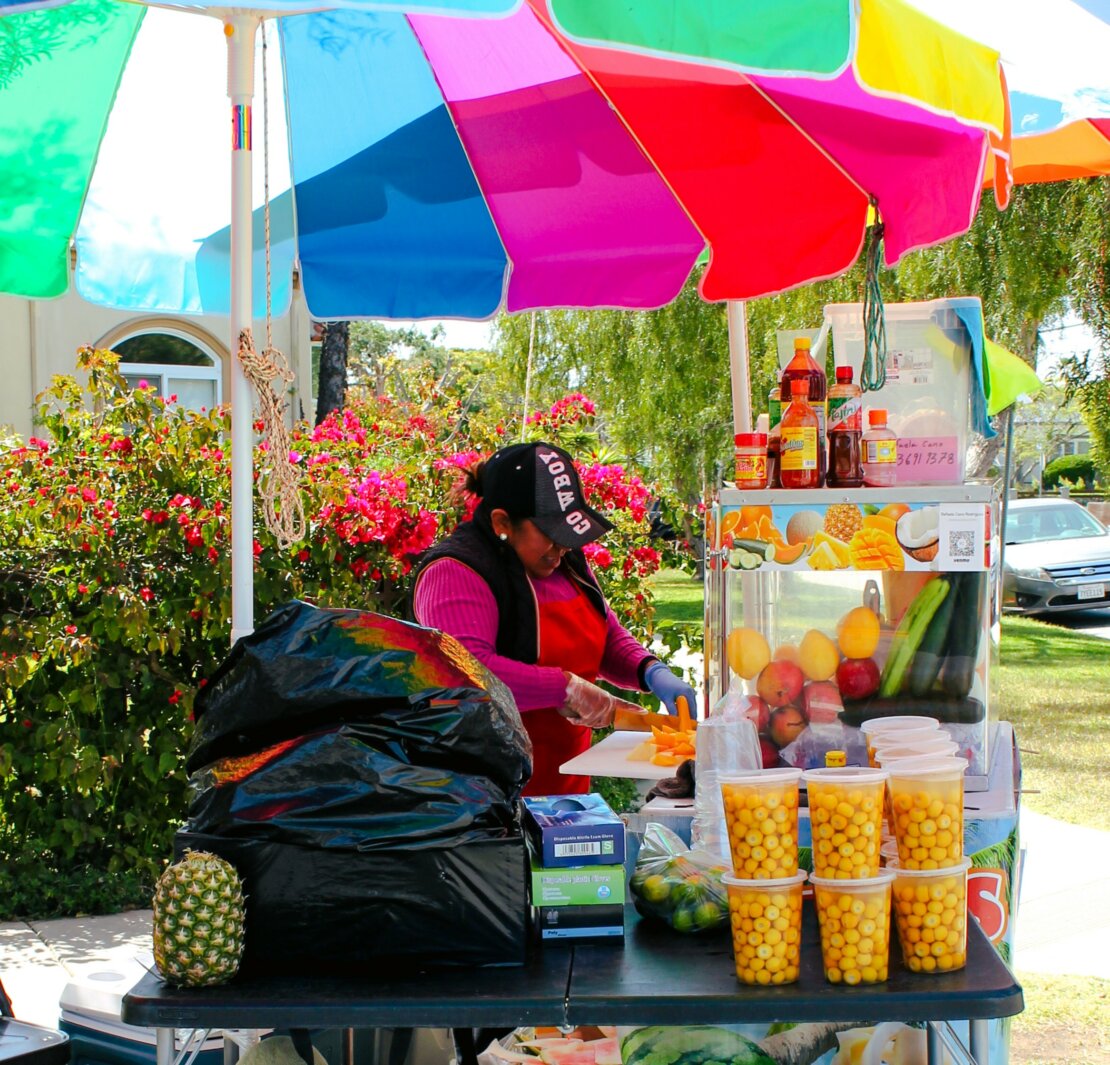
Rafaela Cano Rodriguez, who sells fruit under twin rainbow umbrellas in a Westchester neighborhood, is also very familiar with the amount of work that street vending demands. Monday through Friday, she wakes up at 5:00 a.m. to head into Central LA, where she carefully selects her produce from local markets.
“You notice when it’s not fresh,” she explained in Spanish. “So I always buy new fruit every day.”
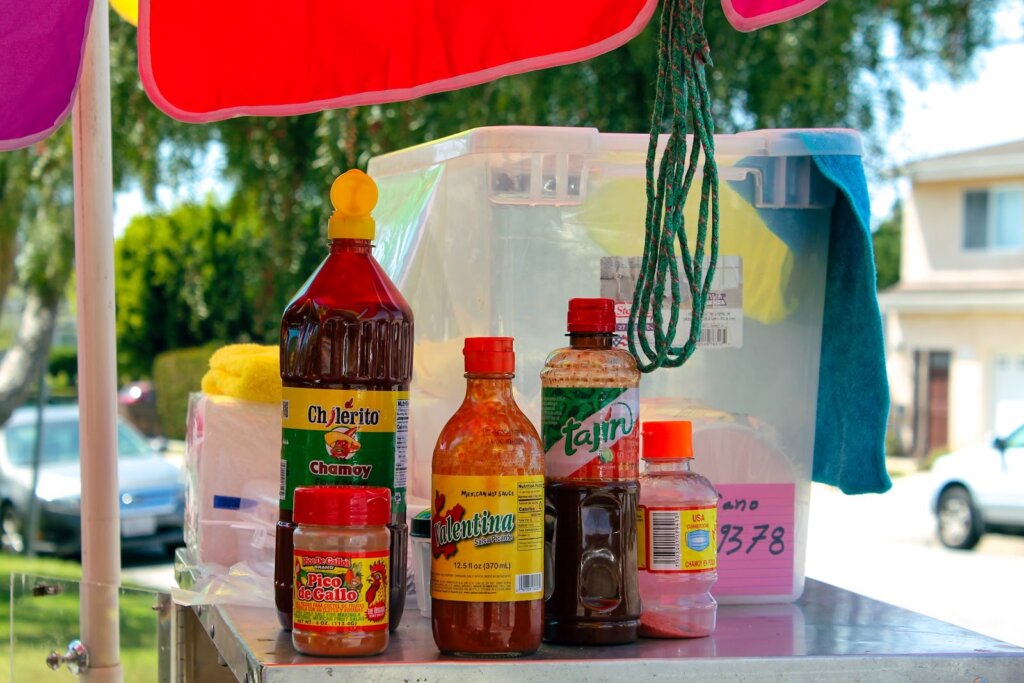
At her cart on Loyola Blvd. she sells freshly cut mango, watermelon, pineapple, cucumber and various other Central American fruits topped with Chamoy, lime, and Tajin. Rodriguez originally got into the business through her partner, who has his own cart in another part of the city.
Despite the amount of work it requires, street vending is not a lucrative career for most. A 2015 Economic Roundtable study reported that street vendors make an average $204 in revenue each week – which was not enough to cover the median rent price for a single person then. As of April 2025, fruit vending was Martinez’s main source of income, but in the past she has worked as a nanny, a housekeeper, and a street vendor at other stands. She is currently in search of additional domestic work in order to support herself.
“That’s the only way we know how to survive – by doing our own business,” Gray said. He explained that the job can be enough to make a living, but only if people get lucky and it’s done well. Food, as Gray pointed out, is a product that never goes out of demand.
In addition to financial pressures, L.A.’s food vendors also deal with unclear and unequally enforced vending laws. Many operate in a legal gray zone, lacking official permits and under constant threat of being shut down.
Vendors will be asked to clear out and in some cases watch all their equipment and food thrown into the back of a city truck or garbage bin. Rodriguez and Martinez have both seen people they know lose everything to enforcement sweeps.

“When the police come – if you don’t have the permit – they can take everything,” says Martinez.
The city’s stance has shifted in recent years, including the decriminalization of sidewalk vending in 2017, but enforcement remains inconsistent. Gray carefully selected his spot for Don’s Jerk Stop to ensure compliance with sidewalk regulations.
“You have to make sure the sidewalk is big enough so they [the city] don’t harass you,” he said.
Regardless of its complications, street food provides a sense of pride, fulfillment, and community that a lot of vendors share.
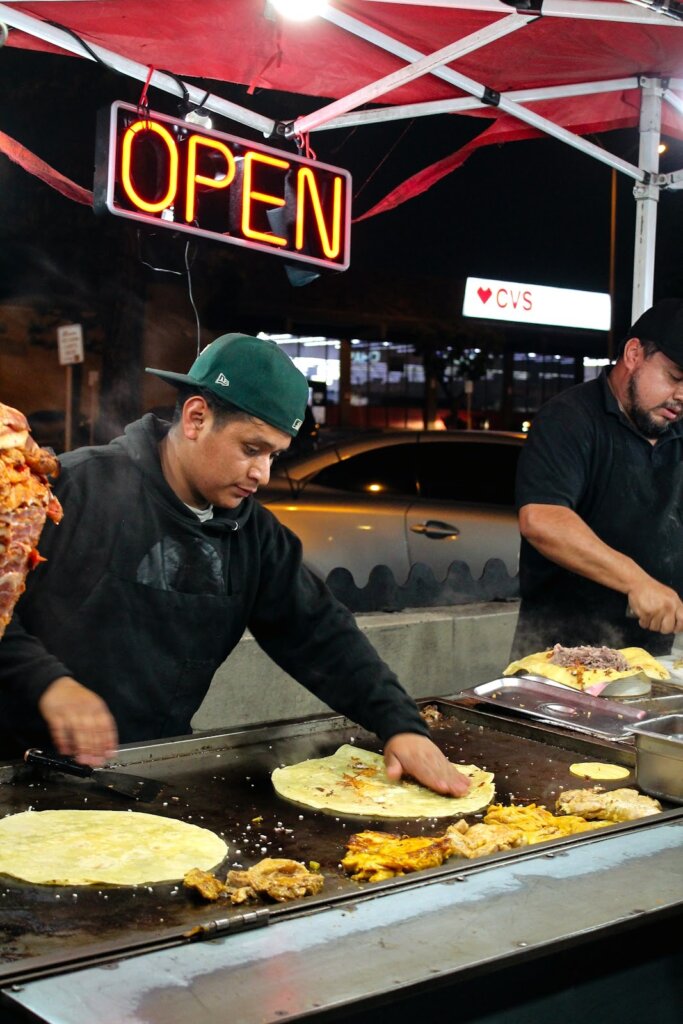
“Es muy hermoso – el trabajo,” said Rodriguez. “I don’t like to be in the house closed up,” she added.
Martinez from Tacos El Flaco previously worked in a food truck but now prefers working at a tent because she is able to socialize more with customers. Gray feels similarly, describing his love for all the people he meets through his job.
“You meet so many people … you learn so much,” he said. “You become a pastor, a counselor, a father.”
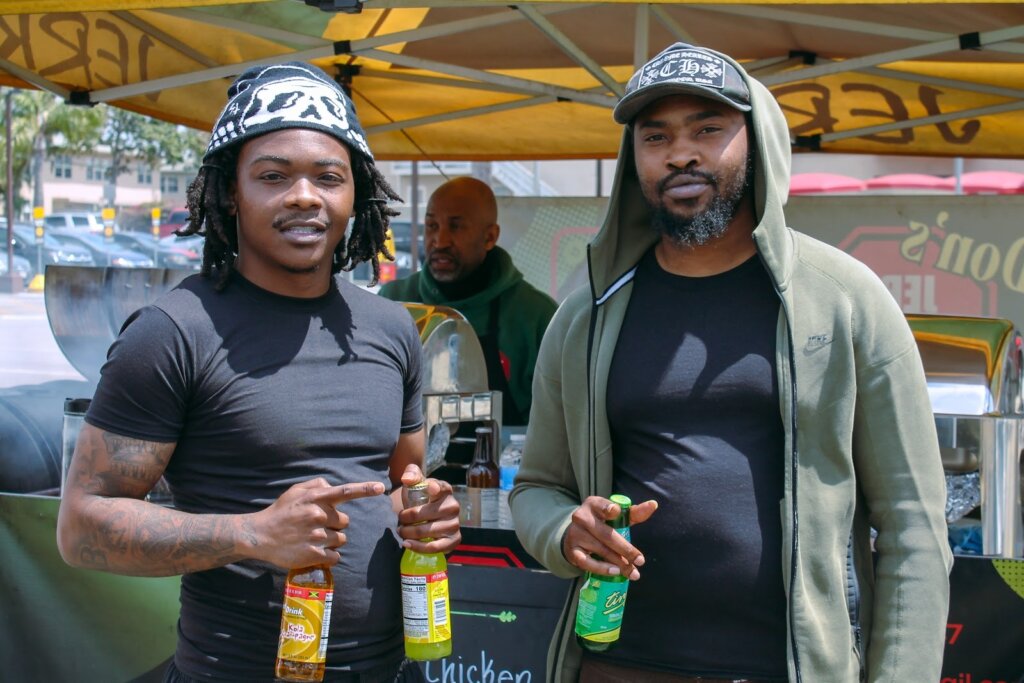
Gray said he hopes to keep cooking for “as long as God permits” him to.
“Street vending is what actually makes L.A.,” he added. With lines wrapping around the block, it’s clear Angelenos agree.
