


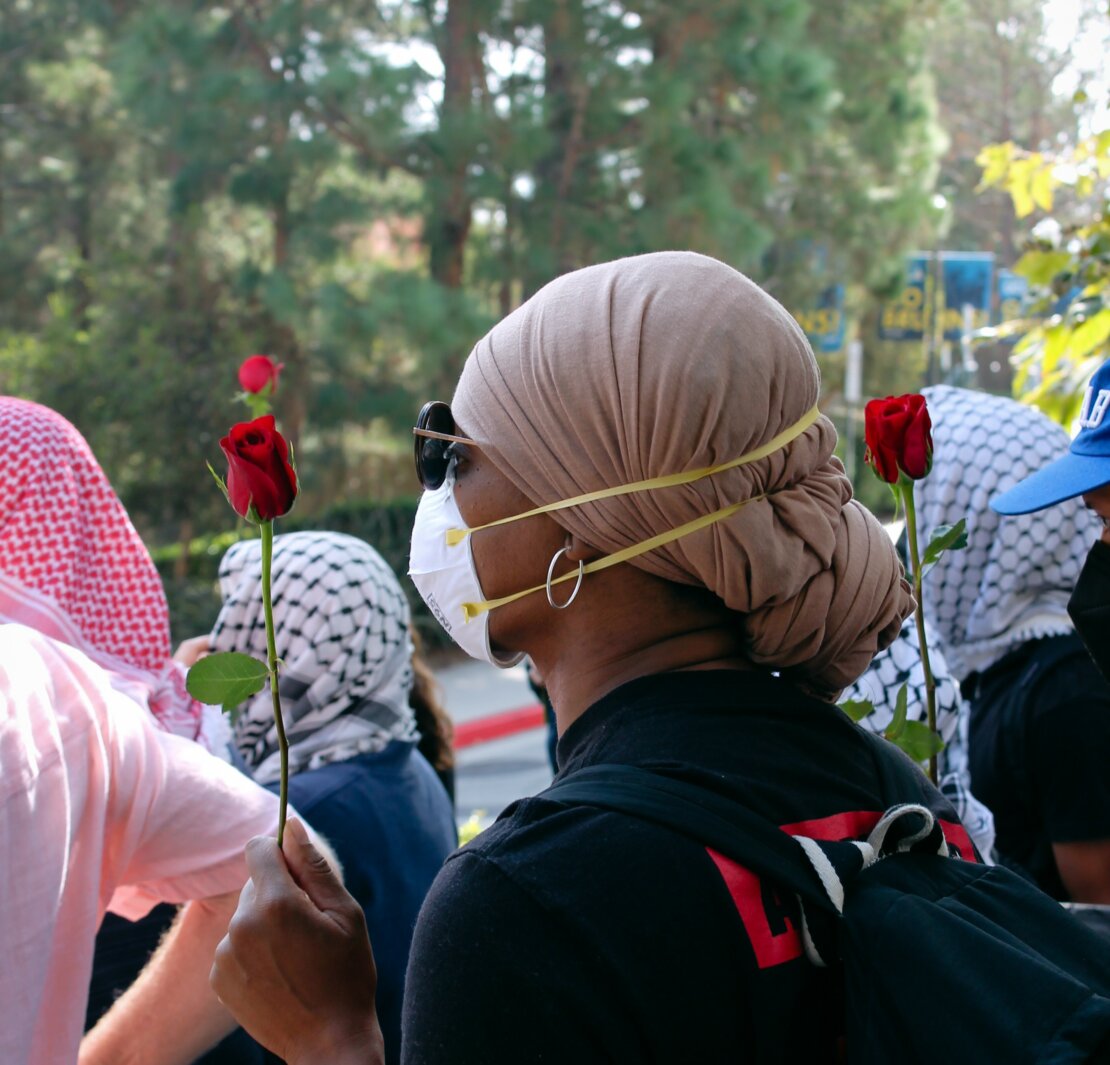
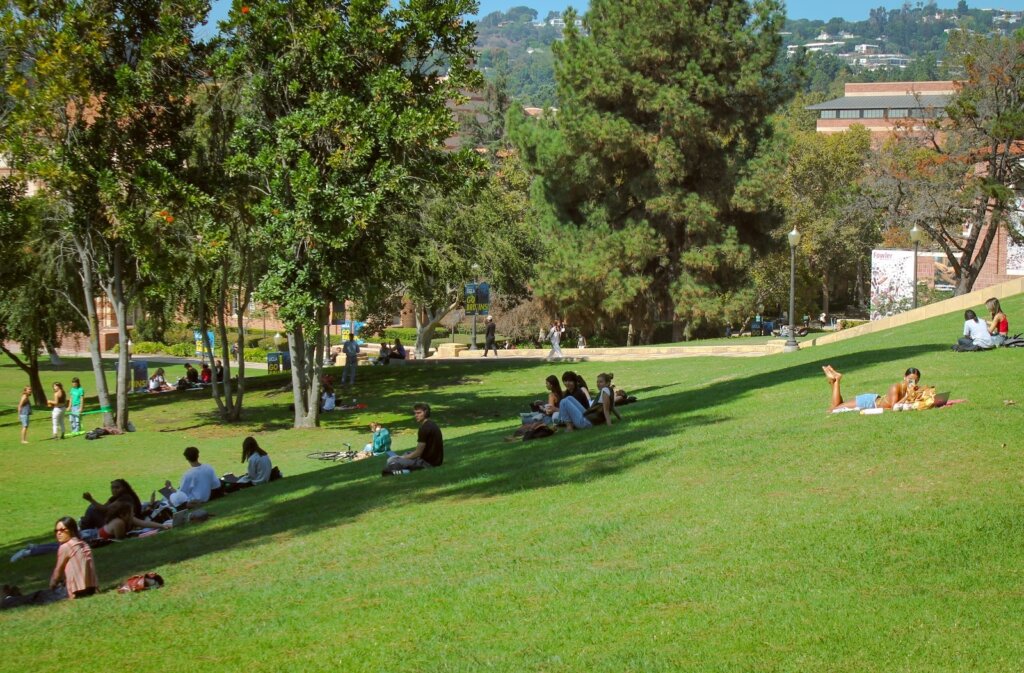
Whether playing with red Play-Doh in the cafeteria or lounging on sun-soaked lawns, the students of University of California, Los Angeles (UCLA) smiled at me as I approached them with “hey! I have a quick question.” It was when I revealed that I was a journalism student writing a story on the state of academic freedom that faces dropped and demeanors became distant. One student interviewed, despite assurance of anonymity, did not want to exchange any contact information. “We’re going to want to keep this as anonymous as possible, for obvious reasons,” they had told me. For several weeks in October, I went back to UCLA’s campus and poked around – attending protests, meeting political groups, wandering around buildings and ultimately trying to talk to as many people as possible. I had done political reporting before, but had never been met with such a dramatic change in behavior after revealing my story topic, especially from a fellow Gen-Z student demographic. I was met with an overwhelming amount of suspicious looks, hesitant answers, and requests for anonymity. It was as if I was the only one not aware of the elephant in the room.
Since UCLA’s 2024 pro-Palestine encampment that resulted in more than 200 people arrested, the university has been in the Trump administration’s crosshairs, alongside other prominent universities like Columbia and Tufts. In January 2025, President Donald Trump issued an executive order announcing major changes to DEI policies, gender identity recognition, and admissions and hiring practices. Through a series of executive orders and funding threats, the federal administration has sought to pressure higher education institutions to comply with its directives on diversity and allegations of antisemitism.
This past August, the administration froze $584 million in grant funds over claims of antisemitism and demanded the university pay a $1.2 billion fine, despite the university receiving an annual $17 billion in funding from the federal government. The situation escalated further when more than 100,000 UC employees sued the Trump administration in September, accusing it of using financial coercion to impose a conservative agenda on public universities. On Nov. 14 a federal judge ruled that the administration cannot fine the UC system or cut its funding over claims it allows antisemitism or other forms of discrimination, however the Trump administration has also shown a willingness to defy court orders. Despite legal push back and condemnation from California governor Gavin Newsom, the government’s actions have left UCLA’s campus unsettled and students afraid to speak out. Several UCLA students, many of whom requested anonymity, said they feared speaking openly about politics, worried their school’s administration might retaliate – as they believe it has done in several other cases.
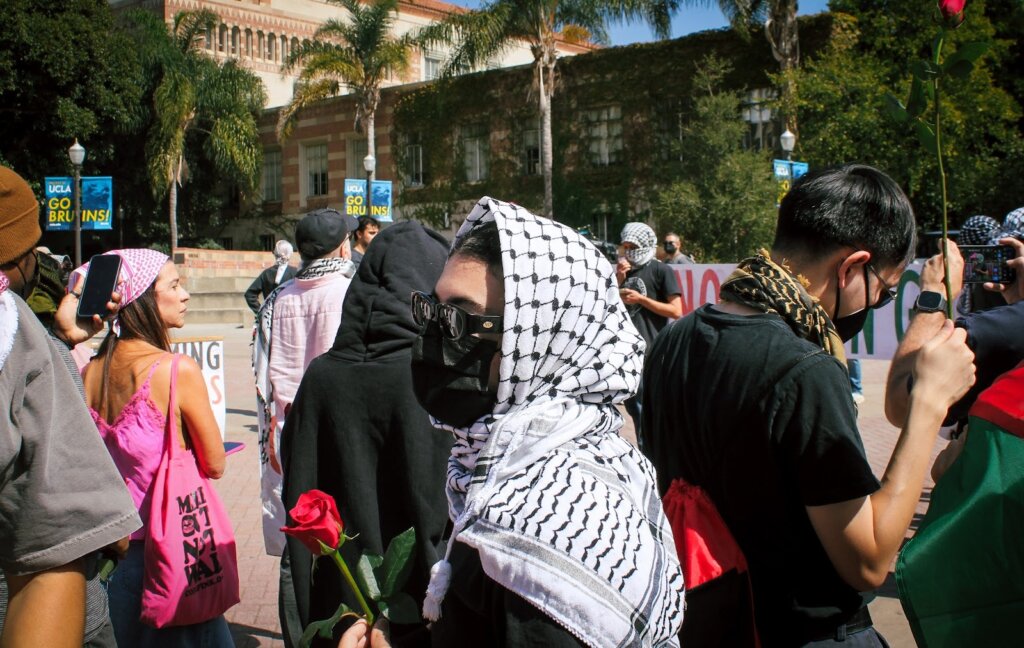
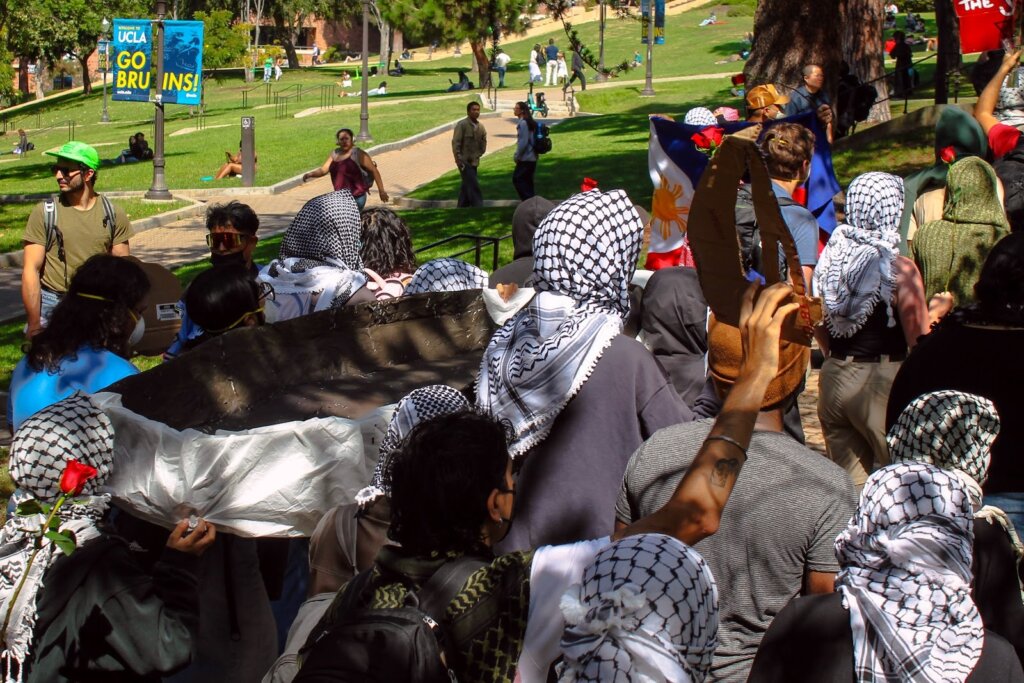
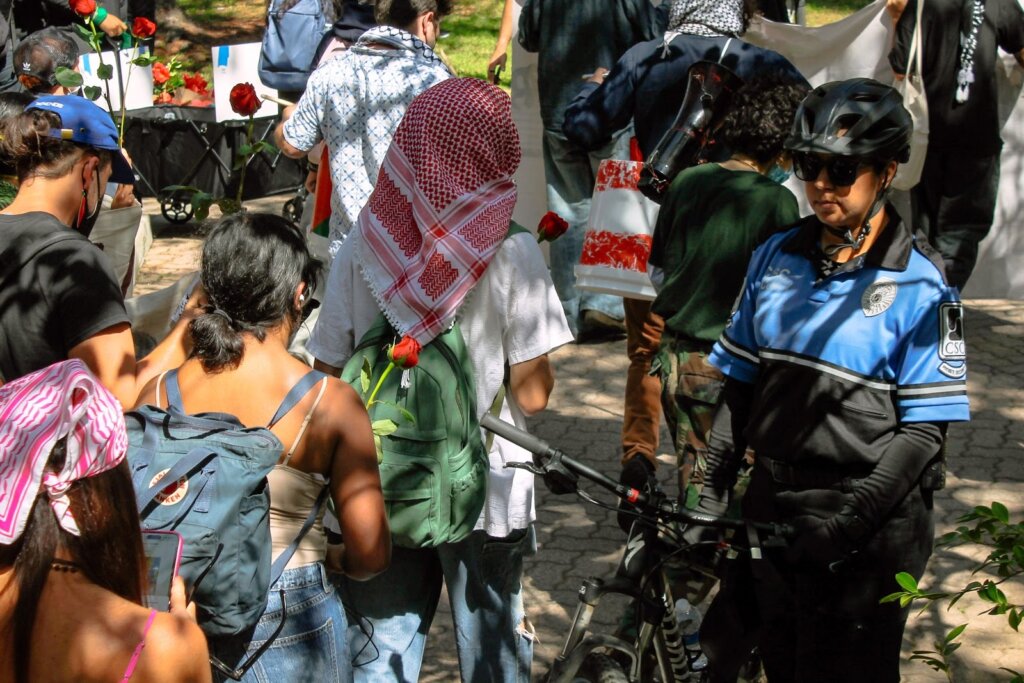
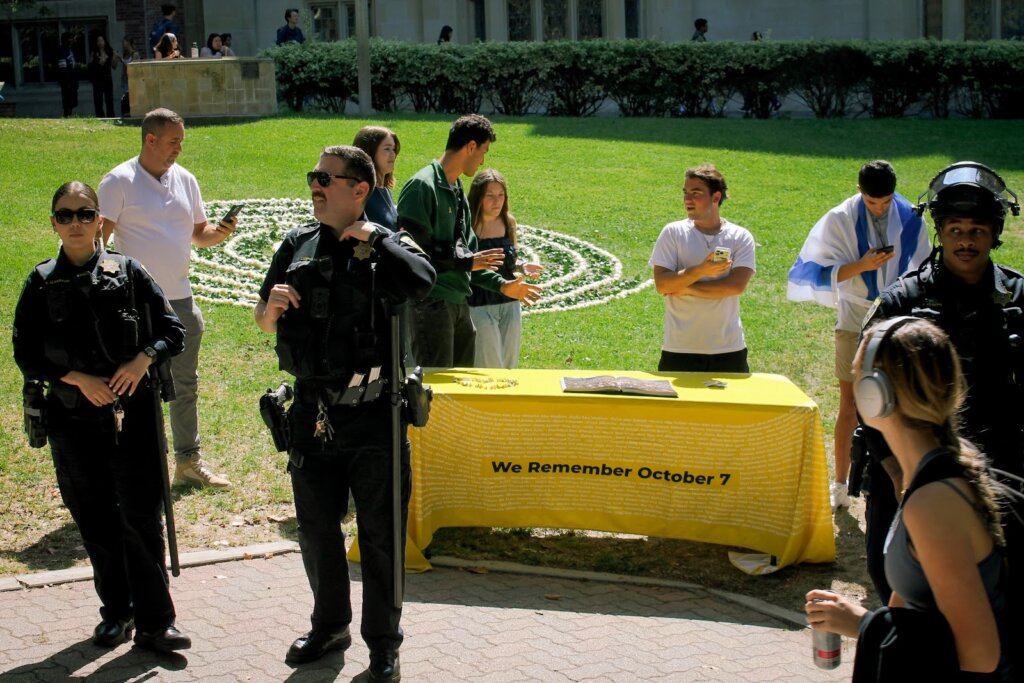
Students for Justice in Palestine (SJP), which was indefinitely banned by the administration last March, organized a floral procession and protest on Oct. 7, 2025, which was listed on social media as a remembrance of “two years of genocide in Gaza.” UCLA has placed extensive restrictions on political demonstrations on campus, but students like first-year environmental science major Andy Sanchez say the enforcement of those policies seem to be unfair.
Sanchez recalled seeing a small group of non-student, anti-abortion protesters who haggled him on his way to class in late September. “They were definitely trying to rile people up,” he said, referring to some of the graphic protest signs which included “dead babies” and homophobic remarks. According to Sanchez, police were never called and the protesters remained in Bruin Plaza for at least two hours. “So UCLA can put restrictions on [protests against] literal genocide going on in the world, but they’re not doing anything to put a stop to these randoms coming onto our campus?” Sanchez said.
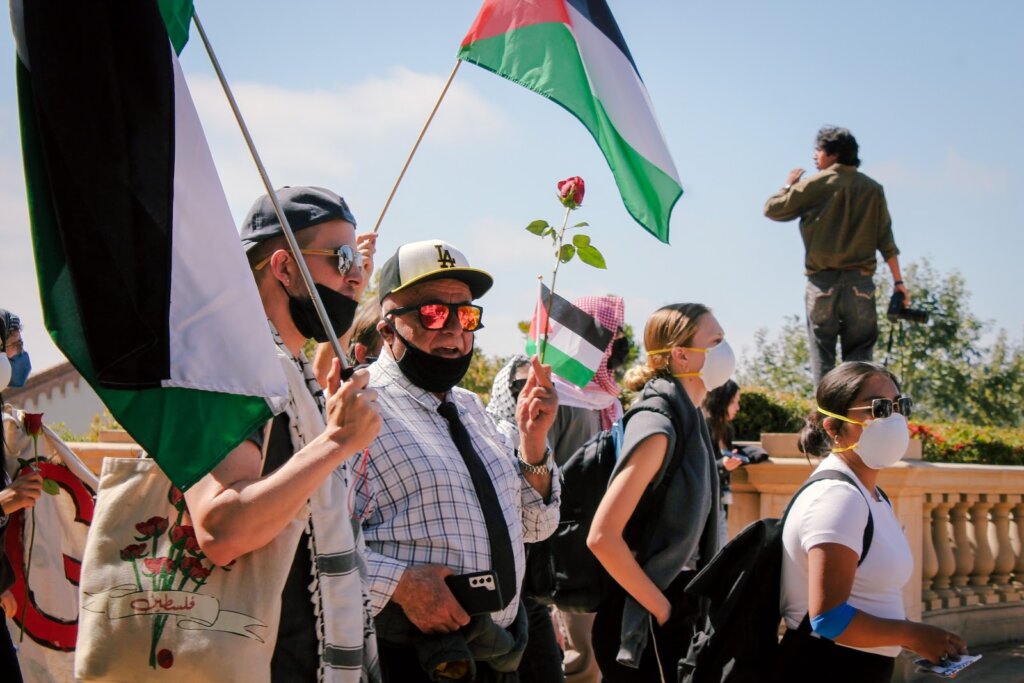
With UCLA’s time, place and manner policies, the university has restricted unapproved political demonstrations to certain outdoor areas on campus, as designated public expression areas that anyone in the UCLA community, including non-affiliates, can use without prior approval on a first-come, first-serve basis. According to the same policies, marches are also only permitted if continuously moving and non-disruptive. For the Oct. 7 protest, an SJP press liaison said she did not believe the protest was approved by the school.
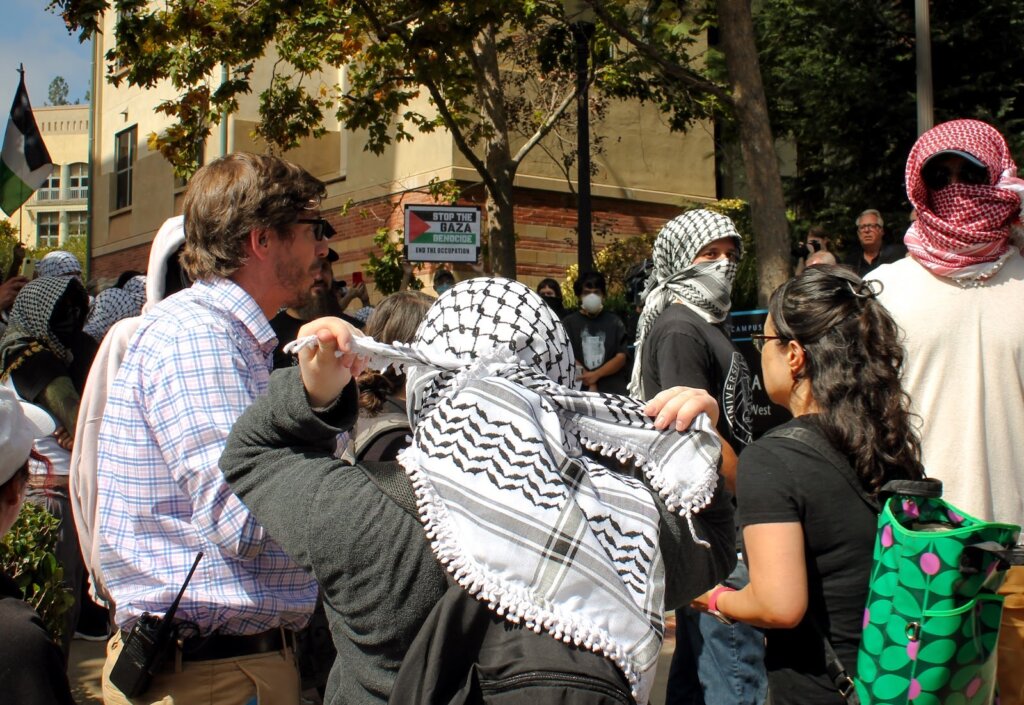
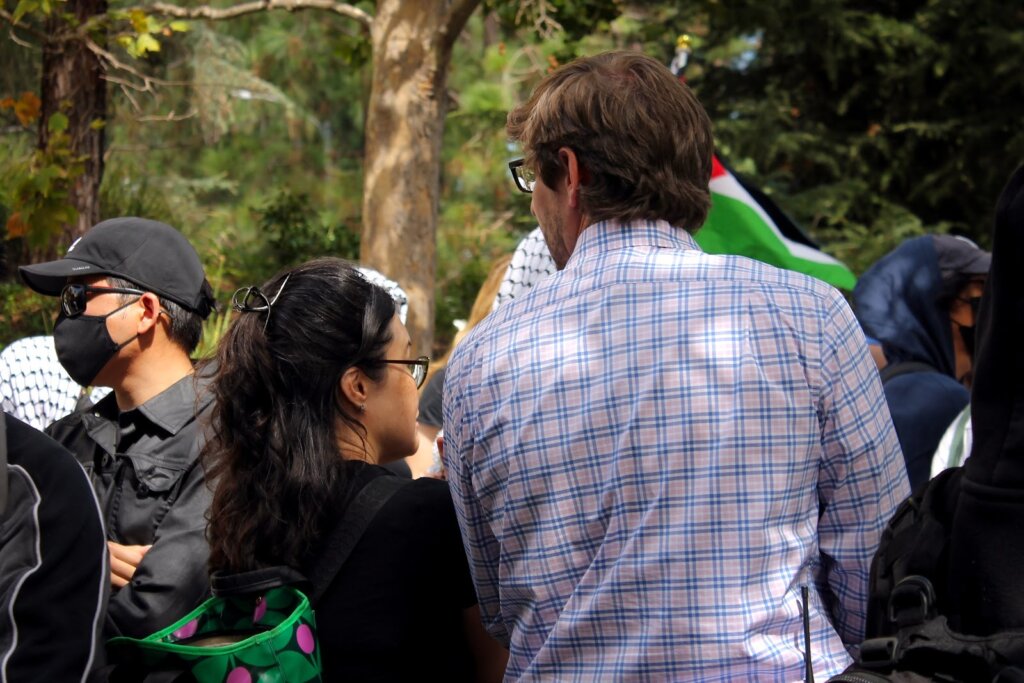
Chett Miller, manager of UCLA Risk and Compliance, told a participant at the Oct. 7 protest (unknown relation to organizers) that protestors need to start moving, citing the blocked pedestrian walkway as a “fire marshal hazard.”
“If they stay put, this is going to become a real issue,” Miller said to the woman. “Delaying isn’t going to help, it’s going to make it worse…there is no negotiation,” he added.
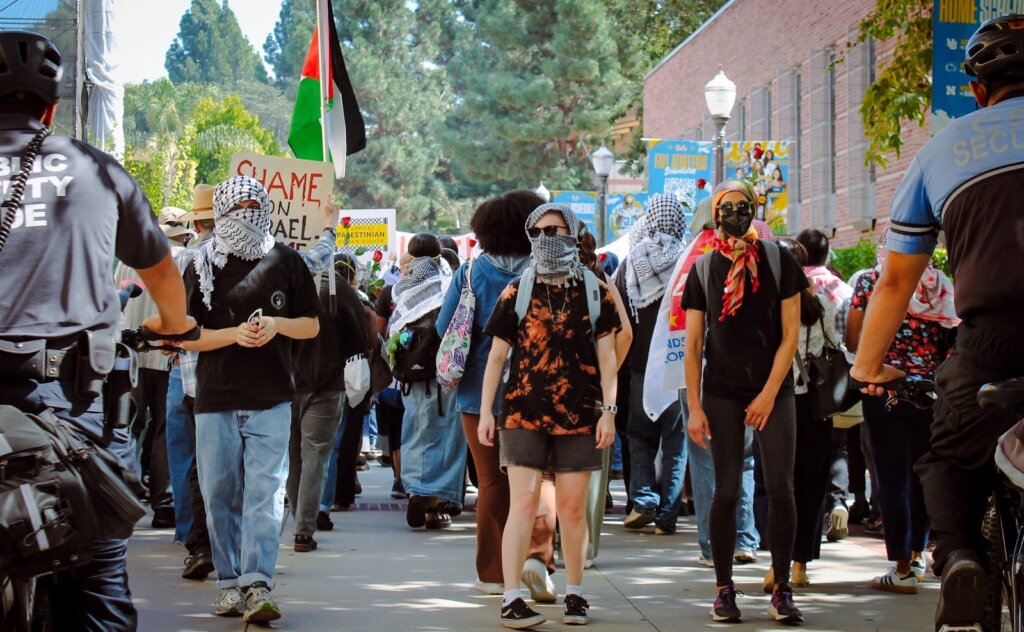
Meanwhile, a student organizer shouted through the megaphone, “We’ve been told to make our grief quieter, our language softer, our demands smaller…!” After five minutes the group began to march and Miller, along with two other administrative staff members, trailed the protesters from behind.
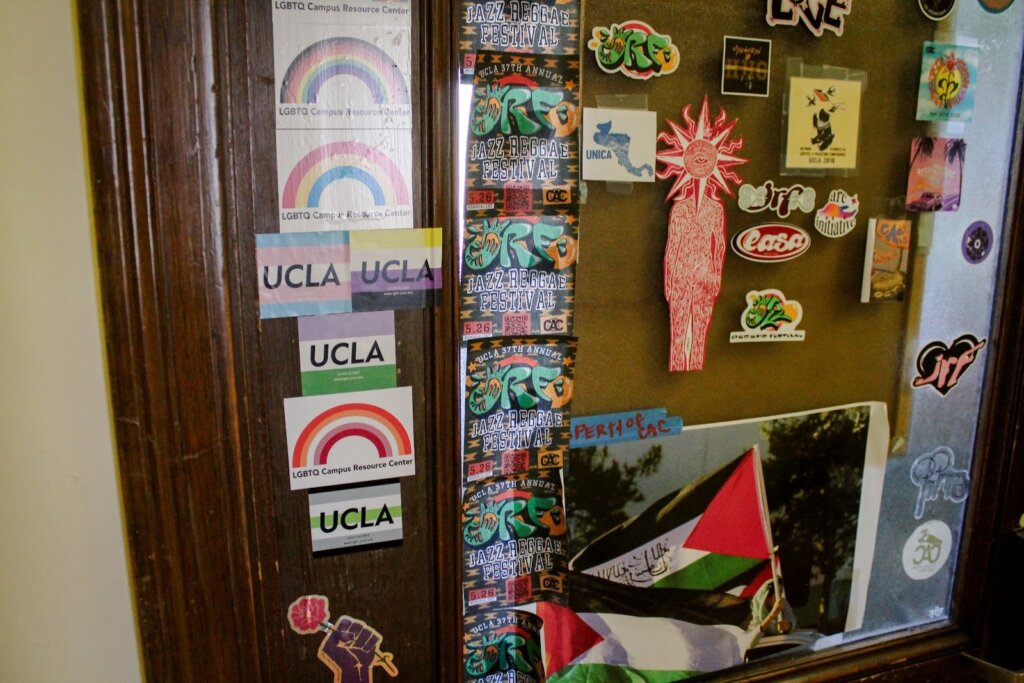
UCLA’s time, place and manner policies assert that posters, signs, banners, and other similar displays on interior university displays, must be “viewpoint neutral.” Meanwhile, an executive order by the Trump administration also demanded that higher education institutions no longer recognize the identity of transgender people, instead defining sex by “biological sex,” and eliminating gender from their definitions.
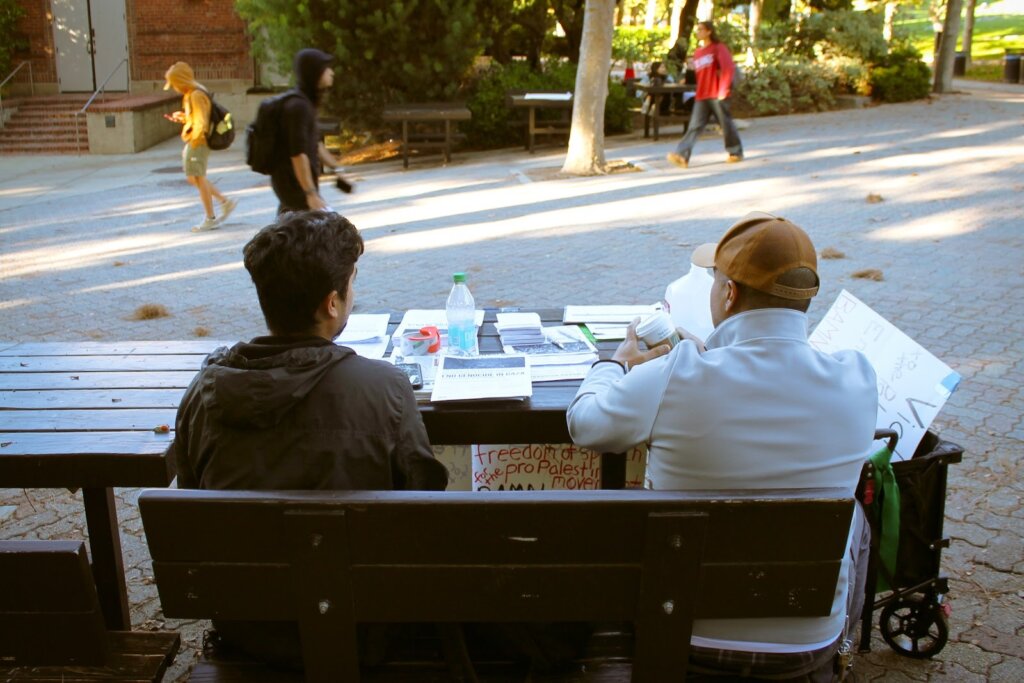
By Any Means Necessary (BAMN) is a national coalition that aims to “defend affirmative action, integration, and immigrant rights and fight for equality by any means necessary.” Lagos just started his first semester at UCLA, but has worked with BAMN previously in Oakland.
He describes that tabling on-campus has felt strange; “The first thing people talk about is friends that they know that were suspended for the Palestinian encampments … the chilling effect it had on their friends,” he said. “People are still afraid now.”
A third-year student who preferred to stay anonymous, also described tabling for the organizations they’re a part of. When tabling for Students for Labor Advocacy Project (SLAP) and UCLA Divest, the student noticed “a lot more fear when talking to people,” saying that students will admit that they are scared of potential disciplinary action for participating in political activism. Even just getting students to sign petitions is difficult, they recalled, because students fear facing consequences for signing.
Lagos says the level of repression from the university administration is disappointing, and partly attributes it to the federal government’s conservative agenda. “This [federal] administration has been so right wing, that if they’re mobilizing on this campus they’re going to be persecuted as well,” he said. “Which is crazy to me because this is Los Angeles, this is UCLA, you would think that they would be at the forefront of a progressive movement.”
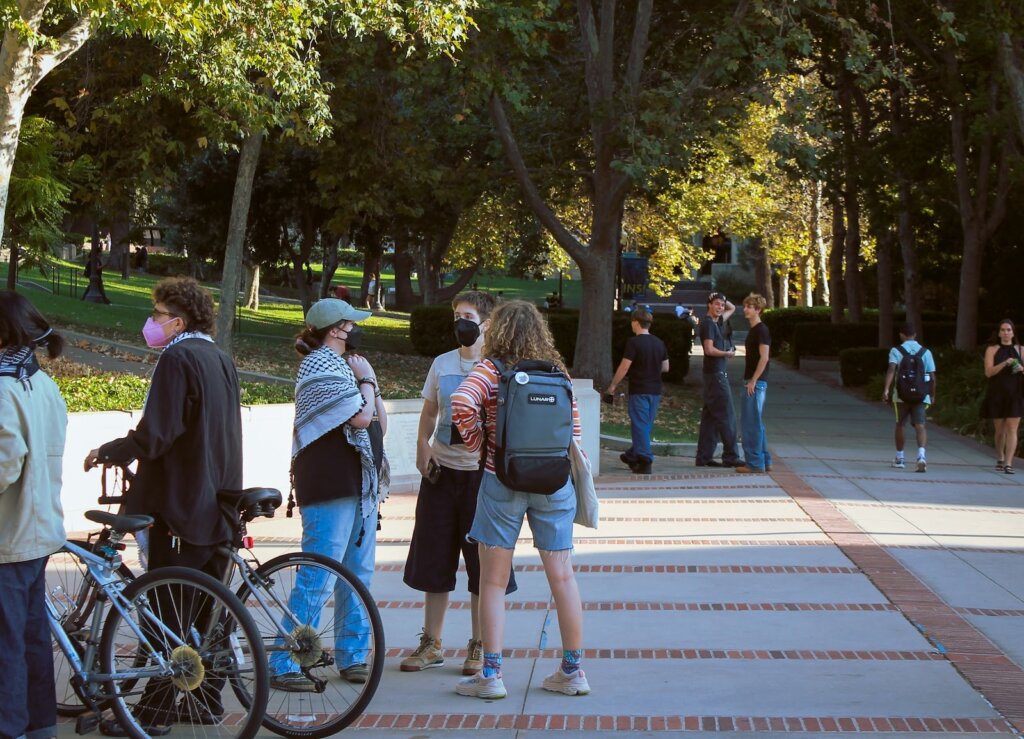
On Sept. 30, SLAP, an anti-capitalist and anti-imperialist student organization met at the base of Janss Steps for a “People’s Campus Tour” and discussed the political history of campus. The majority of the group, made up of about 15 students, wore N95 masks. A male student, dressed in all black, approached the group and sarcastically shouted, “Everybody! We’re going to need a little bit of social distancing. COVID has been spreading in the area. Does anyone have an extra mask?” The group ignored him, turning back to the tour and the student walked back to his friends, laughing. Tai Min, a member of SLAP and UCLA Divest, was at the tour and later described the campus atmosphere as tense.
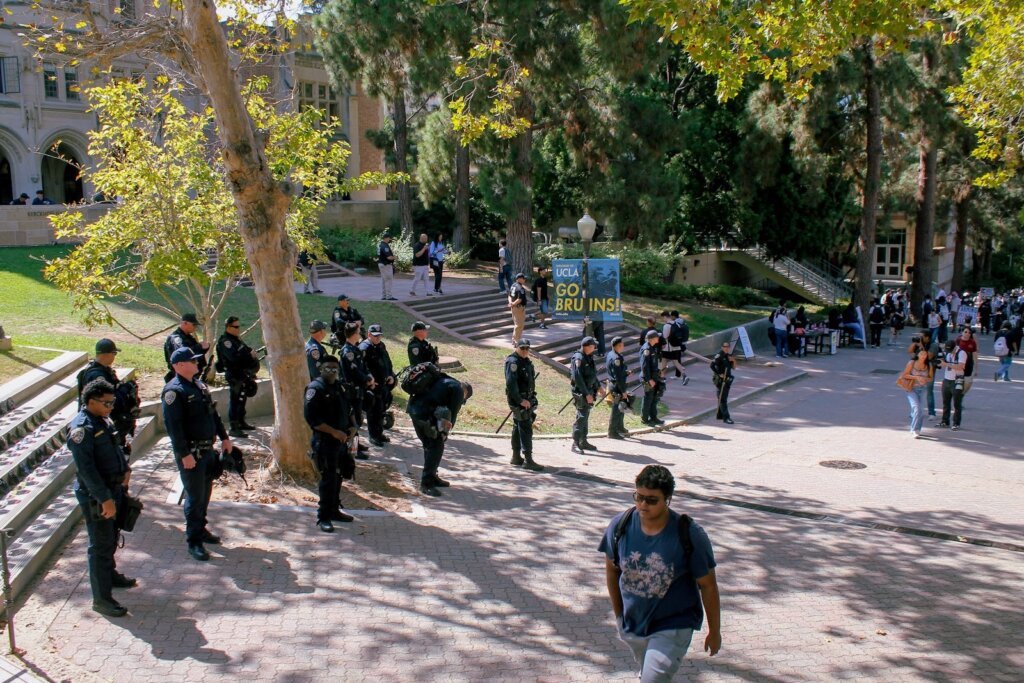
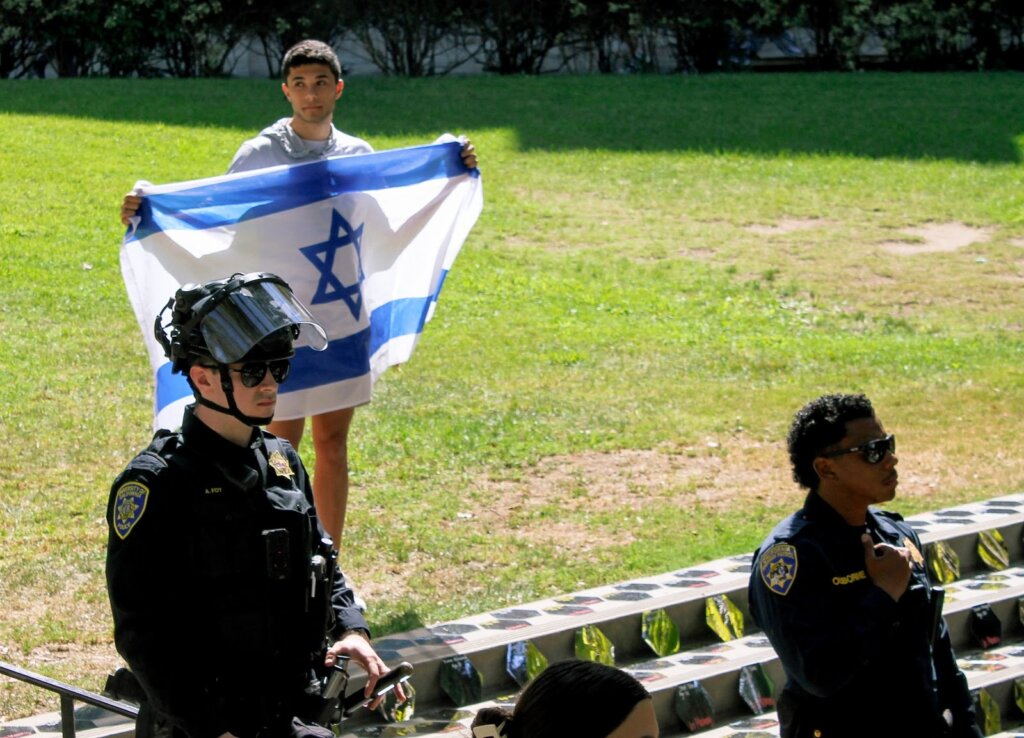
Several students noted an increased police presence on campus since the 2024 encampments. Tai Min, a senior sociology major, said that a large police presence has become normal, especially during pro-Palestine demonstrations. “They [the university] have created an expectation of violence,” said Min.
An anonymous student who is a member of SLAP and UCLA Divest also noted that while walking around campus they often see UCLA Police patrolling. They recalled witnessing a lot more arrests on campus recently, even when unrelated to protests. During one of the first days of the semester, they saw a man (who they believed was a non-student) get arrested while coming out of their morning class. They recalled that two police cars and two officers on bikes were present for the man, who was standing in a fountain. “Why do they need so many cops? … Things like that have become a lot more normalized,” they said.
Students from SLAP and Anakbayan UCLA, a leftist Filipino student organization, met on Oct. 9 to discuss ways in which education is being censored at the university and how they can combat that censorship. Students discussed issues like financial aid delays, anti-DEI policies, and cuts to services for low-income students for about an hour before writing out potential “steps of action” on sticky notes that were then posted on the room’s monitor. The sticky notes included suggestions like, “sit-ins, occupy buildings” and “educate the student body.” The group did not want to be photographed in a way that revealed their identities.
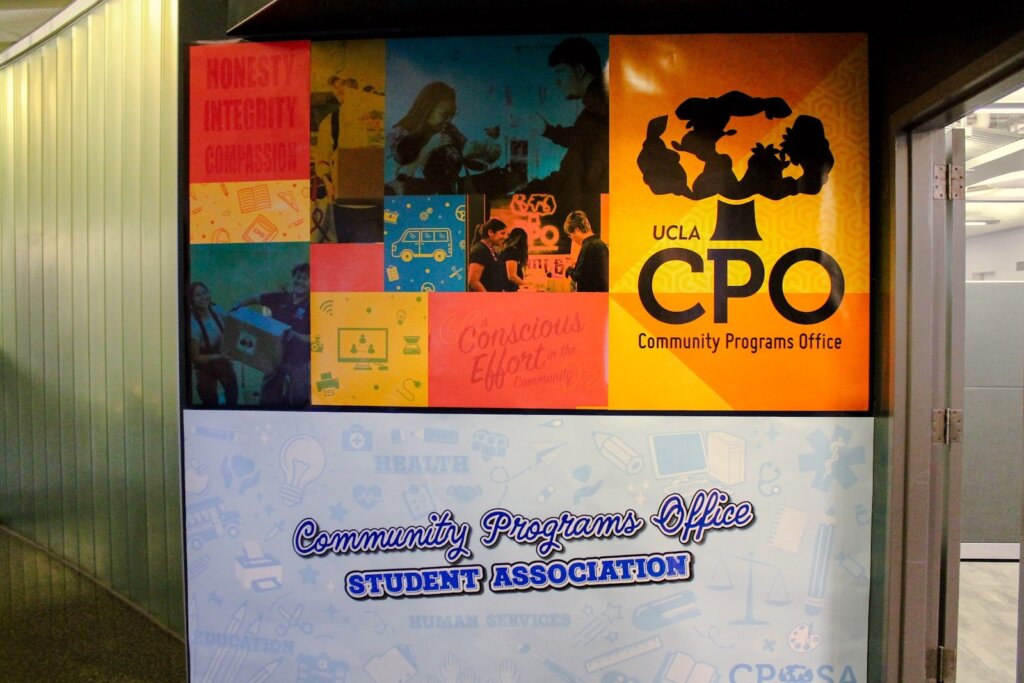
The Community Programs Office (CPO) was originally started by student organizations in the 1990s who felt that services for low-income and minority students at the university were lacking. Thirty years later, it is located within the Student Activities Center (SAC) and provides services like a food pantry, a print shop, and counseling services for low income students. However, amid federal funding complications and national attacks on DEI services, the office has seen some changes. “Essentially overnight, people learned that the CPO was going to close because of funding and staffing concerns,” Min said, recalling a friend who used to work at the office.
However, amid federal funding complications and national attacks on DEI services, the office has seen some changes. “Essentially overnight, people learned that the CPO was going to close because of funding and staffing concerns,” Min said, recalling a friend who used to work at the office.
A student, who asked to remain anonymous due to fears of administrative punishment, expressed frustration with the university’s reasoning. They are a member of the Student Labor Advocacy Project (SLAP) and UCLA Divest, which advocate for labor rights and divestment from Israel.
“We know they have the funds, they’re just choosing not to invest in their students and their workers,” the student said.
Although there has been confusion over the office’s reopening, Min estimated that dramatic cuts to the office left only five nonstudent workers employed. When asked to verify this information, a member of the CPO team referred me to their website but said “There is currently a temporary pause on outreach and retention programs, with plans to reintroduce these initiatives during the winter term.” Currently, five out of 14 CPO Staff positions are listed as vacant on their website.
“Obviously the students had no say in it, nobody really knew why it was happening,” Min said. They theorized that initiatives like CPO are being targeted because they use direct “DEI-type language,” in which it is obvious what groups they are set up to support. In February, a letter sent to public universities by the Department of Education insisted that they eliminate diversity programs from their schools, claiming that it discriminates against white and Asian students and therefore violates Title VI of the Civil Rights Act of 1964. The government threatened financial sanctions if schools were not compliant. Min called it a “weird abuse” of the law.
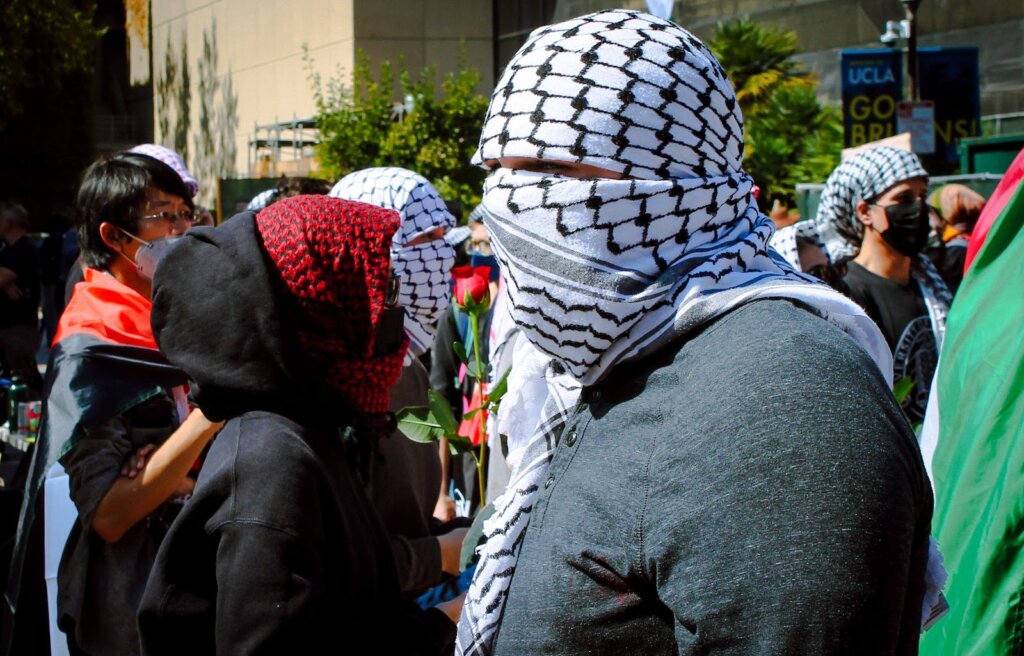
The majority of pro-Palestine protesters at the Oct. 7 event wore masks, keffiyehs, or both. In a March 2025 Truth Social post, Trump threatened to withhold funding from schools who do not enforce a no-mask ban. UC’s policy guidelines affirmed this, banning the use of masks which hide someone’s identity while violating university rules.
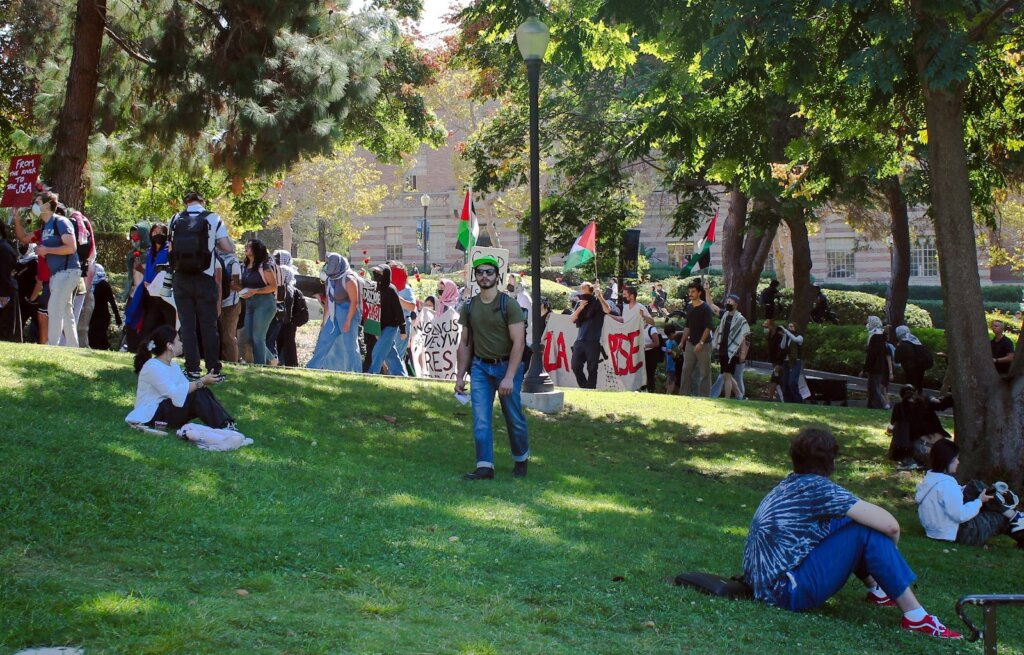
A first-year Palestinian student, who preferred to remain anonymous due to fear of retaliation for her statements, explained that with the current state of academic freedom at UCLA, she is forced to choose between political activism and her education. “As much as we could stand for politics, our education is the most important,” she said. She clarified that she is “grateful to be at the school,” but that “you can still be grateful and critique what’s going on.”
Meanwhile, Min said that after the violent repression of the 2024 encampments, many students are experiencing political fatigue. “People want to be able to put their heads down and go to school and not worry about it,” they said. “I think people are tired of conflict.”
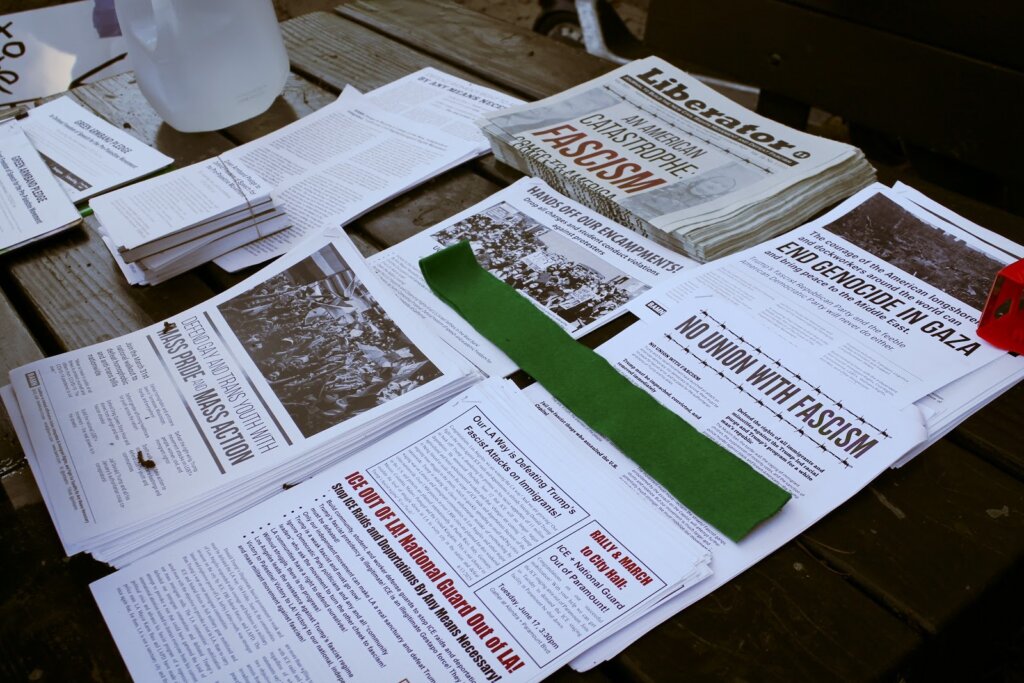
The first-year Palestinian student described how she does not let her friend, who is an international student, be seen with flyers like those pictured when they are walking across campus. “I refuse to let her be seen … with anything related to politics … they [the federal government] will revoke her visa,” she said.
Last spring, the visas of six international UCLA students were revoked by the federal government. Trump has said that similar actions at other universities were in the name of “national security.” Lagos echoed a similar sentiment as the Palestinian student, “I think there is a fear of the students [who are] hoping if there is nothing that is stirred up, we’re going to be fine, maybe, and not become targets of attack.”
