


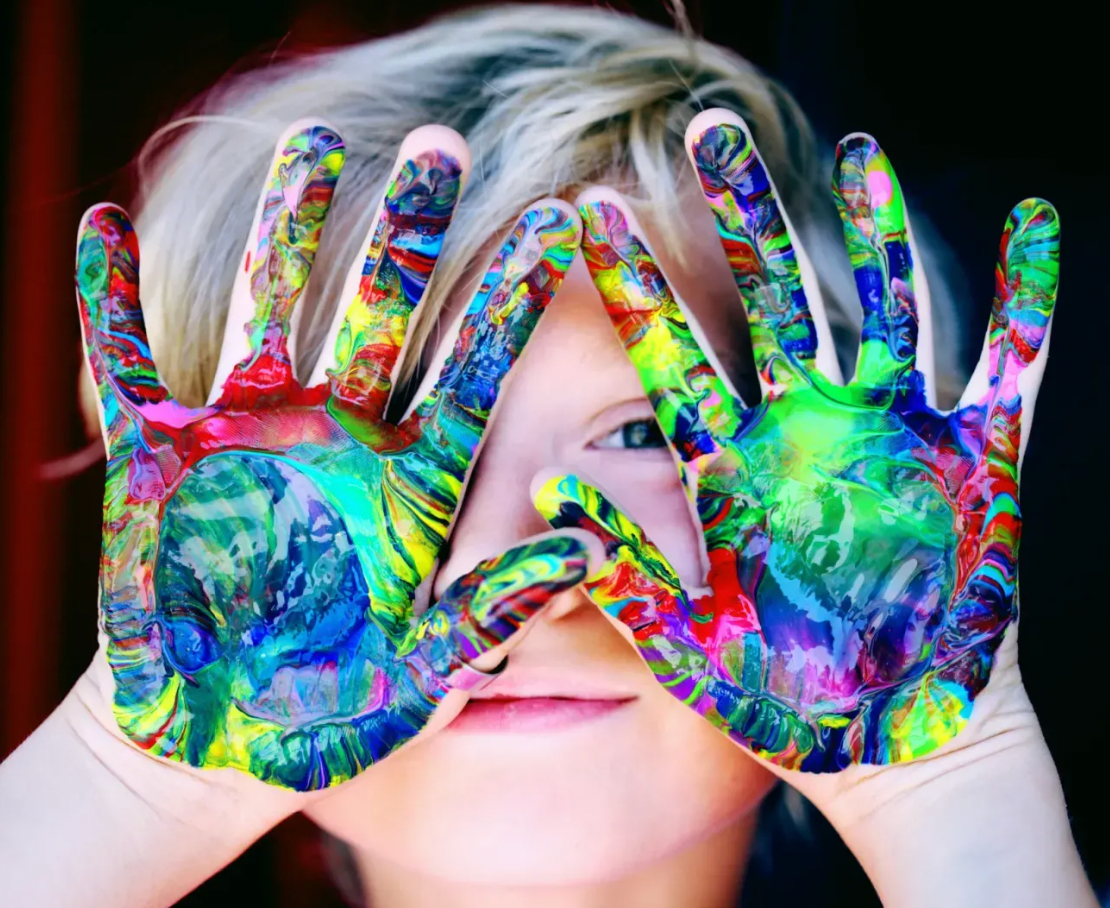
LOS ANGELES — After working at Free Arts Los Angeles for almost 10 years, Bianca Hunter is more than familiar with ins and outs of the organization. Acting as executive director for the past four years, she has never felt stronger or more passionate about the nonprofit’s core mission to “help children in Los Angeles find hope, resiliency, and self-esteem” through creative endeavors.
“We’re not an organization that’s afraid to tackle the issues that we’re facing,” she said proudly. “We bring solace to the child we are working with and are able to calm them through helping them create art.”
Free Arts Los Angeles was originally founded in 1977 by Elda Unger, an arts therapist who recognized the cognitive benefits that can be gained from the creative process. Offering workshops free of charge to children going through the foster care system, Unger created a safe space for individuality and artistic expression, ultimately laying the groundwork for the nonprofit to come.
“She really was the sweetest lady,” Hunter recalled. “She was so passionate and enthusiastic about art and creating programs that could help these kids.”
Although Unger passed away in 2024, the acclaimed therapist had left behind a legacy of altruism that would continue to develop and thrive in her wake. The organization expanded in size and reach over the years, eventually establishing 30 community partnerships within the greater Los Angeles area.
Today, Free Arts Los Angeles serves an estimated 16,500 youths annually with the help of over 225 volunteers. Focusing on children between the ages of 5 and 17, it provides programs for the various age groups in 3 cycles which can last for 6 to 8 weeks. Hunter noted that the curriculum of each program is altered between sessions to keep children engaged and entertained.
“We didn’t want it to feel too much like they were back at school,” she laughed.
One such program is the Free Arts for Court Program. Added to the nonprofit in 1992, these sessions are held twice a week at Edmund D. Edelman Children’s Courthouse and target youths waiting to testify before a judge. This includes children that have been removed from their homes for reasons such as neglect or abuse, as well as those undergoing adoption, visitation, and counseling processes.
“What art does, universally, is allow kids to draw what happened to them or what they’re feeling in that moment. Therapists, judges, and art therapists are able to take that art and plan out the point of recourse for that child,” said Hunter. “Some of these children are up there testifying against their abusers.”
The concept of art helping with stress and anxiety in children is not a new one. Emily Waitt, the clinical director and adolescent therapist at a youth wellness center in Los Angeles, corroborates this sentiment and often uses creativity in her own sessions.
“We use individual art therapy here at Hello Kincove because it is something that bypasses the defensiveness that comes when young people are dealing with trauma,” she said.
Waitt described the court process as often “retraumatizing” for adolescents, suggesting that a moment of quiet self-expression may be just what a child needs leading up to their testimony in court.
“Being separated from siblings, seeing parents use substances, being removed from a home, it all results in a lot of trauma and stress for kids. Sometimes they’ve talked so much about their experiences, to cops and in legal proceedings, that there is almost a sense of burnout when it comes to using words. That’s when I think art can be really helpful.”
The program was intended to add some brief creative levity and relief to the stressful, and often traumatic, experience. Volunteers assist children with arts and crafts to take their minds off the lengthy court process.
“Technically, we don’t call them volunteers. We refer to them as ‘teaching artists’ because they have to go through a certification process and background checks” Hunter said of those who lend their free time to assist Free Arts Los Angeles.
Not only can the court experience be detrimental to children due to the stress it may inflict, but also due to the understaffed and overwhelmed state of many juvenile halls.
On November 7, 2025, executive director of the National Council of Juvenile Justice Administrators, Michael Dempsy, testified in court that the issue is not how many probation officers come into work, but their level of training and how they’re called upon to serve. According to the Los Angeles Daily Times’ account of his testimony, he argued that the majority of those who clock in to work at Los Padrinos Juvenile Hall simply “do not want to be there.”
Dempsy, who has also served as a court appointed monitor for the past 5 years, was testifying against the state’s compliance to meet staffing requirements in L.A. County’s largest juvenile hall. He went on to assert the need for an increased number of workers who have received the “appropriate training to deal with day-to-day operations.”

Hunter agreed with Dempsy’s assessment, noting that there is a definitive lack of funding and proper training within the childcare system. She pointed out, however, that each individual working with Free Arts Los Angeles is passionate and more than willing to give their time and money to help any child in need.
One such individual, Robin Jack Sarner, has been helping them raise money through creating art of her own.
“I first heard about Free Arts LA through an event that my friend was a featured artist in, it was their largest fundraiser called Art Swagger,” she said. “I was interested because art is the most pure, human way to express feelings and to connect with the kids.”
Intrigued and inspired by the nonprofit’s mission, Sarner applied to be a part of the annual fundraiser. Having used art as an outlet through multiple parental divorces as a child, she felt a particular draw towards helping children that might be dealing with stress at home.
“Art was the only thing that I had that was fully mine while growing up. It was the only thing that I could control and feel safe and powerful in.”
After being accepted to Art Swagger 2025, Sarner was surprised by the generosity and passion of the people that Free Arts Los Angeles had managed to bring together. The event consisted of six or seven art spaces within walking distance renting out spaces to artists, free of charge. Various businesses in downtown Los Angeles provided free food and beverages to those that had purchased tickets, the proceeds of which went back into the nonprofit.
“It’s incredible that they’re able to pull that many people together and create such a sense of community. I’m amazed,” Sarner remarked.
Hunter commented that it was the selflessness of Los Angeles natives that allowed the organization to help so many children each year. She encouraged anyone considering volunteering at a nonprofit to go out into the city and give it a chance.
“People are always in need. You have no idea how beneficial you can be to an individual organization or how important your contributions can be to set the blueprint going forward. Find ways to be part of the cause.”
