


UPDATE 10/14: Guest speaker Xavier Becerra (former U.S. Secretary of Health and Human Services, former California Attorney General, and candidate for California governor) voiced his support for unions and “urged the university to reconsider” at an Oct. 13 event hosted by Bellarmine College of Liberal Arts (BCLA) on campus.
LOS ANGELES — On Sept. 12, Loyola Marymount University’s (LMU) Board of Trustees announced it would no longer recognize or bargain with its non-tenure-track faculty (NTTF) union, claiming the decision was for “the common good and putting their students first.” Now, more than a month later, students across campus are pushing back against that narrative and urging the administration to return to the bargaining table.
Students like senior sociology and psychology double major Brody Tomlinson find the administration’s rhetoric “disrespectful.”
“To claim you know the best for someone … while not even listening to what they’re saying is just hypocrisy at its finest,” Tomlinson said.
Amid uncertainty over the legality of union members’ ability to picket, advertise or educate on campus and many fearing potential retaliation, some students have begun stepping in to inform the campus community on the issue.
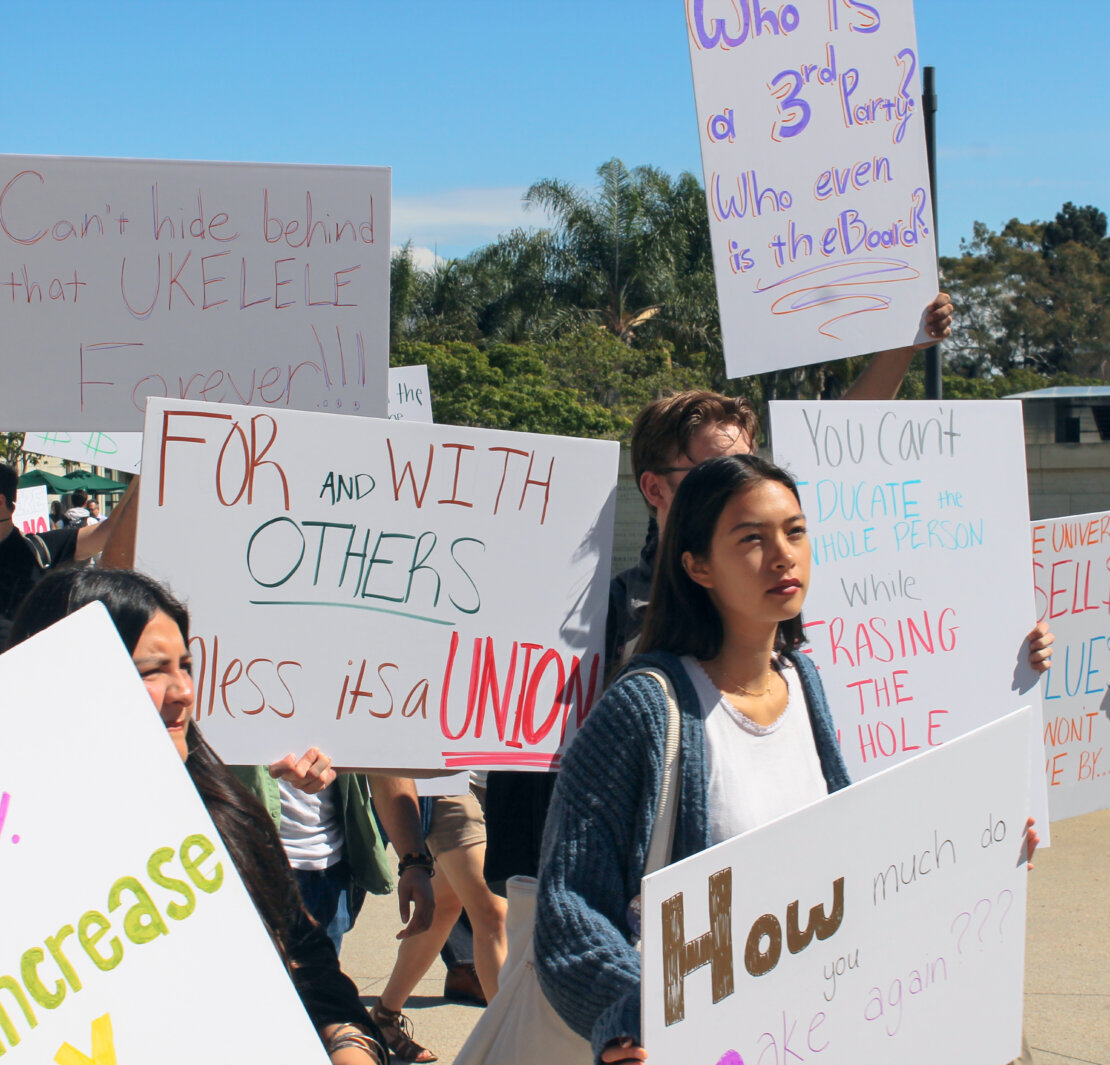
On Tuesday, Oct. 7, students hosted a teach-in at University Hall featuring faculty speakers. The following day, students advocated at Wellness Wednesday and made protest signs with slogans such as “18%? Cite your sources” and “The university sells values it won’t live by.”
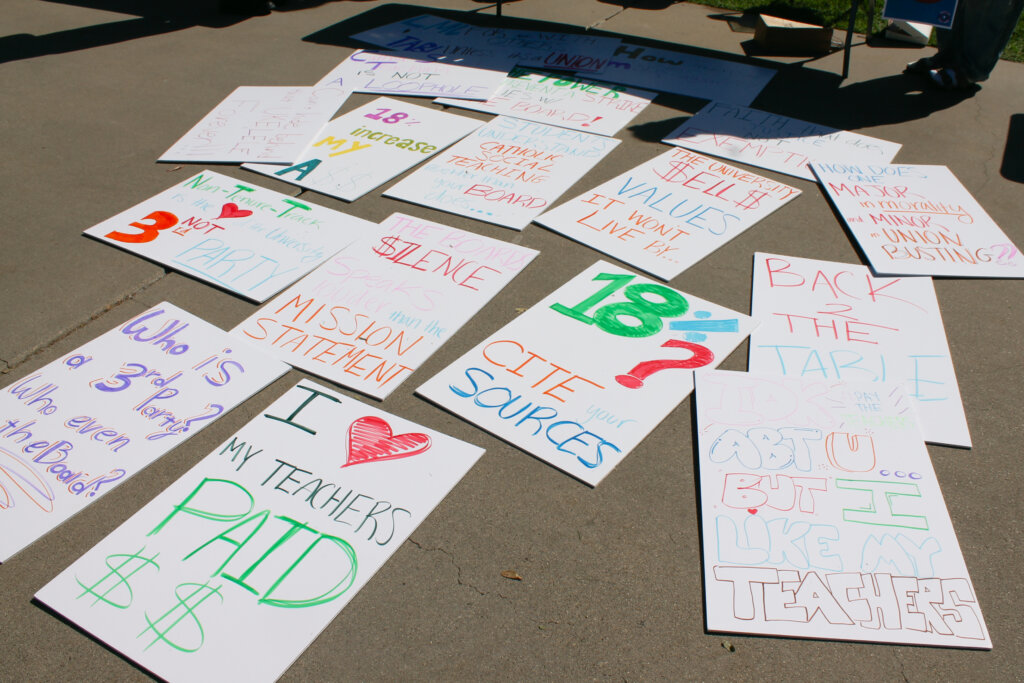
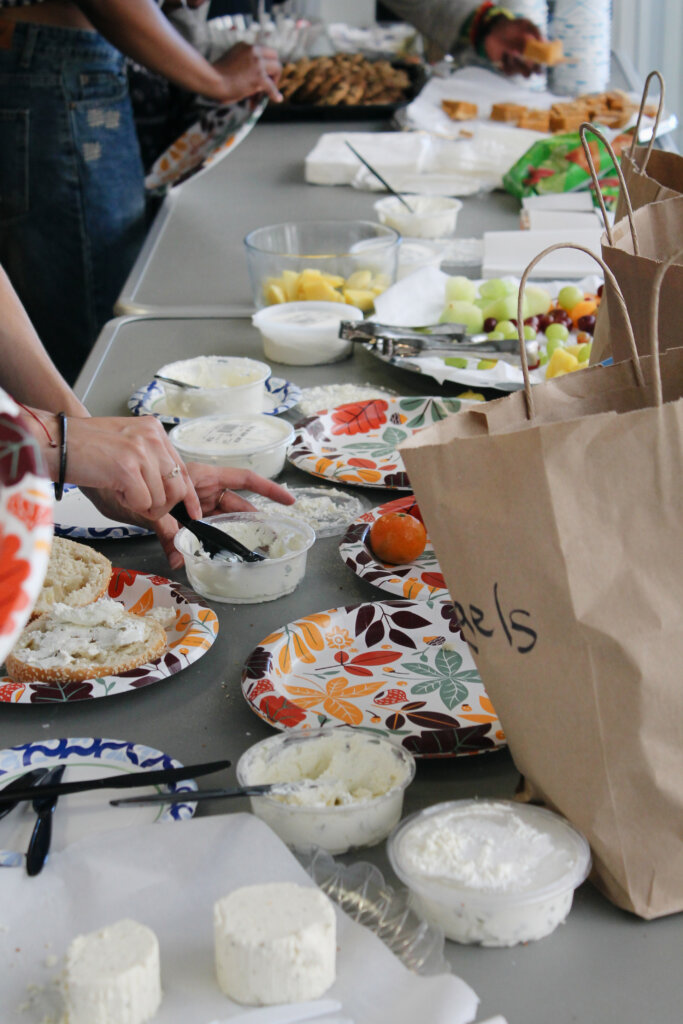
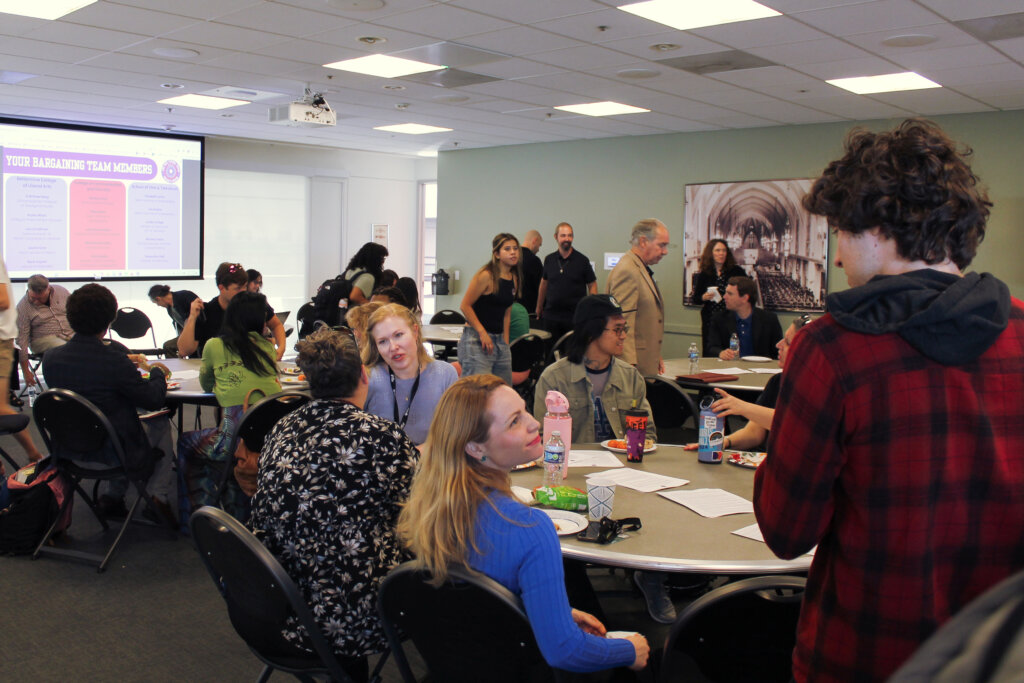
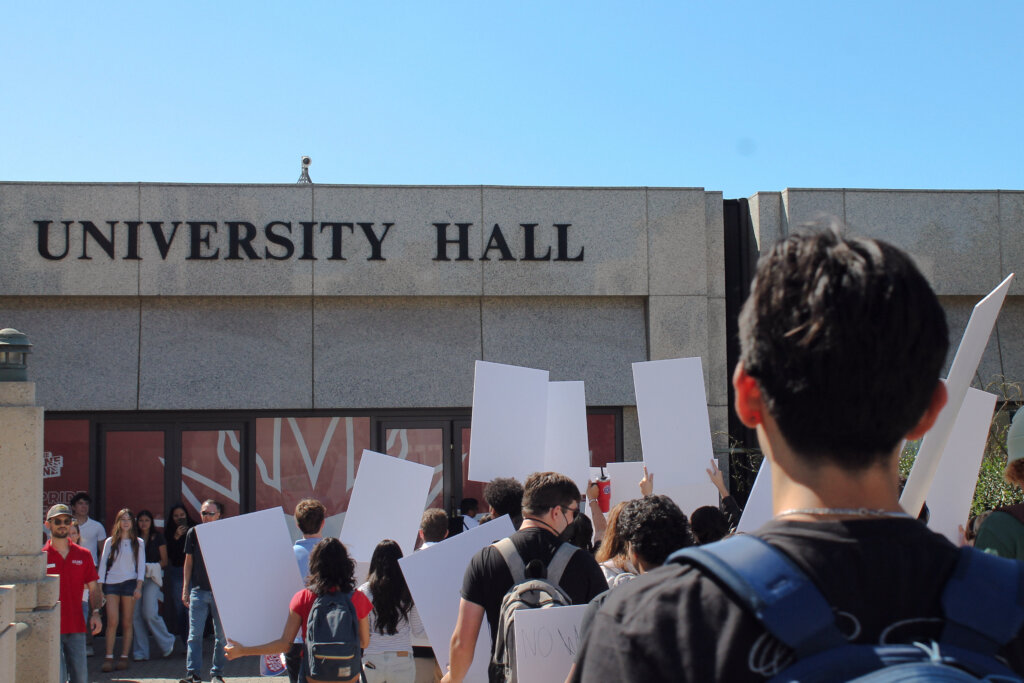
A group of about 25 students rallied Thursday afternoon, Oct. 9, carrying signs and silently marching from Alumni Mall to University Hall before the “Brunch with the Bargaining Team” event. Administrative faculty trailed behind the group and additional security were on standby inside University Hall during the march. When students arrived at the event, they were met with applause from faculty and tables full of bagels, fruit and sweets– all privately donated by faculty and community members. Barbara Dyer, a non-tenure-track music instructor, said she had spent the previous night at Costco buying pumpkin pies for the brunch, just after faculty learned last-minute they would no longer receive event catering.
Elisabeth Adams, a political science major, skipped two classes to attend Thursday’s rally and brunch. “It is really time for students to speak up, because the university has taken the voice away from faculty,” she said.

Adams, who grew up attending church every Sunday and is now involved in Campus Ministry, said the administration’s “religious exemption” reasoning makes a mockery of her faith. “That religious exemption puts such a harmful connotation on being Catholic,” she said.
Meanwhile, several student service organizations, rooted in Jesuit values of community service and education, have issued statements in solidarity with the union on social media. Eight of the 10 service organizations on campus have publicly supported the union, along with various other clubs ranging from Students for Justice in Palestine to Chess Club.
Isaac Donado, a member of Crimson Circle, and a junior political science and journalism double major, said being in a service organization helps him stay informed about campus issues. Donado became personally invested in the union effort years ago when non-tenure-track professor Bryan Wisch was his rhetorical arts instructor during freshman year. Since then, Donado has become involved in ASLMU student government and recently worked for a nonprofit that dealt with its own labor disputes. “Usually if employees want to unionize, it means something is wrong with management,” he said.
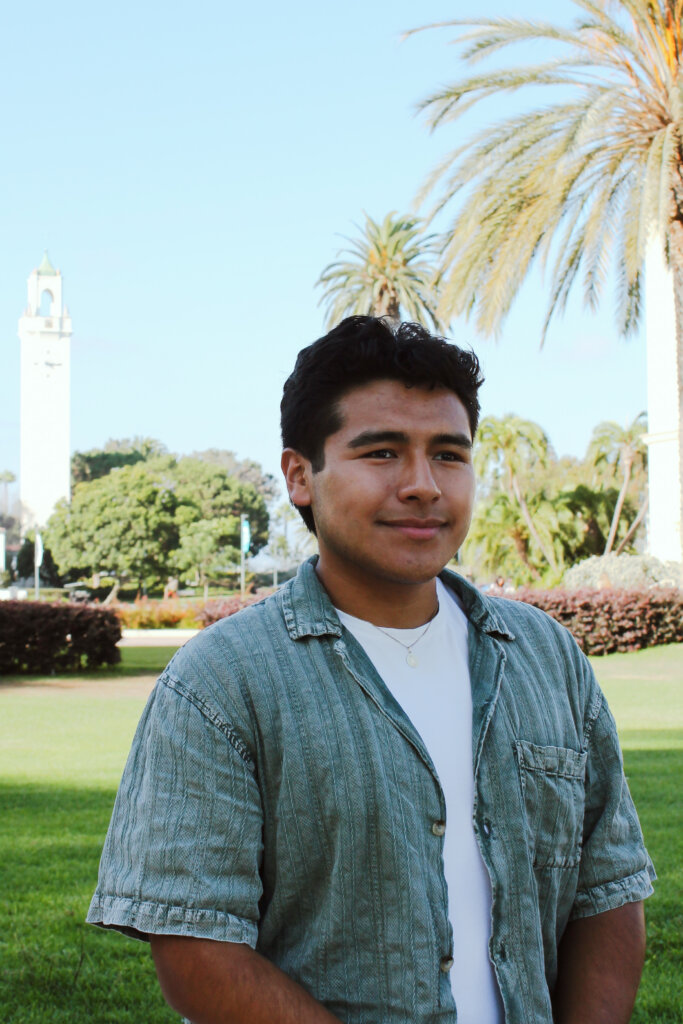
Donado’s frustration with the administration is shared by other students who have found new ways to voice their dissent. Flyers supporting the union were spotted throughout campus last week, while petitions and email templates addressed to President and Provost Thomas Poon have circulated online. Members of LMU’s theology department also sent a formal letter several weeks ago denouncing the university’s use of religious exemption as justification for their decision.
The criticism even reached the stage at LMU’s annual Fallapalooza event on Oct. 5, when student artist and opener Jay Hollywood condemned the administration after his set, saying, “You cannot trust them to create the change you want to see … so speak up!”
While the administration has insisted that students and financial accessibility remain some of its top priorities, many have lost faith in their statements, including Tomlinson’s two alumni brothers, who said they will no longer donate to the university because of the board’s decision.
The administration has repeatedly cited an 18% tuition increase in its emails and letters as the projected outcome if union demands were met, but has yet to provide detailed financial documents to substantiate the figure. “I would encourage that anyone who reads these emails coming from the administration engage in the critical thinking skills that their professors taught them,” Tomlinson said. Union members and supporters call the statistic misleading, arguing that the issue is not financial but moral.

“A budget is a moral document,” said Laura Huffman, senior instructor of modern languages and literatures. “What you decide to spend your money on reflects your values.”
While the union has not yet set a strike date, members voted Sept. 30 to approve one if deemed necessary. A strike would directly affect many students: Donado said only one of his four current professors is tenure-track, meaning three of his four classes could be halted. Student supporters, like sophomore marketing major Emily Hernandez, emphasize that a strike would be the result of the administration’s decision and said she does not feel comfortable sitting in a classroom with the knowledge that her professors are not paid sufficiently. “It’s a system I hate to be a part of,” she added.
In an Oct. 3 letter signed by Interim Executive Vice President and Provost Kat Weaver, the administration stated, “Strikes do not serve LMU’s students or faculty and will not change LMU’s decision,” adding that “while no date has been set, the university is prepared to minimize disruptions to student learning.” Faculty and staff are expected to continue reporting to work as scheduled, according to a letter from Nancy Pluzdrak, Vice President for Human Resources. Weaver also urged faculty to “put their students first” and refrain from striking.
Meanwhile, Adams argues that a strike “is all the faculty have left.” Hernandez echoed that sentiment saying, “When you’re constantly being ignored and shunned, in a way, there’s no other option. Whatever needs to be done, needs to be done.”
Hernandez pointed to the historical power of student activism on campus, citing previous wins for Aramark food service workers last year and beloved LMU crossing guard Albert McCoon two years ago.
Donado echoed the same sentiment. “Students have such a big voice and so much power,” he said. “When people come together, things change.”
Editors’ Note:
Agape and Magis have both posted statements in solidarity (10/13 & 10/15), changing the statistic from six to eight out of ten service organizations that have voiced support for the union.
