


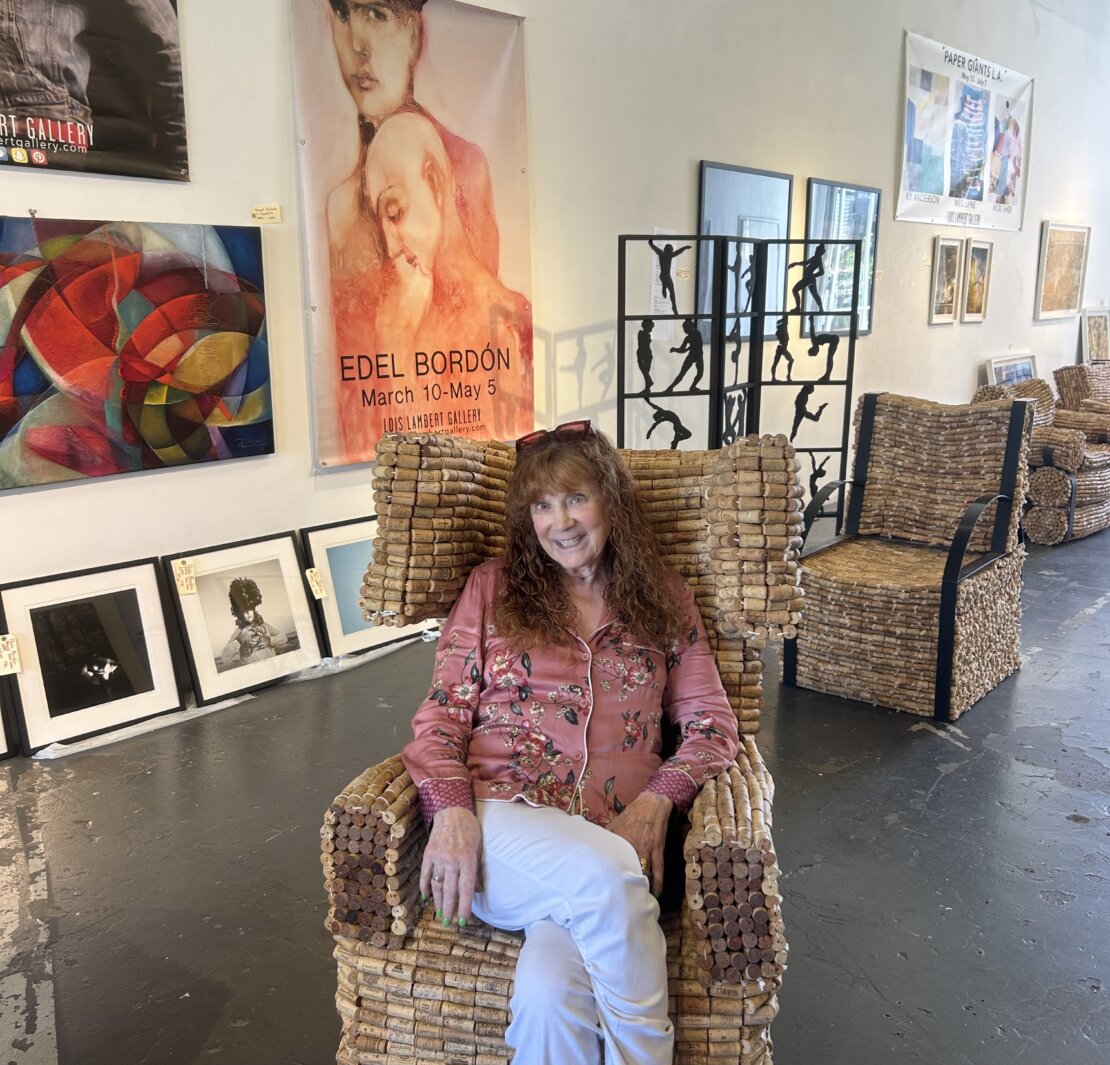
At 83, Lois Lambert is closing the doors on nearly four decades of work. Lambert founded the Gallery of Functional Art (GFA) in 1988, as the first tenant within the iconic Frank Gehry’s Edgemar building on the edge of Santa Monica. Although Lambert was raised within a family of art collectors and attended the Art Institute of Chicago, she insisted she lacks experience within the art world. Lambert opened the West coast gallery through drawing from inspiration found in a New York gallery called Art et Industrie, as well as a famous contemporary art gallery in London called One Off. “I look for people who challenge boundaries, who have something to say, and who are not derivative,” she said, describing her curatorial approach over the years.
On September 30, GFA will shut down for good. The reason behind this, Lambert says, is simple: lack of support from the city she’s called home for decades.
After its opening in 1988, GFA grew alongside the flourishing art scene of Venice and Santa Monica. In 1994, the Bergamot Station Arts Center opened to the public, Lambert seized the opportunity and moved the gallery into the center. This five-acre complex of warehouses converted into gallery spaces cemented the neighborhood as one of Los Angeles’ leading cultural hubs. At its peak, Bergamot housed over 30 galleries. Today, less than half remain. GFA is among them, but not for long. Lambert predicts that within three to five years, the rest will vanish too, as the city plans to redevelop the site into low-income housing units.
Lambert has spent years fighting to preserve the legacy of Bergamot Arts Center and her gallery, attending city council meetings and advocating for support. In 2024, Santa Monica officials promised to bolster the institutions housed there, following crippling debt lasting from the COVID pandemic and recessions over the past years. Their promise never materialized. Now, GFA must close its doors. “It’s totally dead,” Lambert said. “You can’t imagine the difference between when we first started and now. People came from all over the world because it was a fine arts center, but we failed.”
Since its opening, GFA has housed more than 175 shows, each one requiring the space to be completely redesigned, which Lambert described as a “massive undertaking.” But it was an undertaking she and the community enjoyed. “I’m letting down so many artists and I feel so awful abandoning them,” Lambert explained she received hundreds of letters from around the world of artists she’s represented in the past.
Walking through the nearly empty gallery, Lambert paused to highlight pieces from artists located in Ecuador, Tijuana, and Cuba. “Art is important whether you buy it or not,” she said. “It needs to be experienced.”

For Lambert, the work was never about profit. “You don’t go into selling art to make a lot of money. We’re here to educate as well as sell,” she said. “I don’t even like the business side of business, but I love curating and I love working with artists. There’s important work to be seen, but here, it’s become impossible.” Beyond the exhibitions, Lambert has partnered with schools and nonprofits to bring art to wider audiences, ensuring her gallery remains a community space as much as a cultural one.
The gallery is currently hosting a month-long sale of everything that remains within the space. Lambert says she plans on taking a six month hiatus following the closure of the gallery, then will begin to pursue pop up shows around the city at whatever spaces become available to her, “It’s been a journey and it’s been a wonderful journey, and I’m not going to stop.”
