


A new wave of youth activism is redefining the landscape of immigration advocacy in Los Angeles as local students take the streets in protest against Immigration and Customs Enforcement (ICE) through the use of social media.
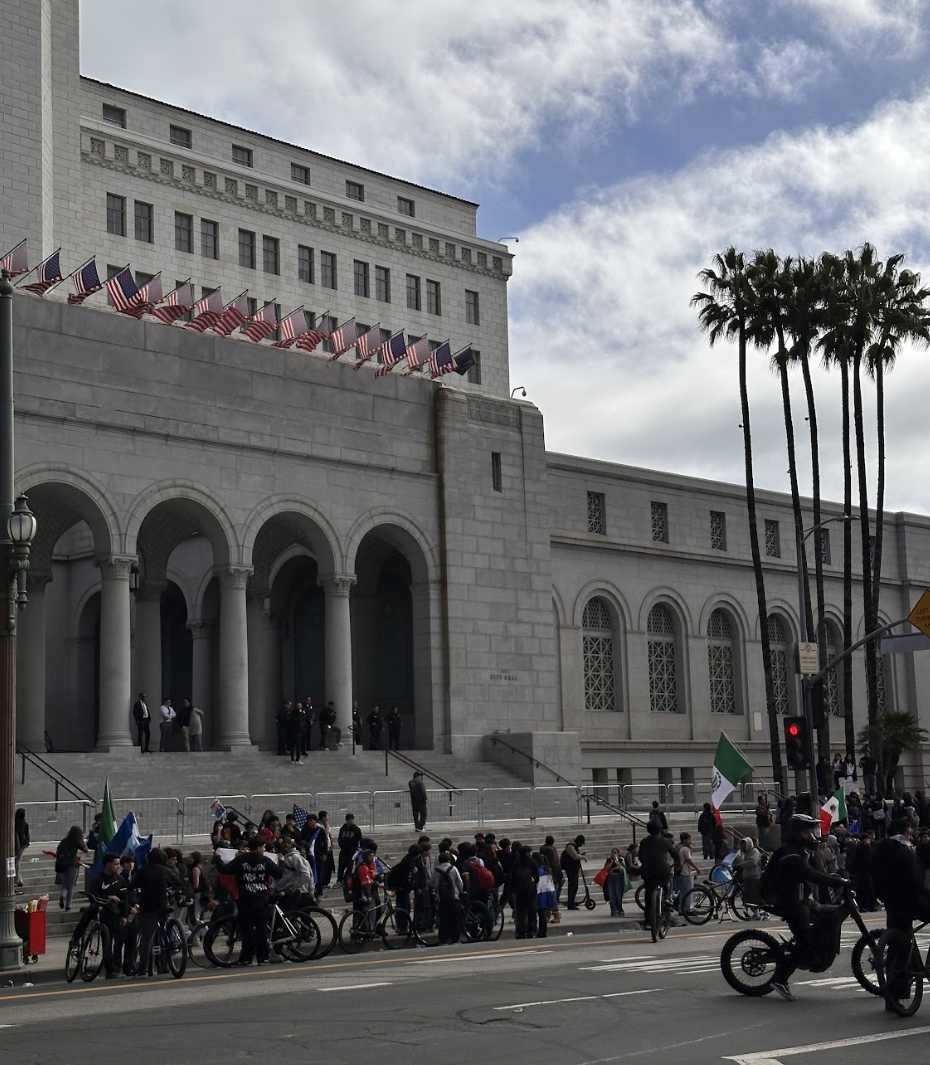
On Feb. 7, 2025, a protest occurred outside the Los Angeles City Hall and across the city as part of a school walkout in response to President Donald Trump’s increasingly strong immigration policies. It was organized through social networks and peer-to-peer networks utilizing in-person conversations. The protest consisted of students walking out of various high schools, one of which being Felicitas And Gonzalo Mendez High School, located not far from city hall. The students were in solidarity with immigrant communities, joining protests and raising awareness about their struggles. This surge in youth-led activism coincides with heightened tensions over immigration enforcement in Los Angeles.
“We couldn’t stay silent anymore,” said a 17-year-old student, who asked to be referred to as Beto. “This issue deeply affects our community. Immigrants are not given the respect they deserve in this country.”
Unlike traditional advocacy groups that rely on hierarchical structures, these emerging movements are decentralized and use social media to rapidly spread information to supporters and coordinate demonstrations against ICE. Social media played an instrumental role in orchestrating the protest, allowing organizers to rapidly spread information, mobilize supporters, and coordinate logistics in real-time.
“Most of the organizing happened through Instagram and Twitter and spread through friends,” Beto explained. “While some teachers showed support, the demonstration was neither encouraged nor discouraged.”
However, the protest took a violent turn when a masked individual in a black hoodie began disrupting the crowd, agitating participants and causing disturbances. Witnesses report that the individual provoked others, leading to an altercation. When a student confronted him, the masked man brandished a knife and stabbed the student, leaving them in critical condition.
Emergency responders arrived quickly, and the injured student was transported to a nearby hospital. Authorities have since arrested a suspect in connection with the attack. Despite the incident, organizers and participants remain committed to their cause. Many believe the attack underscores their activism’s urgency and the risks those advocating for immigrant rights face.

“No one should have to live in fear of being separated from their family simply because of their immigration status,” Beto emphasized. “Young people must use their voices—if we don’t speak up, politicians won’t listen to the people.”
As the national conversation on immigration continues, Los Angeles’ youth assert their presence, signaling that social media and other grassroots strategies are an enduring force in the fight for immigrant rights.
