


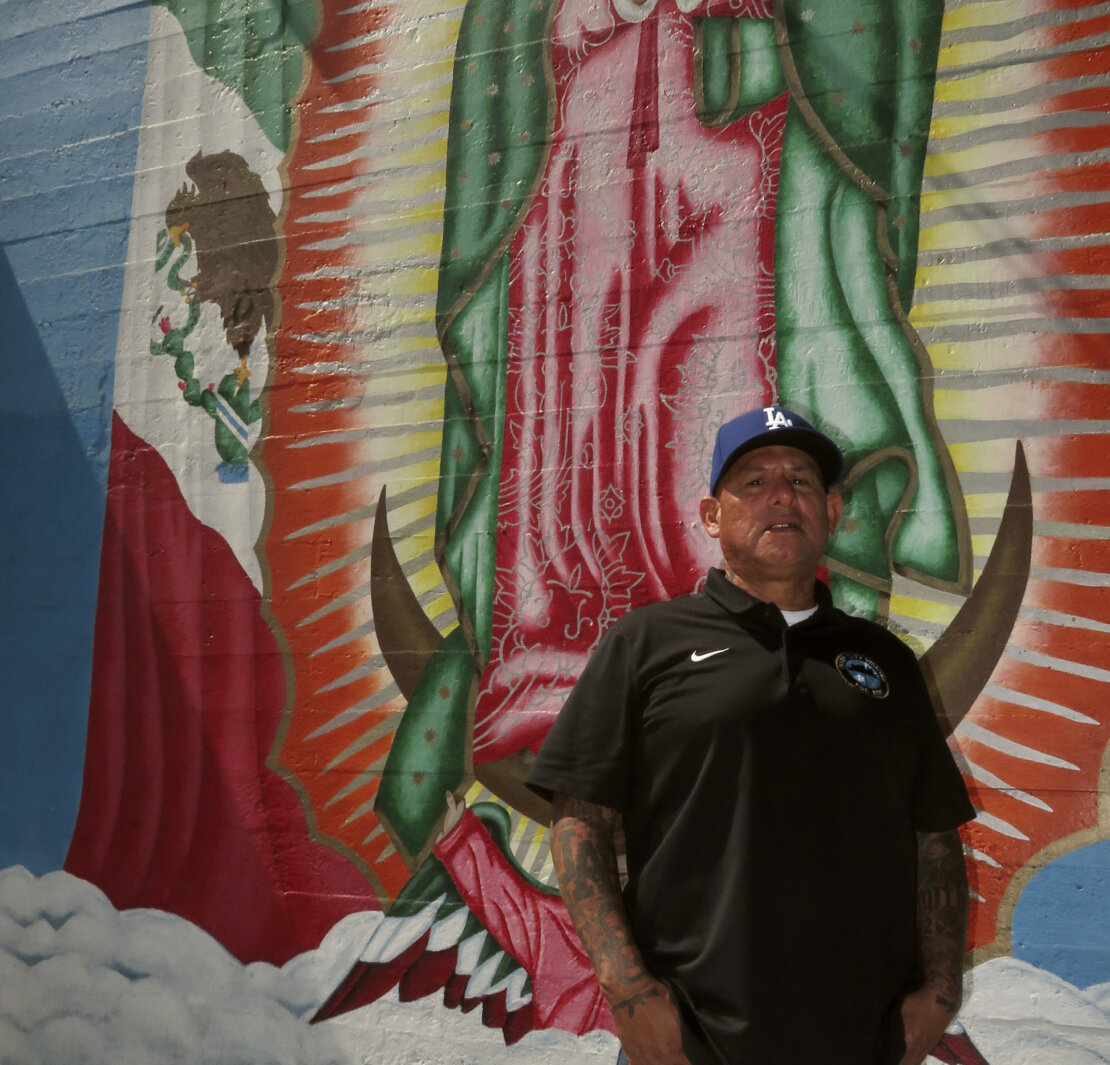
Behind the broken bones, gunshot and stab wounds, was a young boy that had no concept of life outside street violence. Born into a family of gang members, Alfred Lomas, founder of the gang rehabilitation organization Inner City Visions (ICV), was immersed in a culture that would become a testimony to his fight for the safety of the South Central Los Angeles community.
From a young age, Lomas was exposed to the gang violence, substance abuse and brutality that was present in and out of his home. He became desensitized to the socially instilled violence that bled over the streets of where he grew up in Huntington Park and Florence Firestone. Blind to his physical and emotional trauma, with no consciousness of treatment or resources from the examples set by his family, Lomas followed in their footsteps.
At 13-years-old, Lomas was initiated into the gang through a formal procedure where he was instructed to fight three other gang members to determine whether or not he was fit for the lifestyle.
“For me, joining a gang was a right of passage,” said Lomas.
Soon after being named the gang’s leader, Lomas’s role consisted of networking with other gangs to keep their business moving. But with his prominent title, came a bigger target on his back that stretched from being put behind bars to lying him on his deathbed. His drug addiction, lack of mental health treatment and loyalty to the gang kept him engulfed in the lifestyle that was going to kill him.
“I was so involved with the culture and didn’t see an opportunity out of it,” said Lomas. “It was like, ‘This is how I’m going to die or continue my life, so might as well go out in a blaze of glory.’”
It wasn’t until Lomas’s grandmother introduced him to a rehab, in his late 30s, where he was given the opportunity to utilize resources that shaped him into a better man away from violence. In the new environment that invested in his transformation and sobriety, Lomas saw that there is an out from the lifestyle when the right assets are provided.
“It was easier to walk away from the lifestyle once I started to see that there was an alternative,” said Lomas.
Through Lomas’s first-hand experience of both gang violence and rehabilitation, he grew passionate to see the same transformation in others. He wished to pay forward the proper treatment he received during his desistance by creating an organization that offers programs for redirection.
ICV is a non-profit organization and community-based intervention that aims to reduce gang violence within South Central Los Angeles through rehabilitation, counseling and economic models that offer on-site job services so that one is able to safely earn an income without the complications of carrying the label of a gang member. Lomas and his team not only work with those who wish to leave the gang lifestyle, but with active gangs in keeping the children of the community safe.
Lomas’s history with gang involvement allows for there to be emotional understanding between the community’s gangs and his movement for change. The strong influence he once possessed over the community as a gang leader is now used to transform it. He understands the root causes of gang involvement as he too found a sense of belonging in it due to his failed support system. ICV works to build trust within the community that feels unheard by systematic protection services and be that support system for them.
“There’s a whole negotiation piece that goes along with lived experience,” said Lomas. “This is why community-based intervention is so important, because it’s transformation from within, it’s place-based, it’s relational.”
In acknowledging that there can’t be a definite stop to gang violence, the organization fights to minimize it through various programs and accordances. Lomas’s team pushed for Ceasefire Agreements between conflicting, active gangs in areas of high crime so there could be an understanding to not act in any violence or rival gang activity in common areas during school hours. In approaching the Ceasefire Agreements, Lomas comes forward to gang leaders, as a former gang leader, to remind them of childrens’ innocence and that it could be their little brothers or sisters caught in the crossfire.
Apart from the Ceasefire Agreements, ICV teamed up with the initiative Parks After Dark in the inaugural pilot program that launched in Florence Firestone in 2012 as the city is known to have “disproportionately negative outcomes related to violence, suicides, and health rate,” said Lomas. After the initiative launched, results showed a 43% reduction in murder and violent crimes.
“We’re very proud of that datapoint because it reflects the importance of public safety and keeping kids safe,” said Lomas. “You can’t study, you can’t go to school, you can’t have a job if there’s no investments in communities for safety.”
When the organization first came about in 2007, its primary focus pertained to adults coming out of prison, but through the years, Lomas came to find that there was lack of protection within the youth. As gangs before were created to protect and serve low-income communities, today’s gangs show a lack of respect between each other and those outside the lifestyle, along with higher levels of deviancy.
The increase of youth involvement in gangs led ICV to implement programs within the community’s schools that redirect a student who may be at risk of heading down a similar path. As opposed to a student getting expelled for their actions, the student instead gets enrolled in ICV’s school-based initiatives that gives them a second shot.
“We began to realize there was a huge need for working with youth’s prevention and intervention,” said Lomas. “We have a memorandum of understanding with the Los Angeles Unified School District, so we provide on-campus services for school-based intervention.”
ICV follows a culturally sensitive curriculum as a result of the tensions that have stemmed from Los Angeles’ historical, racial violence. With this knowledge, the organization aims to meet “everyone where they’re at culturally.”
“We may have someone that has been a victim of racialized violence, which is historic in this community,” said Lomas. “Being able to understand sensitivity and compassion is very important for us and our work, especially if we’re mediating black-brown gang violence.”
Lomas’s transformation defies the stigma around a gang member’s ability to break the cycle and change. Today, Inner City Visions is a $1.7 million organization that has shown success rates in the transformation of individuals and continues to change the community for the better. At 60-years-old, Lomas continues to utilize his “undeniable passion” to help others lead a lifestyle away from gangs, he and his team fight each day to de-escalate violence for the safety of their community.
From a young age, Lomas was exposed to the gang violence, substance abuse and brutality that was present in and out of his home. He became desensitized to the socially instilled violence that bled over the streets of where he grew up in Huntington Park and Florence Firestone. Blind to his physical and emotional trauma, with no consciousness of treatment or resources from the examples set by his family, Lomas followed in their footsteps.
At 13-years-old, Lomas was initiated into the gang through a formal procedure where he was instructed to fight three other gang members to determine whether or not he was fit for the lifestyle.
“For me, joining a gang was a right of passage,” said Lomas.
Soon after being named the gang’s leader, Lomas’s role consisted of networking with other gangs to keep their business moving. But with his prominent title, came a bigger target on his back that stretched from being put behind bars to lying him on his deathbed. His drug addiction, lack of mental health treatment and loyalty to the gang kept him engulfed in the lifestyle that was going to kill him.
“I was so involved with the culture and didn’t see an opportunity out of it,” said Lomas. “It was like, ‘This is how I’m going to die or continue my life, so might as well go out in a blaze of glory.’”
It wasn’t until Lomas’s grandmother introduced him to a rehab, in his late 30s, where he was given the opportunity to utilize resources that shaped him into a better man away from violence. In the new environment that invested in his transformation and sobriety, Lomas saw that there is an out from the lifestyle when the right assets are provided.
“It was easier to walk away from the lifestyle once I started to see that there was an alternative,” said Lomas.
Through Lomas’s first-hand experience of both gang violence and rehabilitation, he grew passionate to see the same transformation in others. He wished to pay forward the proper treatment he received during his desistance by creating an organization that offers programs for redirection.
ICV is a non-profit organization and community-based intervention that aims to reduce gang violence within South Central Los Angeles through rehabilitation, counseling and economic models that offer on-site job services so that one is able to safely earn an income without the complications of carrying the label of a gang member. Lomas and his team not only work with those who wish to leave the gang lifestyle, but with active gangs in keeping the children of the community safe.
Lomas’s history with gang involvement allows for there to be emotional understanding between the community’s gangs and his movement for change. The strong influence he once possessed over the community as a gang leader is now used to transform it. He understands the root causes of gang involvement as he too found a sense of belonging in it due to his failed support system. ICV works to build trust within the community that feels unheard by systematic protection services and be that support system for them.
“There’s a whole negotiation piece that goes along with lived experience,” said Lomas. “This is why community-based intervention is so important, because it’s transformation from within, it’s place-based, it’s relational.”
In acknowledging that there can’t be a definite stop to gang violence, the organization fights to minimize it through various programs and accordances. Lomas’s team pushed for Ceasefire Agreements between conflicting, active gangs in areas of high crime so there could be an understanding to not act in any violence or rival gang activity in common areas during school hours. In approaching the Ceasefire Agreements, Lomas comes forward to gang leaders, as a former gang leader, to remind them of childrens’ innocence and that it could be their little brothers or sisters caught in the crossfire.
Apart from the Ceasefire Agreements, ICV teamed up with the initiative Parks After Dark in the inaugural pilot program that launched in Florence Firestone in 2012 as the city is known to have “disproportionately negative outcomes related to violence, suicides, and health rate,” said Lomas. After the initiative launched, results showed a 43% reduction in murder and violent crimes.
“We’re very proud of that datapoint because it reflects the importance of public safety and keeping kids safe,” said Lomas. “You can’t study, you can’t go to school, you can’t have a job if there’s no investments in communities for safety.”
When the organization first came about in 2007, its primary focus pertained to adults coming out of prison, but through the years, Lomas came to find that there was lack of protection within the youth. As gangs before were created to protect and serve low-income communities, today’s gangs show a lack of respect between each other and those outside the lifestyle, along with higher levels of deviancy.
The increase of youth involvement in gangs led ICV to implement programs within the community’s schools that redirect a student who may be at risk of heading down a similar path. As opposed to a student getting expelled for their actions, the student instead gets enrolled in ICV’s school-based initiatives that gives them a second shot.
“We began to realize there was a huge need for working with youth’s prevention and intervention,” said Lomas. “We have a memorandum of understanding with the Los Angeles Unified School District, so we provide on-campus services for school-based intervention.”
ICV follows a culturally sensitive curriculum as a result of the tensions that have stemmed from Los Angeles’ historical, racial violence. With this knowledge, the organization aims to meet “everyone where they’re at culturally.”
“We may have someone that has been a victim of racialized violence, which is historic in this community,” said Lomas. “Being able to understand sensitivity and compassion is very important for us and our work, especially if we’re mediating black-brown gang violence.”
Lomas’s transformation defies the stigma around a gang member’s ability to break the cycle and change. Today, Inner City Visions is a $1.7 million organization that has shown success rates in the transformation of individuals and continues to change the community for the better. At 60-years-old, Lomas continues to utilize his “undeniable passion” to help others lead a lifestyle away from gangs, he and his team fight each day to de-escalate violence for the safety of their community.
