


In the sprawling city of Los Angeles, where dreams turn into opportunities against the backdrop of palm trees and city lights, a new wave of talented DJs is emerging from the most unexpected places — college dorms and student homes.
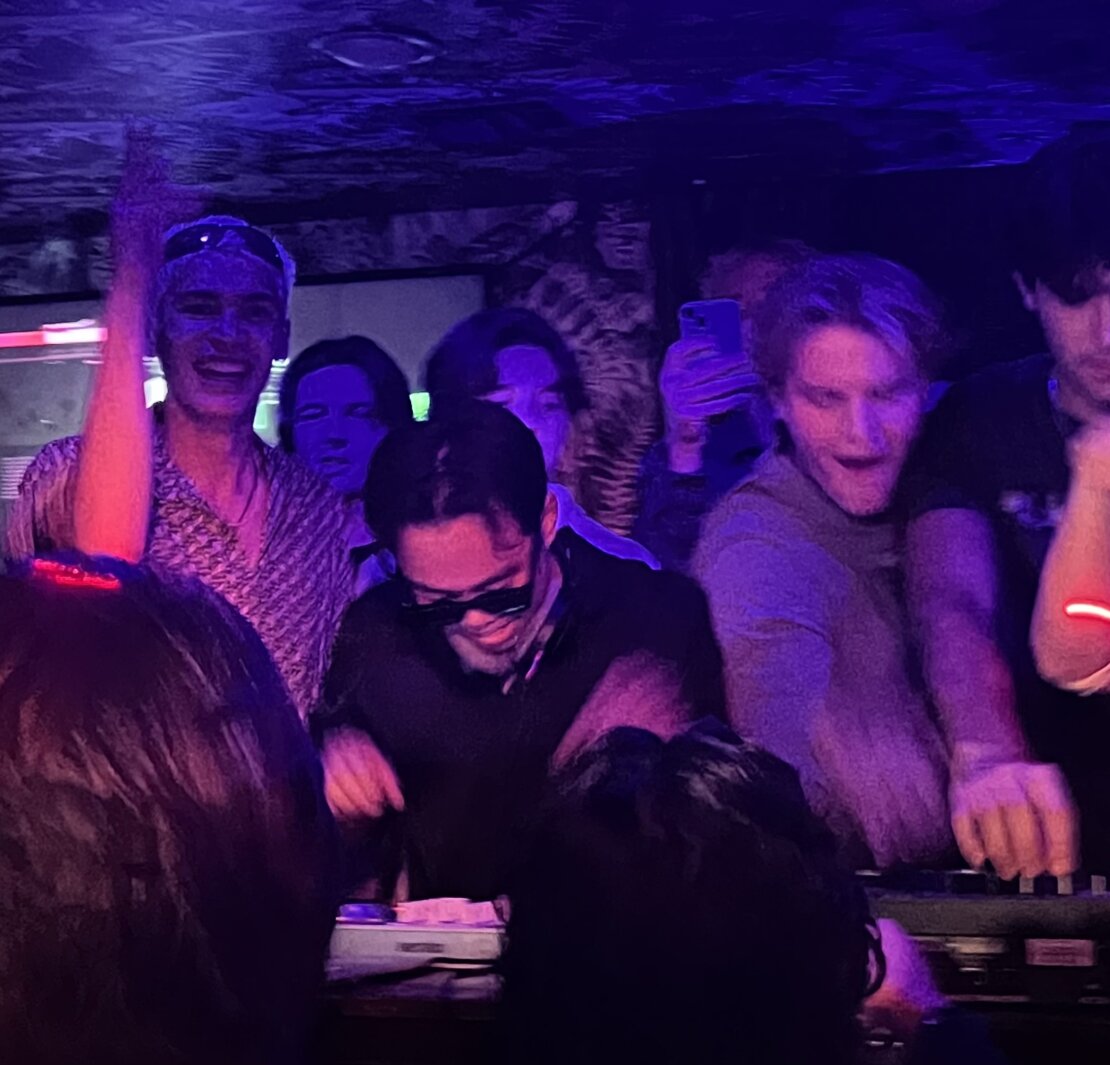
For many student DJs, the journey starts in the comfort of their own bedrooms as a personal hobby or a means of entertaining friends at house parties. However, the leisure activity has now transformed into a gateway to success for some student DJs here at LMU, such as Bryce Yoshida, a senior finance major and a member of the Sigma Phi Epsilon fraternity. Yoshida was inspired to take up DJing after witnessing the impressive productions of his chapter’s previous president Drew Seibel.
“Whenever my fraternity would have parties, I wouldn’t even go and talk to people,” Yoshida said. “I would literally just stand there and watch Drew DJ the whole time.”
Yoshida made the decision to purchase his own beginner DJ software, which coincidentally arrived at his on-campus apartment when he contracted COVID-19.
“I was locked in Rains for 12 days and I had nothing to do. Thankfully, I got my DJ controller,” Yoshida said. “So for 12 days straight I just played around, downloaded songs that I liked to hear, and watched YouTube tutorials. It was a lot of fun.”
The COVID-19 pandemic brought about unprecedented challenges for everyone, forcing individuals worldwide to adapt to a new normal. However, within the realm of adversity, a silver lining emerged for students, particularly those with a passion for music. Avery Kokka, a senior at LMU, also came out of the pandemic with a newfound love for DJing, and can definitely be considered a leader of this new wave of DJ culture at LMU.
“I never really knew how to get started and it seemed like there was always such a barrier to entry, so I just never really did it,” Kokka said. “Then, once I was exposed to so many people around me doing it, I was able to see that it was actually something that was feasible.”
For a little over $150, Kokka purchased the DDJ-200, the cheapest deck she could find, in May of 2022. By October of the same year, she was professionally DJing with her friend and co-owner Liam Tunney at events hosted by their LA-based event company, Apolla Events.
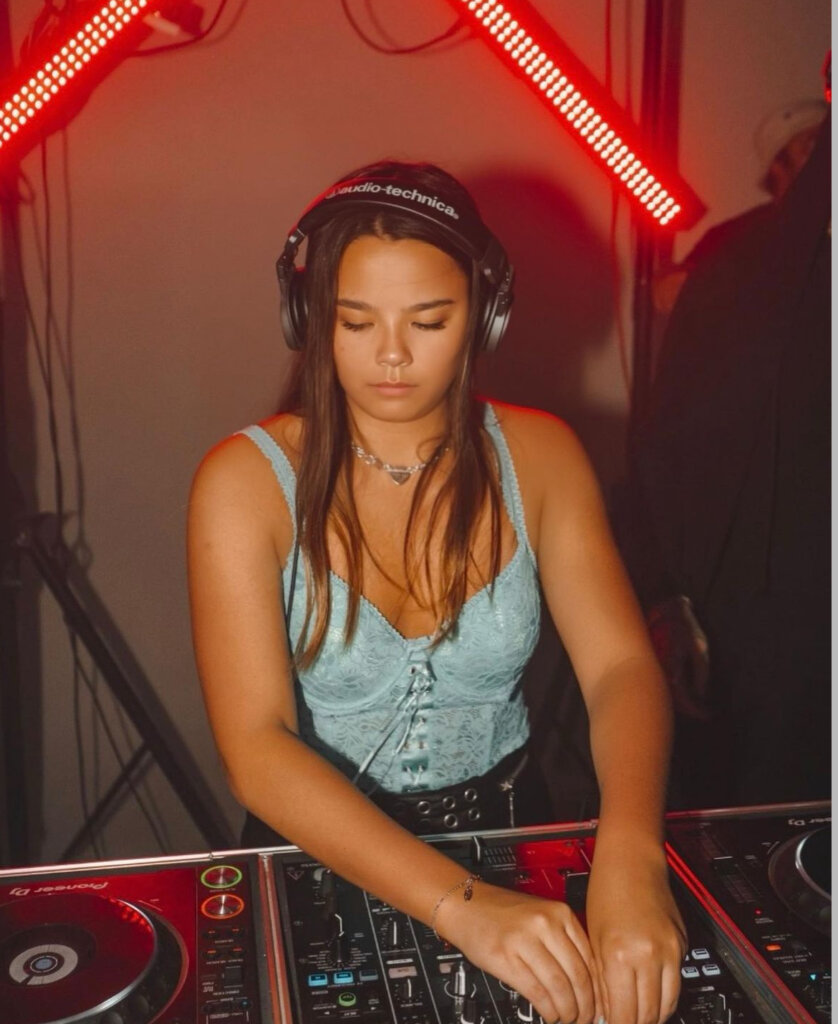
“As soon as I realized I could actually make money doing that and that it would be a fun thing for me to do, I was just like, ‘Damn, if I could do this for the rest of my life, I would love to do that,’” Kokka said.
As both Yoshida and Kokka gained traction, they began to forge connections within both the LMU community and the local music community. For Yoshida specifically, DJ opportunities stemmed primarily from events hosted by sororities, business fraternities, and other LMU organizations.
“That was kind of my bread and butter until like two weeks ago when my friend Joey Kula invited me to come and join him for a set at Baja Sharkeez,” Yoshida said. “A lot of past LMU DJs who I’ve looked up to have all played there. For me, that was kind of like my ticket to playing in more clubs hopefully.”
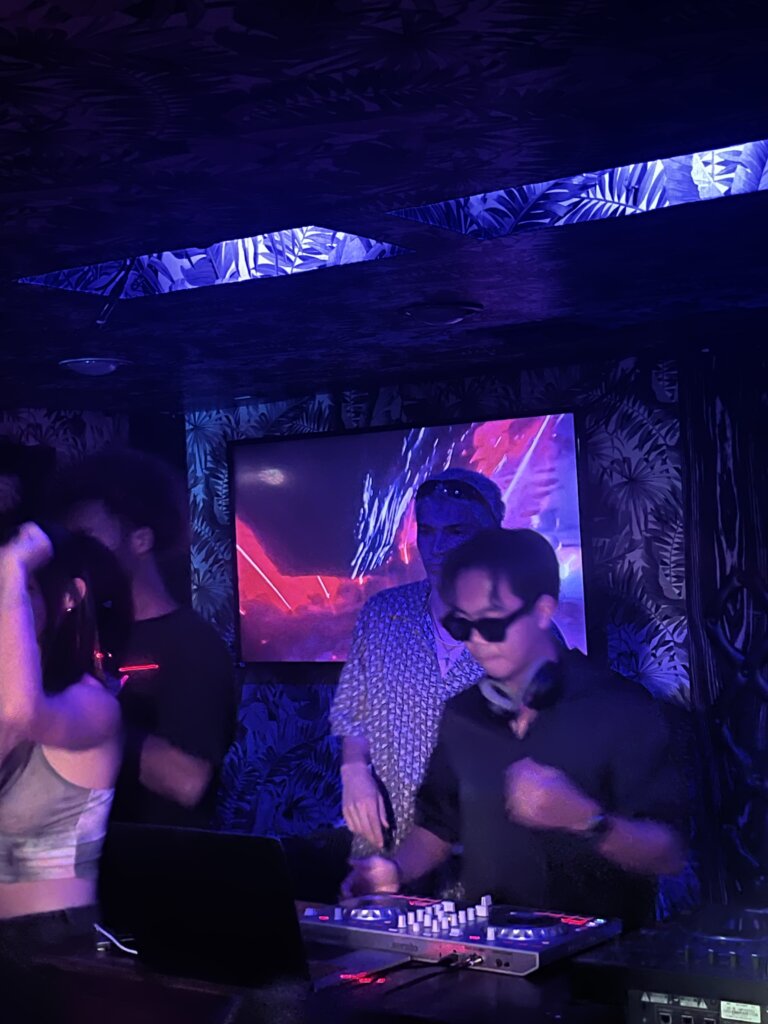
Kokka has also independently DJed at some of LA’s hottest clubs including The Victorian, Poppy, and Melrose Place in addition to rooftops, speakeasies, and clubs in Miami, New York City, San Francisco, and Mexico.
For both Yoshida and Kokka, creating a thrilling atmosphere on the dance floor requires more than just technical skills; it demands a keen understanding of music, an intuitive connection with the audience, and self-confidence to improvise and pivot while DJing.
“For my first year, I wasn’t too sure about how to count beats and learn phrasing and when to transition,” Yoshida said. “I started with house music just because it’s a lot more forgiving to mix a song without words.”
Yoshida’s DJ sets were essentially effortless until his audience wanted to hear their favorite radio songs or music from their Spotify playlists. With motivation and patience, Yoshida eventually learned how to analyze and understand the software better, which allowed him to incorporate rap music into his sets for the first time at the beginning of this year. He also got more comfortable with taking song requests.
“That was something I really feared, but it’s a lot of fun and keeps it fresh, “Yoshida said. “And at the end of the day, I know the crowd wants to hear what they want to hear.”

Similarly, Kokka’s distinctive approach to DJing reflects a prioritization for the audience’s taste. Her commitment to fluidity and responsiveness is evident in her preparation, or lack thereof, as she never fully pre-plans a set. Instead, she immerses herself in a diverse range of music, downloading 25 to 50 new songs before each gig. This extensive library becomes her palette, allowing her to read the energy of the crowd and craft a sonic experience that resonates with them.
“I’ll just download all of that onto my USB and then I won’t really have anything pre-planned,” Kokka said. “Then, based on how the crowd is reacting to what I’m playing, that’s how I’ll determine what I play for the rest of the set.”
Whether it’s remixing sing-along Top 40 hits or seamlessly blending old-school Beyoncé and Rihanna with new disco and tech house, Kokka’s signature style emerges from a dynamic interplay between preparation and spontaneity. It’s a musical dialogue where the audience’s reactions guide the trajectory of the set. “My sets are kind of unique because I want to play to the specific venue and crowd,” Kokka said. “So no two sets I play are the same ever. They change every time.”

Now, with professional management, Kokka and her team are working on a tour for the spring of 2024. She has also released original music this past year under the artist duo Kolacane. Kolacane released their debut single in June of this year, and their second release “Somewhere” will be available to stream this Friday, Dec. 15.
The once-perceived barriers of entry to the DJ world are crumbling day by day, with artists like Yoshida and Kokka proving that passion, determination, and a bit of technology can pave the way to success. Students can now embark on their DJ journey simply with a laptop, some basic equipment, and a deep love for music. “I highly encourage other people to check out DJing ‘cause it’s a lot of fun,” Yoshida said. “It’s definitely a lot more accessible than it once was.”
Similarly, with the emergence of more female DJs, Kokka also calls for increased representation at LMU. “My hope is that if there’s a girl that’s reading this and wants to DJ, feel free to reach out to me,” Kokka said. “I really wish that there had been someone for me to look up to at LMU that was doing this because I probably would have started way sooner if there had been.”
For updates and more information, follow @Bryce.Yoshida and @AvKokka on Instagram.
