


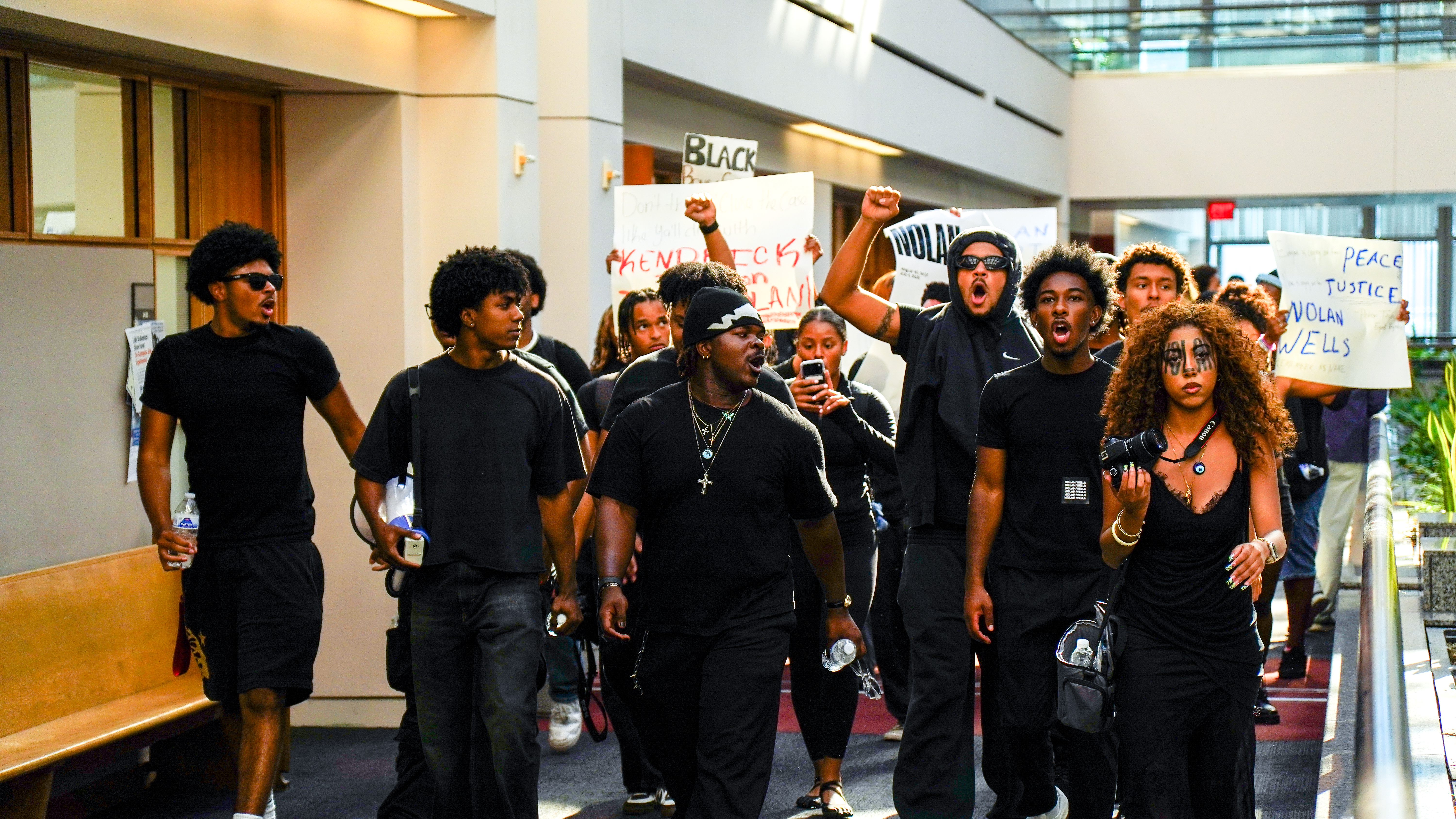
Students at Loyola Marymount University gathered on Nov. 4 for a student-led walkout supporting Nolan Wells. With their voices and strong-willed spirits, students demonstrated a call to action for the continuation of public attention on Wells’ death, institutional accountability, and solidarity among Black students. This walkout is a declaration that Nolan Wells will not be forgotten and that his death will not fade from campus conversation. For LMU students who participated in the walkout, leaving class and other commitments was a necessity for justice.
Jude Calhoun, a freshman business management and leadership student and a freshman representative for Brothers of Consciousness, said he was inspired by similar demonstrations at other universities, particularly Historically Black colleges and universities.
“How come we’re not doing it out here on the West Coast, too? I feel like we should do it as well, because we can’t let his name die out,” said Calhoun.
Calhoun said the demonstration was “to inspire others” and to show students attending a predominantly white institution that they can organize, fight for justice, and demand adequate answers.
The walkout brought together students with various roles in campus organizations. Sol Alexander, a senior vice president of Sisters in Solidarity, described the walkout as a collective sacrifice, not just a simple interruption to the school day.
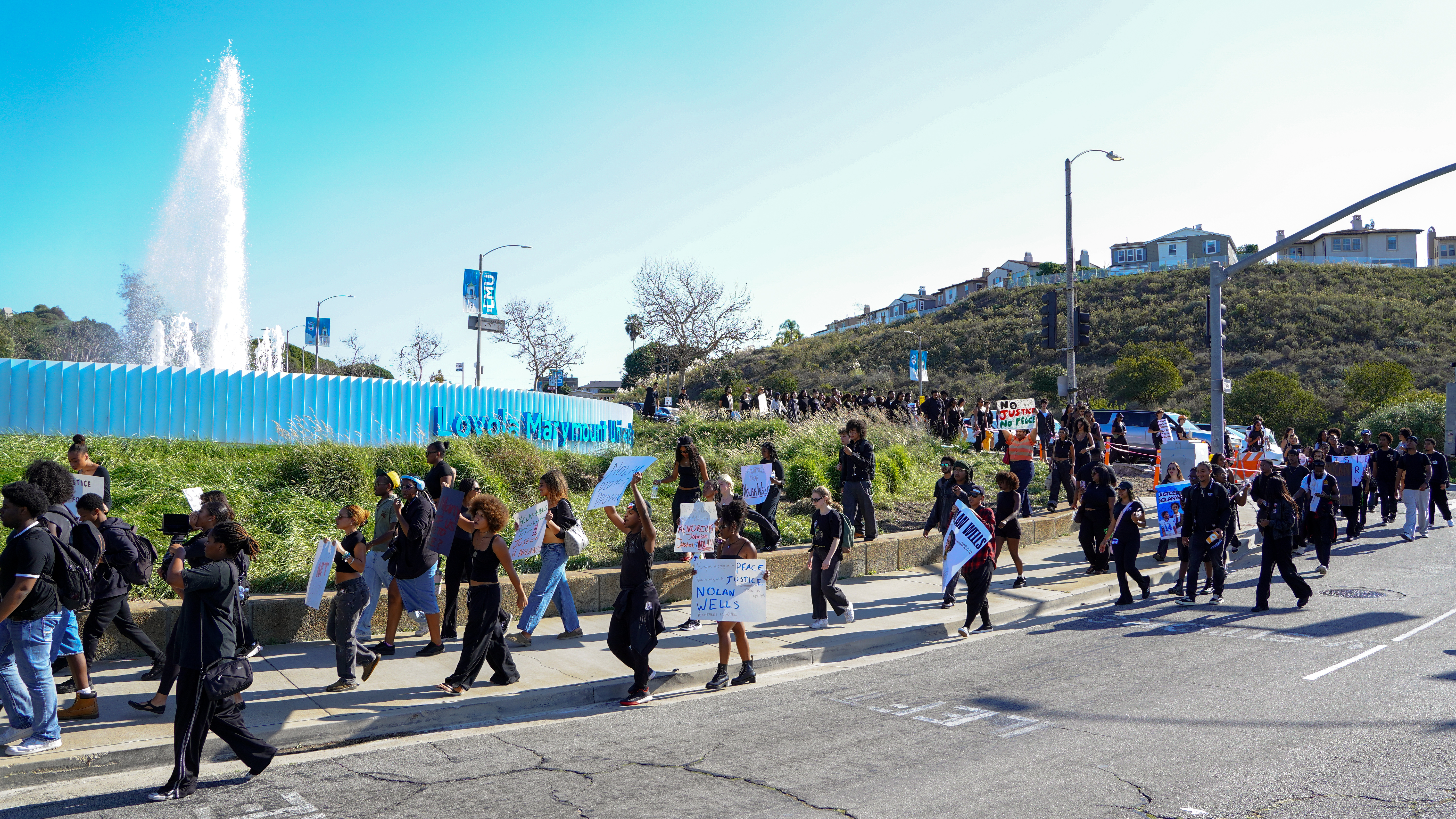
“A walkout is a sense of solidarity and a willingness to sacrifice,” said Alexander, referring to students leaving class, work, and obligations to participate.
Alexander also wanted the demonstration to reach students unfamiliar with Wells’ case or who hadn’t considered the broader pattern of unsolved Black cases.
“I want to create enough commotion to turn heads and bring this problem to the surface point where this is not just a Black issue,” said Alexander. She urged students of all ethnicities at LMU to fight for Nolan Wells’ death and the many other Black people who have passed under suspicious circumstances.
Broadening awareness was a central standing point for students organizing and participating in the walkout. David Opaleke, a senior computer science major, president of the African Student Association, and a board member of the National Society of Black Engineers, also stands with Alexander on the importance of introducing this case to individuals who otherwise never encountered it.
However, Opaleke said he did not view the walkout as an endpoint. “It starts with exposure to students, but it cannot end here,” said Opaleke. He believes this walkout must spread throughout LA and even the West Coast as a whole. Opaleke knows exposure takes time, but it’s important to have “little things to then provoke cause and action.”
Opaleke believes change starts with students. “As Michael Jackson said, it starts with the man in the mirror.”
For Brynin Henderson, a senior theater arts major and social action chair for the Tau Delta chapter of Delta Sigma Theta Sorority, Inc., participating in the walkout was connected to her responsibility to support Black students and causes on campus.
Henderson said being part of a historically Black Greek organization made it important for her to show support at a predominantly white institution. She also said the gathering reflected the way students must see themselves in Wells.
“We are all Nolan Wells in one way or another,” Henderson said. Henderson expressed that the tragedy of Wells’ passing could have happened to any one of us. She urged students to see the broader picture and not be subject to complacency.
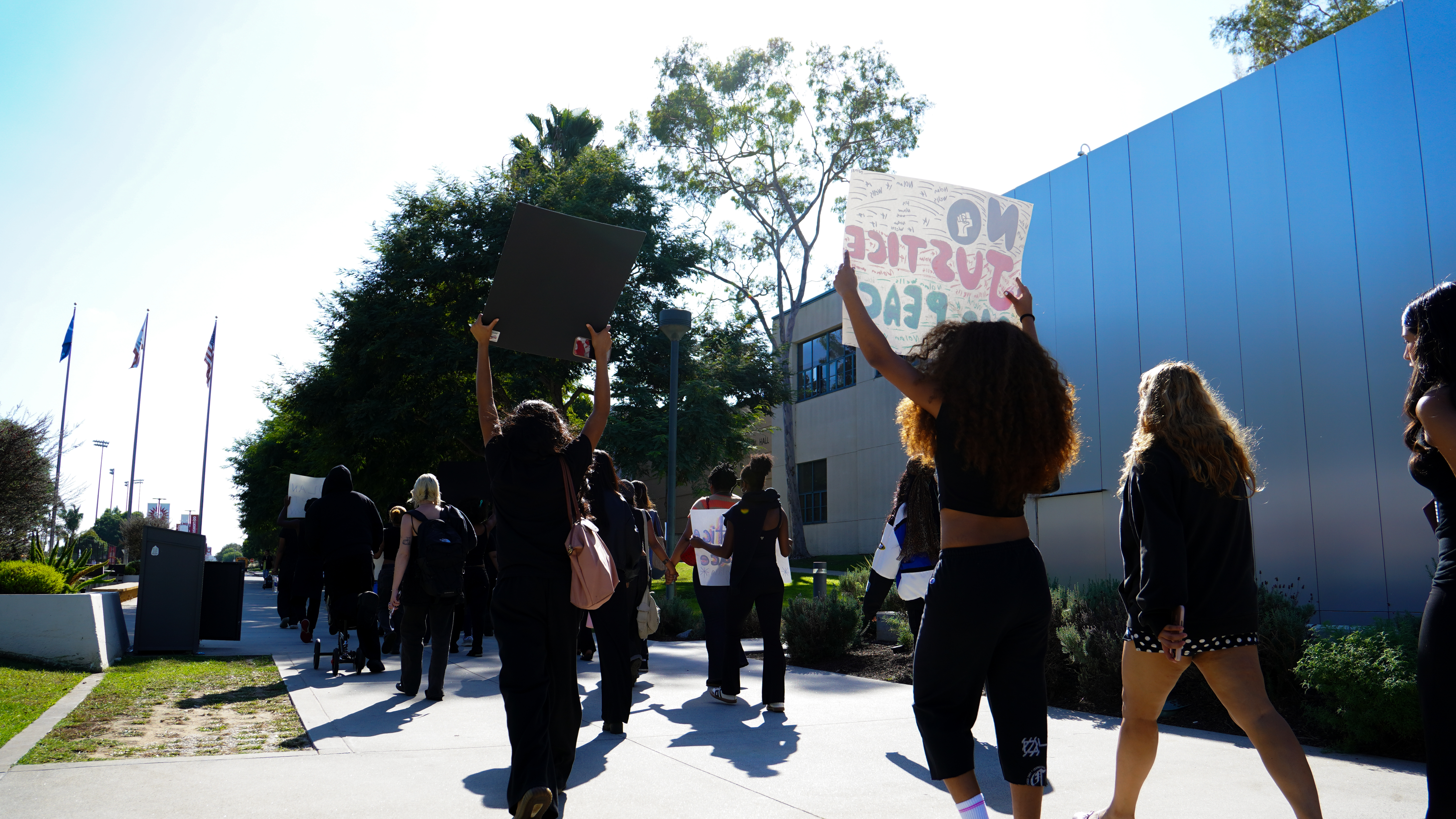
Henderson argued that the walkout should also prompt LMU to demonstrate what its support for Black students means in practice. She questioned how the university supports the organizations and communities it claims to serve.
“LMU is now a Black-serving institution, but how is the institution serving us as they claim to do so?” said Henderson.
She said institutional support should include funding mentoring, promoting Black student events, and outreach to racialized issues to LMU students and faculty.
The students’ focus on education and institutional responsibility reflects a longer history of distrust in the government surrounding investigations into the deaths of Black people, according to Professor Jennifer “Jae” Williams-Riley, a professor of LMU’s African American Studies Department.
Williams-Riley said there is a history of Black people’s deaths receiving inadequate investigation and of institutions making negative assumptions about Black people. She said that history shapes how many people interpret Wells’ case and why the case has resonated beyond the immediate circumstances.
“There is a history of Black individuals not getting justice,” Williams-Riley said.
Through multiple conversations with Black students at LMU campus, many expressed their hesitancy toward governmental institutions. History reflects the acceptance and ignorance of the disposal of Black people.
In particular, Alexander expressed that she feels distrust in the government.
“Across history, whether it’s the Trump administration or the Biden administration or everything before it, there’s always been a lack of care and the infliction of violence towards Black bodies,” said Alexander.
This is what Dr. Brad Stone, LMU professor of philosophy, explains as “Black fungibility.” Stone explains that fungibility is the complete and utter disregard for Black men dying in America. To society, the death of Black men is “never wrong” or “excusable.”

“It doesn’t matter how great you are, it doesn’t matter how accomplished you are, as a Black man in America, your life can end on any day. So Nolan Wells just becomes one more example of a long heritage of fungible violence,” said Stone.
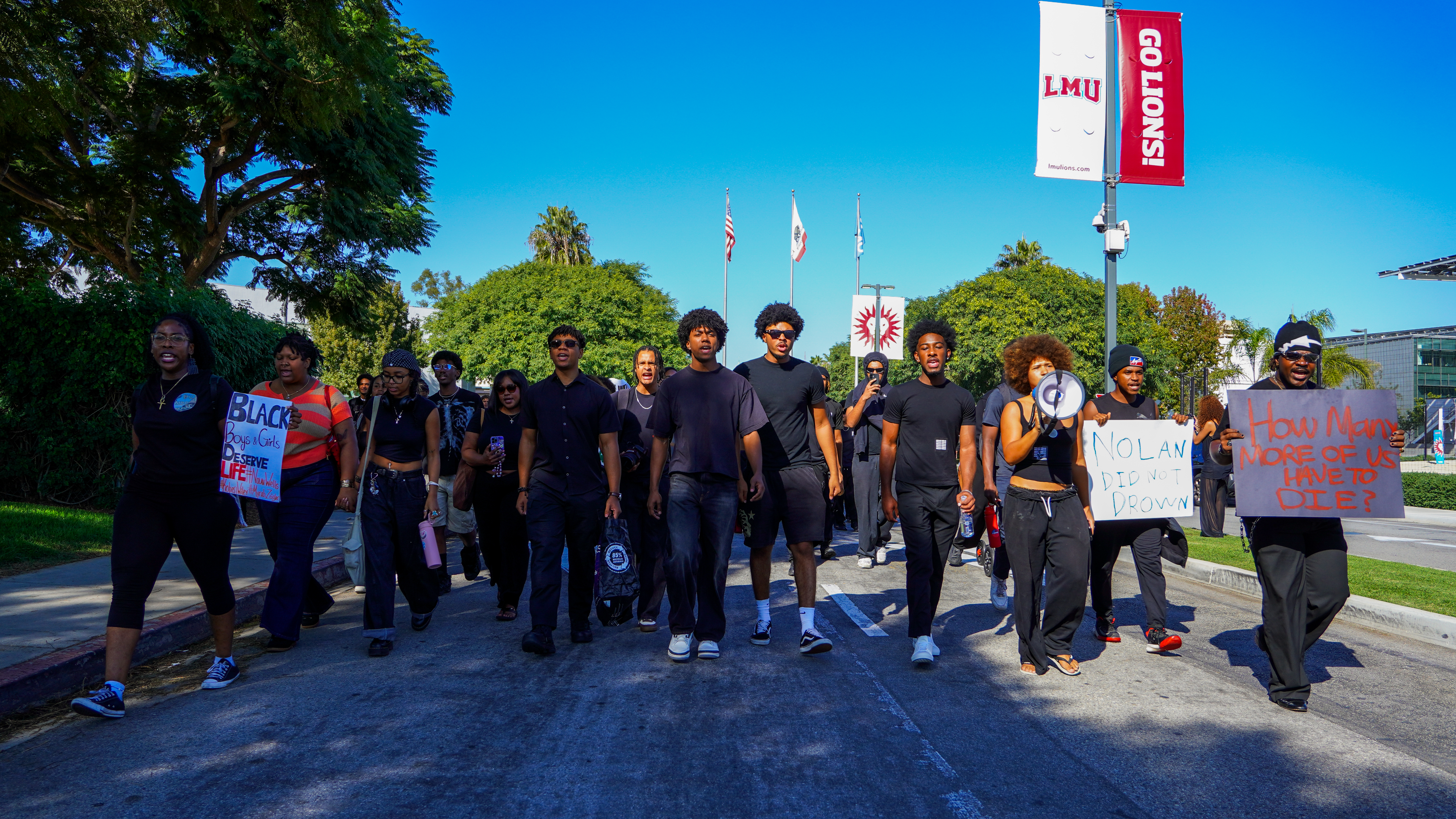
Kyle Reid, junior and vice president of the Black Student Union, says, “Black men deserve to grow old in the future.”
Reid hopes that after this walkout, Black faculty will continue to preserve Black spaces for students and that students on campus feel safe and not isolated at LMU.
“We’re all community,” said Reid.
Jason Perry, LMU’s TLC coordinator and faculty member of the Office of Black Student Services, said OBSS supported the student-led walkout to create a space for students, faculty, and staff to gather, learn, and discuss the significance of action.
“We have to continue to show that we care,” Perry said. “We have to continue to show up and to make noise.”
Perry explains the importance of having institutions that provide support for Black students. For Perry, this was an opportunity for the university community to humanize Wells and recognize the responsibility students and educators have to stand against injustice.
Perry believes that after the walkout, faculty should continue building relationships with students, focusing on education and supporting student leadership initiatives. Perry hopes to use education to develop critical consciousness and prepare students to serve their future communities.
“We can model what we want you to do in the spaces that you go to next after you graduate,” Perry said.
This walkout is only the beginning. Calhoun hopes the demonstration will lead to a stronger Black student voice on campus; Alexander wants the attention of Nolan Wells’ case to be broadcast across campus; Henderson calls on LMU to show viable support; and Opaleke wants students to continue educating themselves and others.
“We will not be silenced,” Calhoun said. “We will continue to protest and fight for any injustice left unsolved.”
