


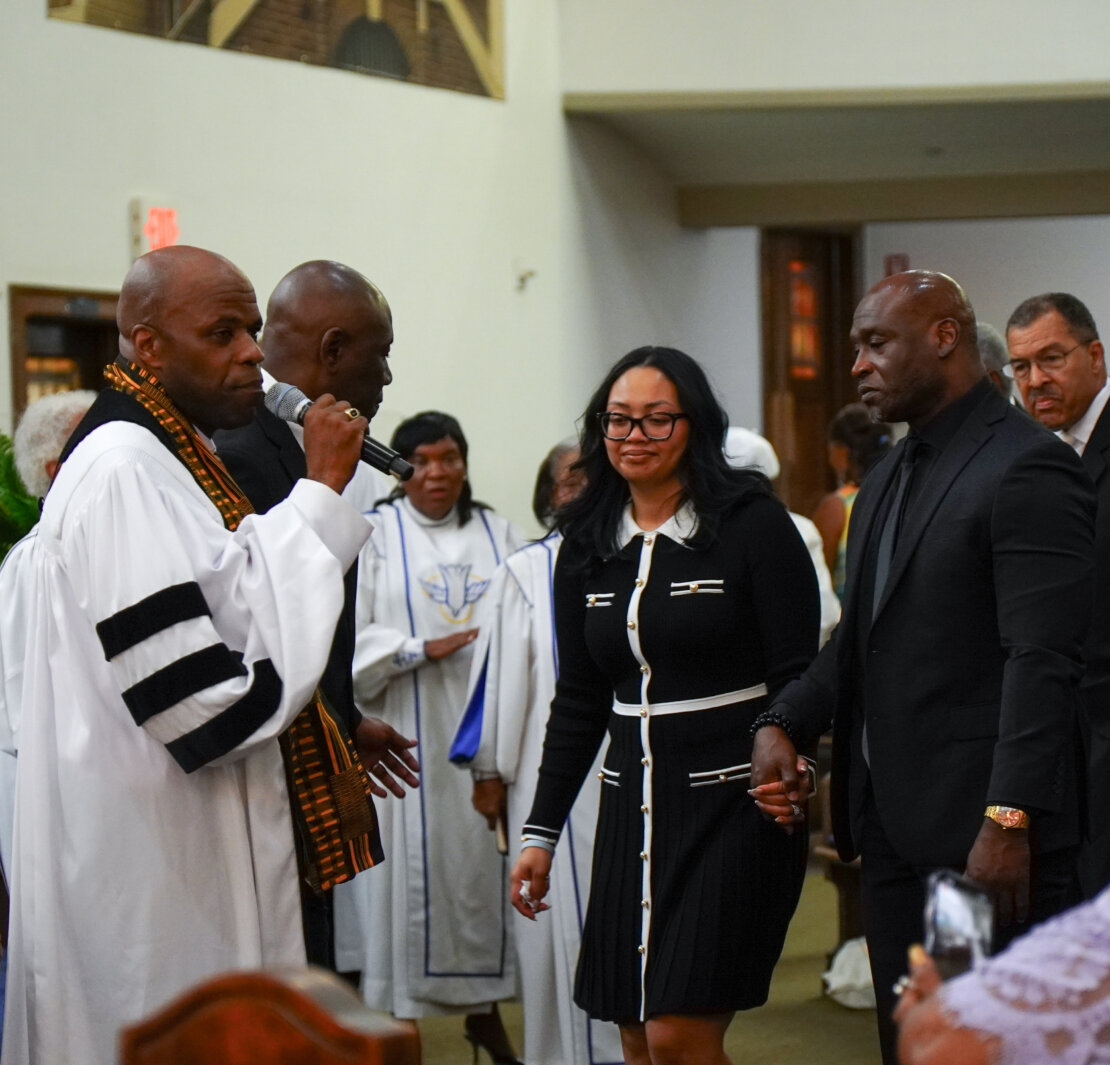
On Nov. 4 at noon, students and faculty across LMU’s campus will gather at the Mbongi Spot for a walkout honoring Nolan Wells in the ongoing fight against injustice.
Freshman Jude Calhoun, a member of The Learning Community (TLC), Brothers of Consciousness (BOC), and the Office of Black Student Services (OBSS), initiated the idea in collaboration with numerous Black student organizations on campus.
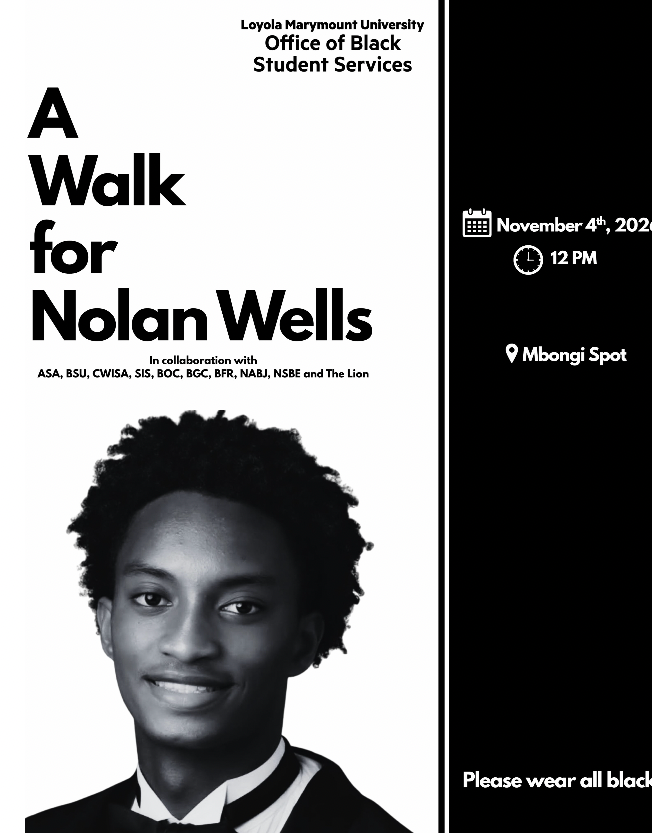
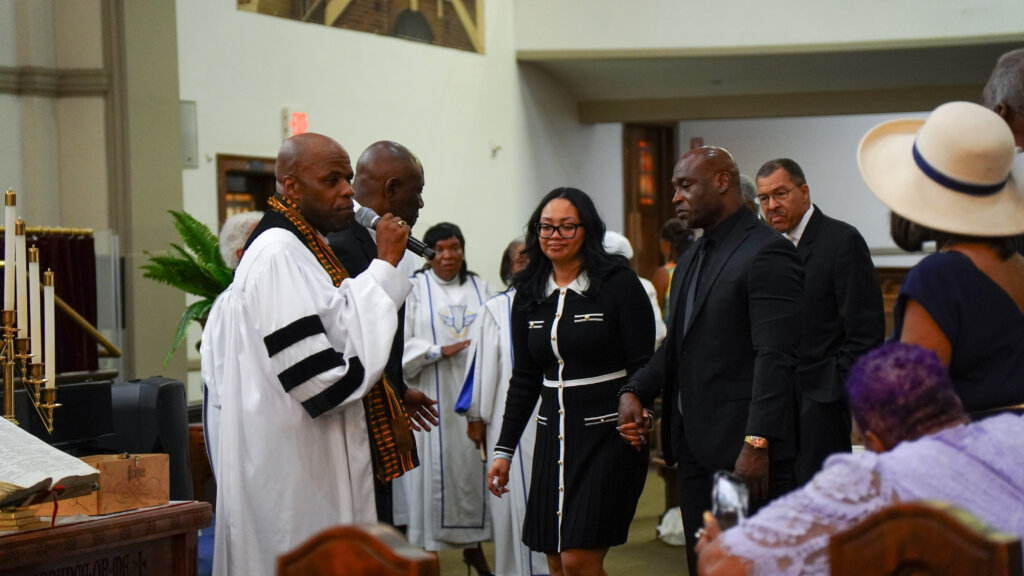
“Nolan is loved, cherished, and honored,” said his mother, Christine Wells-Wonsley, during a conference on Sep. 22 in Stonecrest, Georgia.
Wells was born in Ocean Springs, Mississippi, and played football at Southwest Mississippi Community College. On July 4, Wells traveled by boat to Horn Island with friends—he did not return with them. Two days later, on July 6, a park ranger found his body in the water near Horn Island. Wells was 18.
Two autopsies followed. The first was performed on July 7 by Mississippi State Chief Medical Examiner Dr. Staci Turner. Turner’s report added that Wells’ airways held no fluid or debris, his stomach was empty, and his internal organs were free of injury and natural disease.
An independent autopsy requested by the Nolan Wells family was later performed by forensic pathologist Dr. Roger A. Mitchell Jr. on July 10. Both autopsy reports listed that Wells had two dark red-purple deep soft tissue bruises beneath the scalp on the back of Wells’ head and listed the manner of death as undetermined.
However, in Mitchell’s autopsy report, it states, “Because the initial autopsy rightfully removed and dissected each organ, there are additional limitations inherent in the second autopsy of Nolan Wells.”
Wells’ internal neck structures, including the trachea, have also been removed.
In September, a Jackson County grand jury unanimously declined to bring charges, finding that the position, condition, time of discovery, and the location of Mr. Wells’ body are consistent with drowning.
Questions have also been raised about the autopsy findings. Turner’s report noted that Wells’ airways contained no fluid or debris, a finding that has drawn attention amid questions surrounding the official determination of drowning. The grand jury acknowledged the bruising of Wells’ head but stated that its exact cause is uncertain and nonfatal.
“For the Wells family, the grand jury decision represents another development in an investigation they say still has not provided a complete explanation of what happened to their son,” said civil rights attorney Ben Crump.
The Wells family has asked the FBI, the Department of Justice, and the National Park Service to get involved; since Mississippi has no statute of limitations, the case can reopen if credible new evidence emerges.
Wells’ death sparked a nationwide conversation about the circumstances surrounding his death and whether foul play was involved. Some have pointed to inconsistencies in accounts from people on the boat with Wells, raising questions about what happened and whether everyone involved is telling the truth. Theories surround numerous deleted messages about who was on the boat, whether Nolan Wells “left” the boat, and how Wells’ body was found.
The grand jury ultimately declined to indict anyone, finding insufficient evidence to bring criminal charges while rejecting claims that it was racially motivated.
However, it is reasonable to doubt this ruling, especially in a state like Mississippi, historically rooted in racism and unsolved murder cases of Black citizens. The 1955 murder of 14-year-old Emmett Till remains a reminder of how often the justice system has failed Black families seeking answers.
Dr. Brad Stone, a philosophy professor and a member of the Black faculty and staff at Loyola Marymount University for over 20 years, said in an interview, “History doesn’t always repeat, but it often rhymes.” For Stone, the historical pattern of violence against young Black men in America cannot be ignored.

Distrust of government officials handling Nolan Wells’ case now extends to Turner as well. Critics point to Turner, who ruled the 2021 death of Damien Cameron “undetermined,” while Cameron’s mother has alleged that Rankin County deputies knelt on his neck.
According to reporting from The New York Times and Mississippi Today, three national pathologists later said Cameron’s death should have been ruled a homicide. More than 50,000 people have signed a petition calling for an investigation of Turner’s office and for her medical license to be revoked. Although a petition is not proof of misconduct, this shows how badly the public wants answers and how little they trust institutions and government authorities’ findings.
Walkouts have historically driven positive change in society, from the Civil Rights Movement to the Black Lives Matter movement, especially in times of crisis, and have pushed institutions toward policy change.
Conversations with Black student organization leaders reveal why the case has prompted campus advocacy.
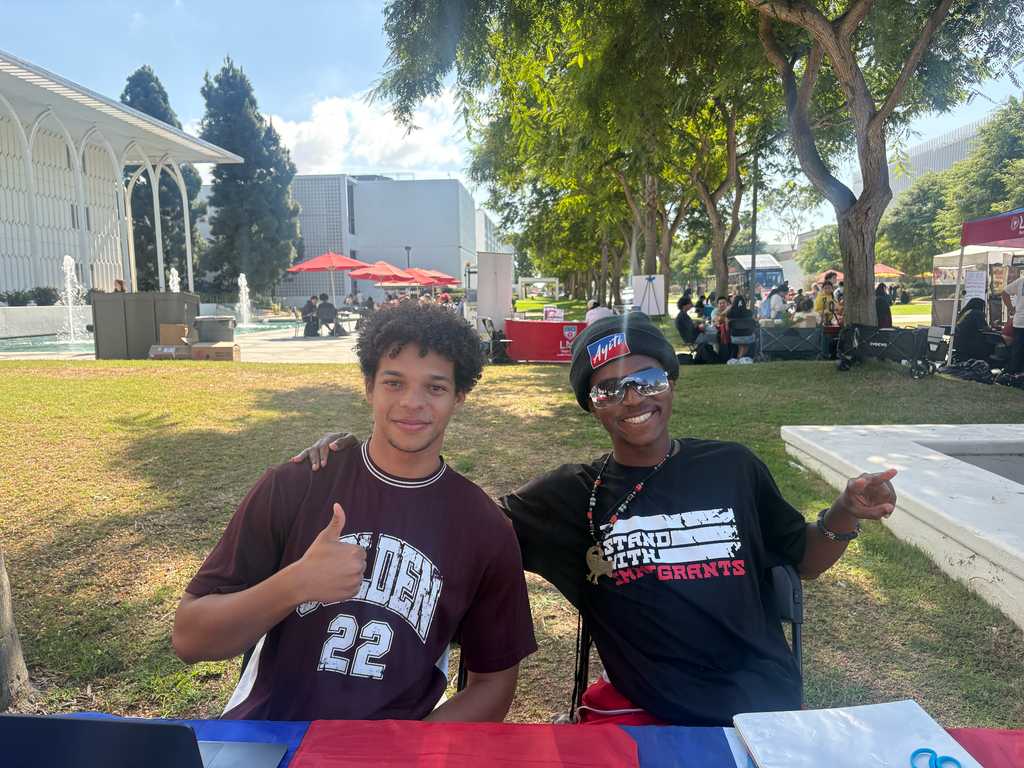
Julien Herard, the president of the Caribbean and West Indian Student Association and an e-board member of Brothers of Consciousness, said that the walkout is an opportunity to keep Wells’ case in the public eye.
“I feel like walkouts are a good start for awareness, so people can see and recognize that this is an issue that is still thought about—and we haven’t forgotten,” Herard said.
“Time has passed from his original death, but this story can’t die,” said Joshua Roseboro, a junior and the social media chair of the Caribbean and West Indian Student Association.
Students at colleges across the country have organized walkouts in honor of Wells; now, on Nov. 4, the LMU community will unite in solidarity to honor Nolan Wells’s life and continue demanding justice.
