


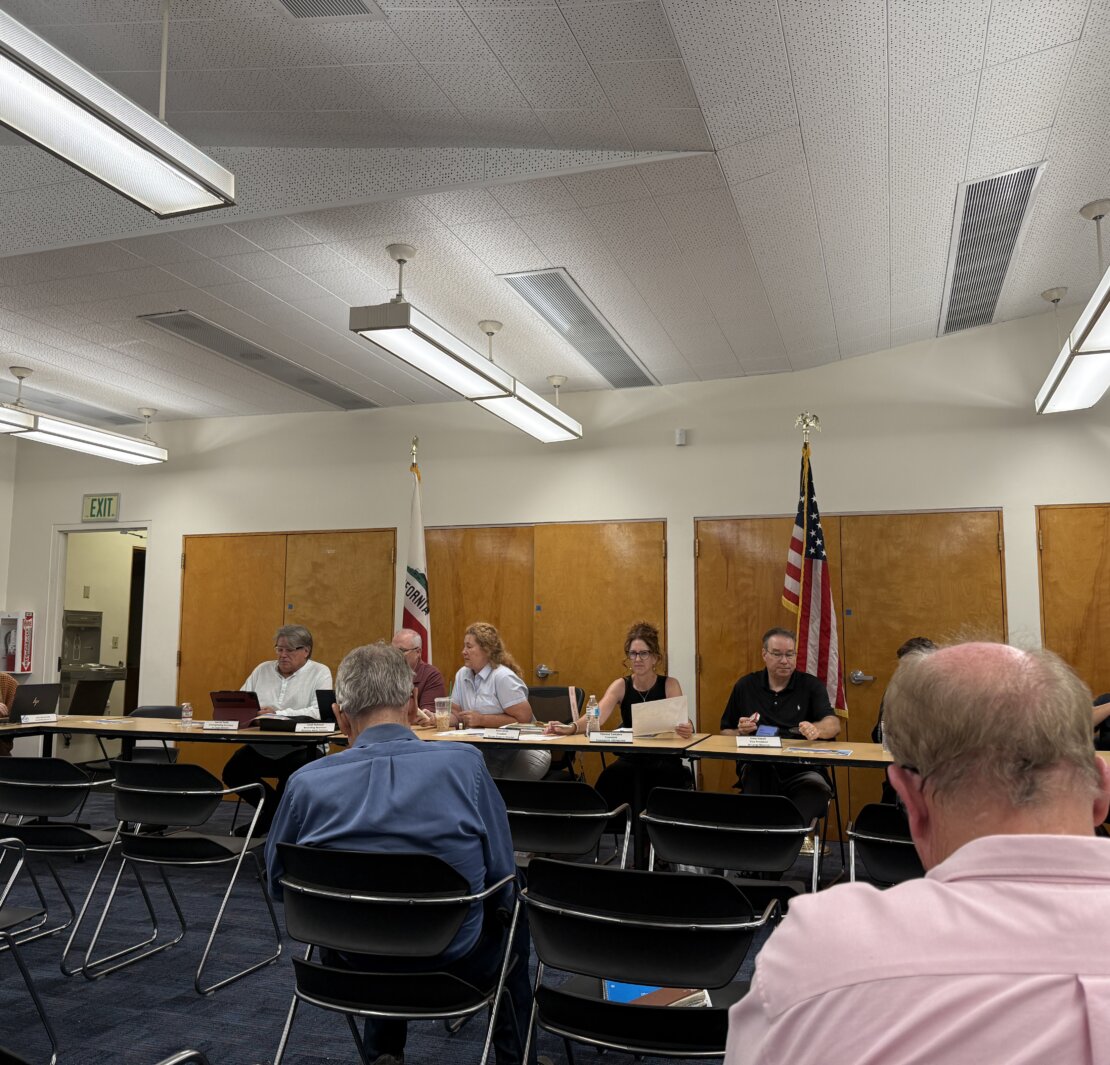
WESTCHESTER – A neighborhood council meeting on Tuesday, Oct. 6, discussed an ongoing issue between LMU students residing in Westchester.
Late night parties, crowded streets, and student-led disturbances have prompted calls for stronger discipline of LMU students renting homes in the neighborhoods surrounding campus.
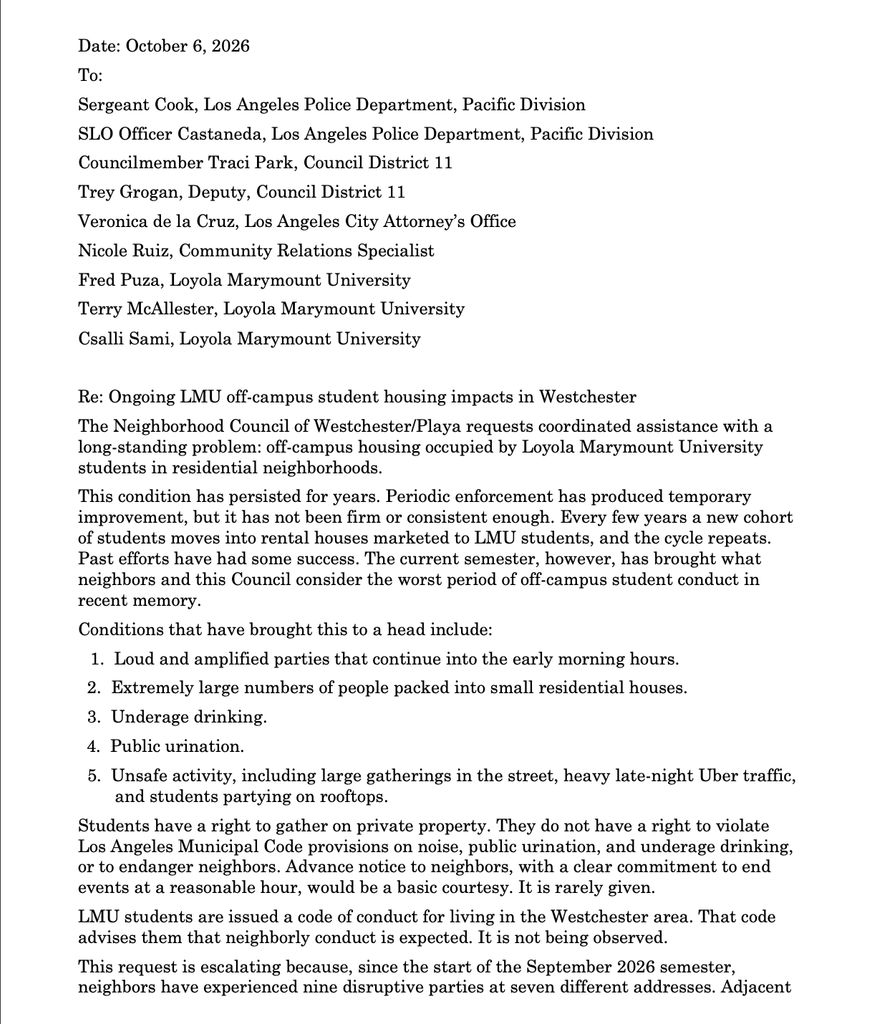
The letter from the Neighborhood Council of Westchester/Playa Vista requesting action from local officials and LMU, Courtesy of the Neighborhood Council of Westchester/Playa Vista
A letter from the Neighborhood Council of Westchester and Playa Vista, written on Oct. 6, describes an ongoing conflict between residents and students living off campus, reporting at least nine disruptive parties at seven different addresses this semester alone.
The letter was placed on the council’s meeting agenda on Oct. 6 for consideration, requesting a coordinated response from LMU, the LAPD, Council District 11, and the City Attorney’s office.
For neighbors who were affected by the gatherings, the concerns extend beyond loud music. The letter lists allegations of parties continuing into the early morning, large crowds packed into small houses, underage drinking, and public urination. It also describes people gathering in the street, heavy traffic due to Ubers and Waymos, and students climbing rooftops to party further.
Also, according to the letter, police and Public Safety ‘drive-bys’ and insufficient incident documentation have not resolved the complaints either. The proposed approach calls for prevention alongside enforcement with clearer expectations for students and stronger accountability when problems recur.
The letter states that the current semester of students have some of the worst behavior and worst period of off-campus conduct in recent years, due to attitude from the students along with behavioral issues.
Ron Knoll, a local homeowner, said that the students are rude and hard to reason with, especially when they are inebriated. “They just don’t give a s—,” he said. “Nothing bad’s gonna happen to them, they’re not going to get in trouble, so it’s a big f— you.”
Some of the houses are used by LMU fraternity members, such as Phi Delta Theta or Sigma Chi, which added another layer of tension between the students’ social life and residential expectations. Whether a gathering is hosted by a fraternity or an individual renter, the council’s proposed letter calls for students to respect their neighbors and for property owners to help address the recurring disruptions.
The residents of the neighborhood are calling for action due to years of disruptive behavior from fraternity houses, sorority houses, and places where students from neither group reside. The worst behavior comes from the parties on campus.
Chip Mallek, another local homeowner in the area and also on the Neighborhood Council, discussed the issues further during and after the meeting. He described that his grievances weren’t with the parties themselves, but with the school stating they have no control over the students in the fraternities throwing unruly parties due to their off-campus status.
“You allow them to put up tents and you allow them to, you know, and go out and look for new people to join. Therefore, you do have control over them,” Mallek stated. “We appreciate community life; we want them to have fun, too,” Mallek said. He then added that the disturbance becomes more of a problem when there are “200 people in a single family home,” which leads to loud music, blocking the streets due to rideshares, and other disruptive behavior.

The council’s proposed response states that they know there is a right for students to gather on private property, but it also argues that those gatherings must respect neighbors and comply with city law. It also states that LMU students receive a code of conduct outlining expectations for living in Westchester, but it alleges that those expectations are not being followed. The remedies would put responsibility on multiple parties, including students, LMU, and the property owners renting to the students.
The letter also asks LMU to require students who are living off campus to register their current addresses and sign an agreement acknowledging their conduct and representation of the university, and it requests that the LAPD issue citations when violations are supported by the facts.
The City Attorney’s Office would be asked to identify property owners, notify them when tenants are violating city law, and hold them accountable when able. Council District 11 would help address procedural obstacles that prevent agencies from responding promptly.
The council offers to convene a meeting among the agencies and university representatives to share information and establish a plan.
For residents seeking relief, the central issue is whether that coordination can produce a lasting change. The letter describes a pattern in which enforcement brings temporary improvement before another group of student renters arrives, leaving neighbors to raise the same concerns over and over again.
When asked, fraternity Phi Delta Theta was unable to comment on the situation.
