


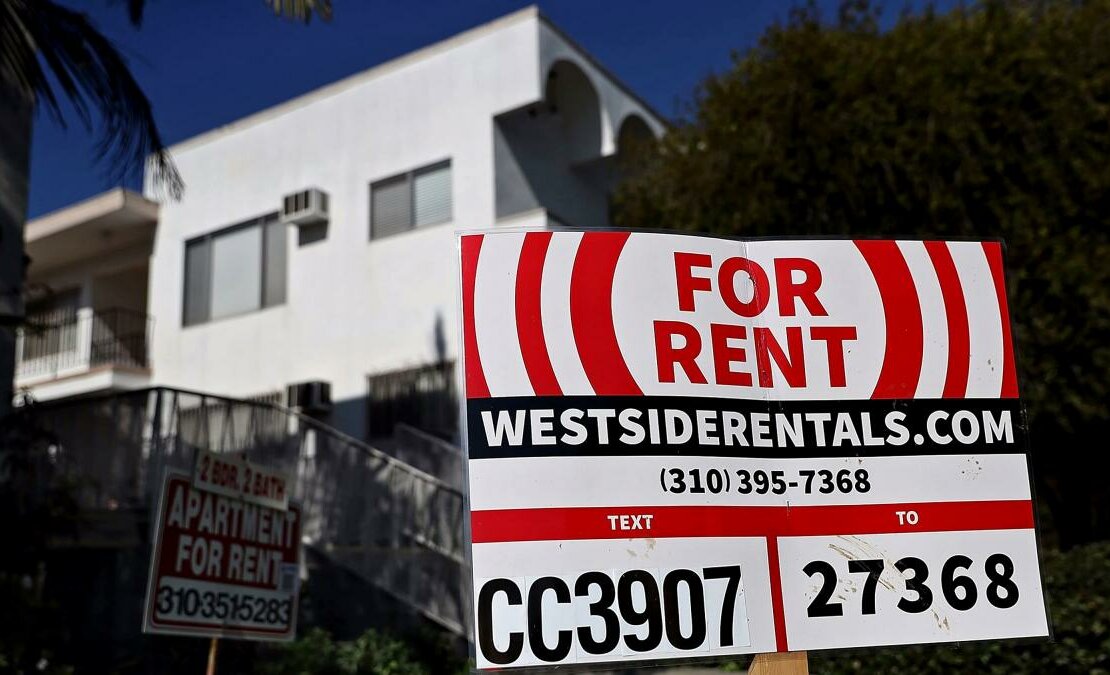
Summer Alexander, a 21-year-old junior and resident advisor at Loyola Marymount University, has lived in Los Angeles their whole life, but fears they won’t be able to afford to stay in their hometown after they graduate. With the average one-bedroom apartment going for $2,095 a month, the psychology and African American Studies double major is not optimistic. “The only way I could get an apartment is if my grandfather co-signed,” Alexander said.
As Los Angeles County continues to face an affordability crisis, the city’s population is only expected to grow by 8.15% between 2020 and 2030, according to an estimate by the nonprofit Southern California Association of Governments. The city has set a goal of 456,643 new units over roughly that same time, according to the Los Angeles City Housing Element report, a state-mandated planning document adopted in 2021. That is five times higher than the previous allotment. Experts say the county will need to match that pace to meet regional demand.
The lack of units has contributed to an affordability crisis for Angelenos coming of age as housing costs continue to outpace incomes. While the city has stepped up housing construction in recent years, data from the California Department of Housing and Community Development show that most of it is market-rate or for low-income renters. A small fraction, just 4.3% of approved units, is affordable for moderate-income residents, making it increasingly hard for soon-to-be graduates like Alexander to afford a place to live.
State housing policies are a driving force behind the goal, but local zoning laws shape which housing is built. Cities and counties across California are required to report housing data annually to the state, which breaks down affordability status of each application by low-income, moderate-income or above moderate-income. An independent analysis of California Housing Progress Reports data shows that there were 67,865 units of new housing approved across the county between 2021 and 2025.
The vast majority, 73%, of these units were market-rate and out of reach for most residents, the data show. Another 22.8% were designated for low-income households and built overwhelmingly in economically disadvantaged neighborhoods. Meanwhile, the city’s most affluent communities like Pasadena and Santa Monica have been slow to build affordable units and a handful of communities, including Rolling Hills and Malibu, didn’t create a single unit.
Michael Wojciechowski, chairman of Affordable Housing Advisors, a brokerage firm that specializes in affordable housing, said the lack of moderate-income housing reflects broader structural barriers in Los Angeles.
“Los Angeles has always been a high-cost place to build, but labor, land and regulatory costs make construction two to three times more expensive than in other states,” which he attributes primarily to wage requirements that drive up construction costs.

Wojciechowski said current policies are unlikely to close the gap. “There’s only so much funding available, and housing competes with other priorities,” he said. Without a stronger political commitment, he added, producing enough workforce housing remains difficult.
Growing up in South Los Angeles, Alexander said they have seen how sharply housing costs divide the city. Now that divide is shaping their own future. Despite spending their entire life in Los Angeles, they will likely have to leave because they cannot afford to stay on their own.
“I think that plays a big role in why most people can’t live in LA,” Alexander said. “Because they are not affluent and white.”
